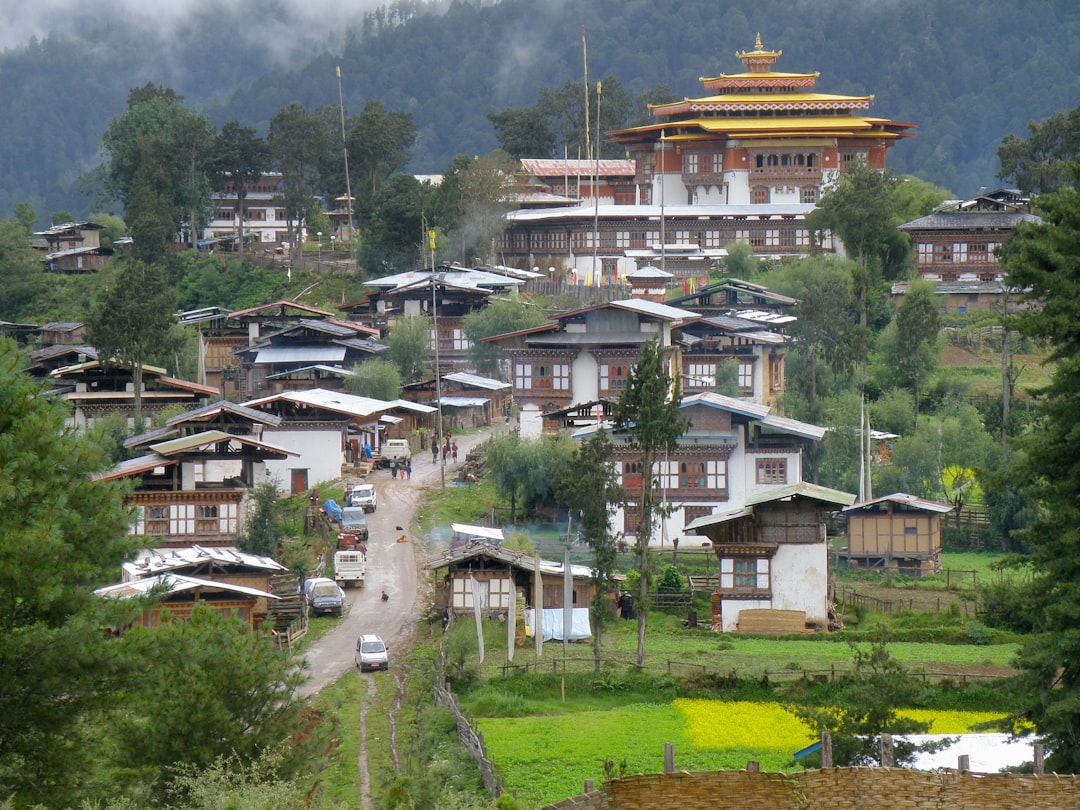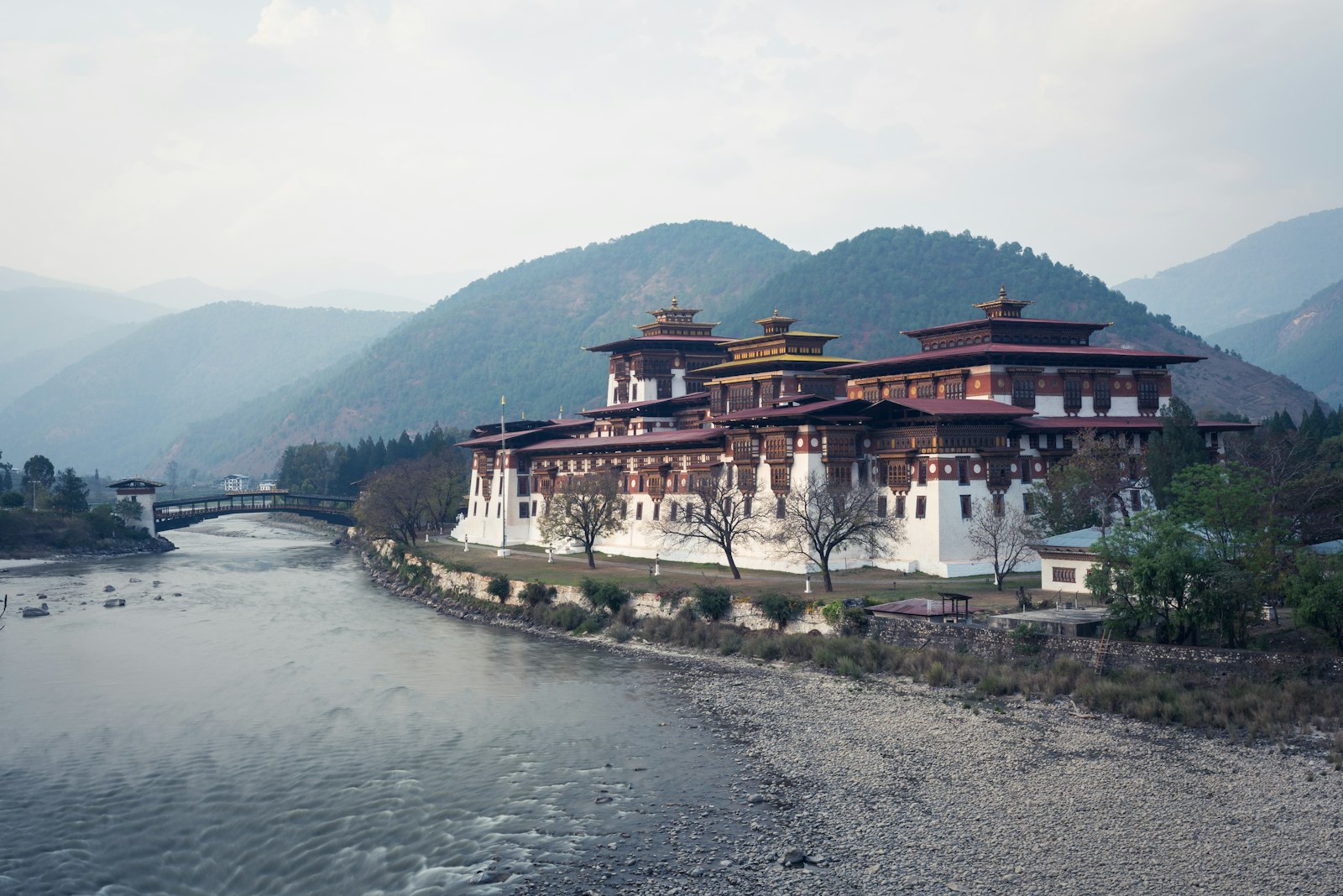
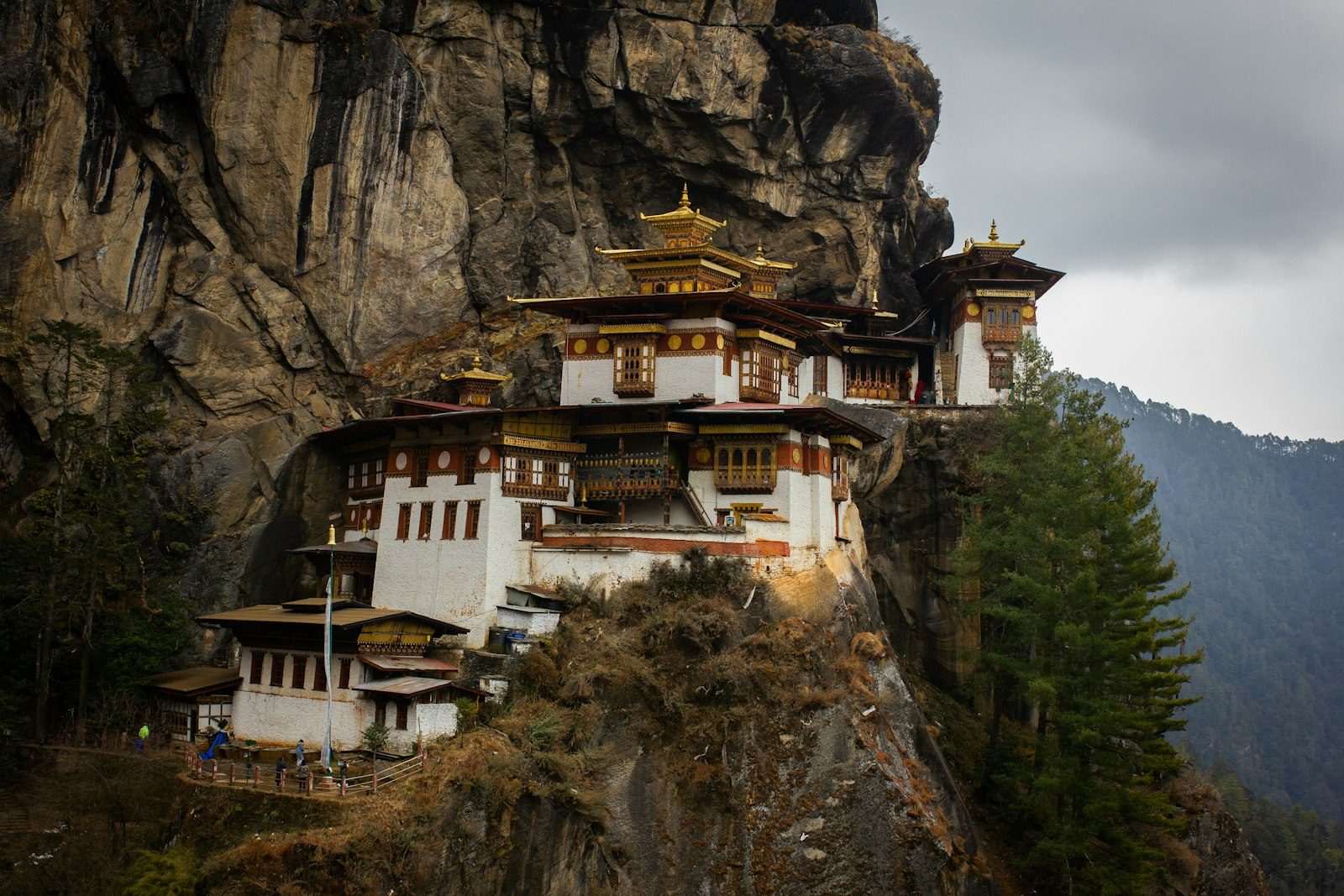
Paro is where your trip begins, whether or not you plan to spend much of it here. The valley holds the country's only international airport at 2,235 m, the Tiger's Nest monastery on the cliff above it, one of Bhutan's great dzongs, and its oldest temple. Most first visits from Bangkok start and end here, and many are based here throughout.
The single most useful thing to know is that the first day should be slow. Not because of jet lag — Bhutan is only an hour behind Thailand — but because you have arrived at altitude, and what you do on day one determines whether the Taktsang climb on day two is a pleasure or an ordeal.
What is Paro, and how does it fit a first trip?
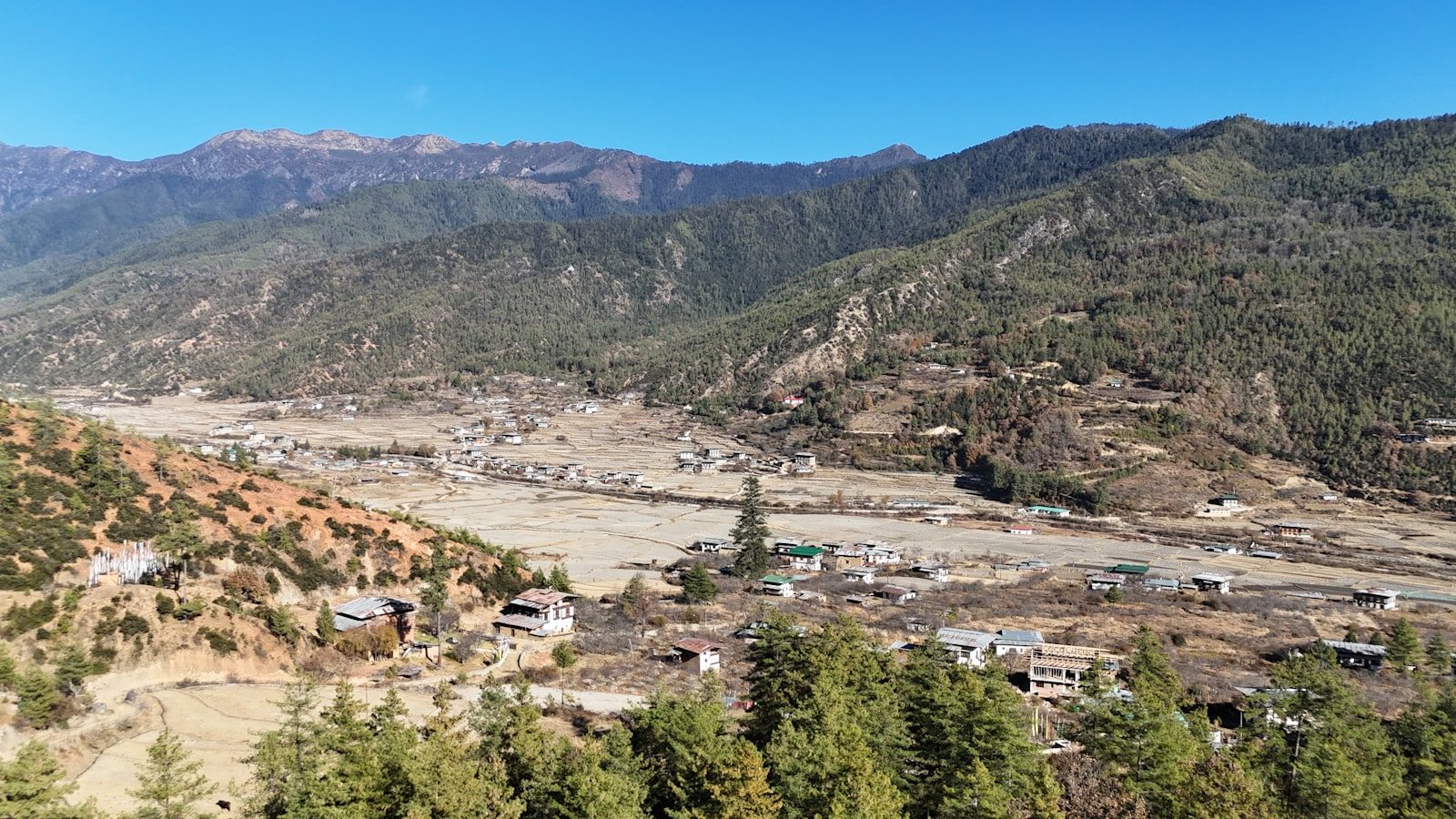
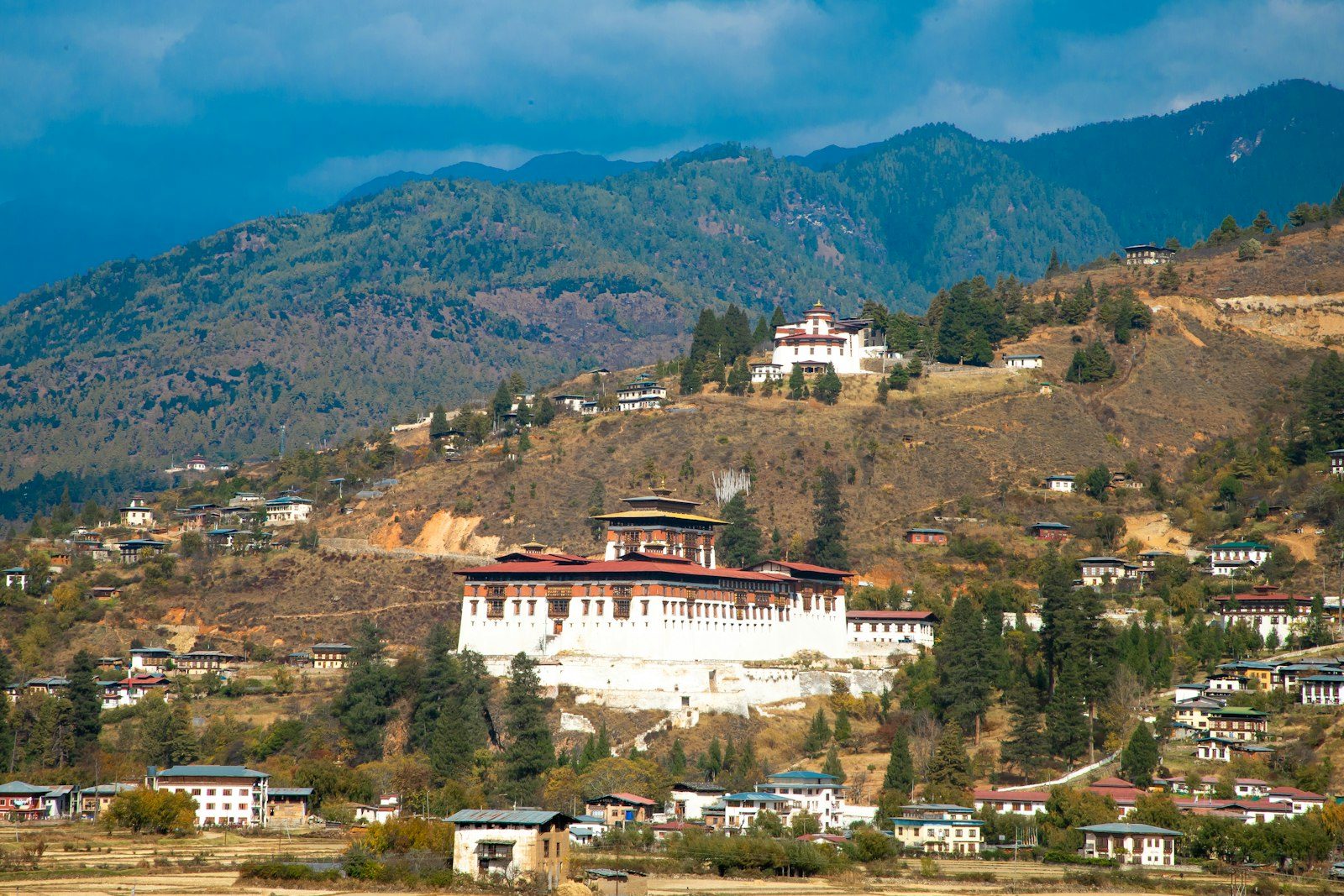
A broad, farmed valley about 55 km west of Thimphu, running along the Paro Chhu river with terraced fields, traditional houses and forested ridges rising on both sides. The town itself is small: one main street of timber-fronted shops, walkable end to end in twenty minutes.
That scale surprises people who expect an airport city. Paro is a farming valley with an airport in it, and the sights are spread along the valley rather than clustered in the town.
For planning, it works as a base. The airport is minutes away, Taktsang is a short drive up the valley, and Thimphu is around 90 minutes by road. Most itineraries — including the standard five-day, four-night route through Paro, Thimphu and Punakha — open and close here.
What happens when you land?
Simply, and quickly. Paro handles few flights a day, so arrival is unhurried.
You complete an arrival card on the aircraft, queue briefly at immigration, and the officer matches your passport against the visa clearance already in the system and issues the visa into your passport. You are not asked for an SDF receipt. Your guide meets you in the arrivals area with the itinerary.
Wheels down to leaving the terminal is normally well under an hour. There is an exchange counter, and usually a telecoms desk, though buying a SIM in town is generally easier. The full arrival and paperwork sequence is in the Bhutan visa guide.
Departure is the mirror image and slightly less relaxed. Check-in opens two hours ahead, the terminal is small enough to fill quickly, and any antique or religious item in your bag needs its export clearance to hand. Ask your guide to leave the hotel earlier than feels necessary on a festival weekend.
The approach itself is worth staying awake for: the aircraft manoeuvres between ridges close enough to make out individual farmhouses. It is flown visually, in daylight only, which is why the schedule is what it is — and why weather can delay the flight.
Why does the first day matter so much?
Because you have gone from sea level to 2,235 m in three and a half hours, and your body has not been consulted.
Most people feel this only mildly: slight breathlessness on stairs, a shorter fuse, poor sleep the first night, perhaps a dull headache. That is normal and passes. What turns it into a problem is treating day one as a day to make up time — a long drive, a big lunch, a few drinks, and a 07:00 start up a mountain the next morning.
The fix costs nothing. Walk rather than climb, drink more water than feels necessary, eat lightly, and go easy on alcohol the first night. Symptoms that are not normal — a headache that does not respond to water and paracetamol, nausea, dizziness, breathlessness at rest — mean tell your guide rather than push on. How to acclimatise properly in Bhutan covers what to watch for.
What should you do on your first day?
A valley-level day, all of it under 2,600 m, and a genuinely good one.
Rinpung Dzong. The fortress-monastery above the town, reached across a traditional cantilever bridge. Still a working administrative and monastic centre, with courtyards, steep wooden stairs and dark shrine rooms. Shoulders and knees covered.
The National Museum, in the old round watchtower above the dzong. Thangkas, masks, textiles and the historical context that makes everything else you will see legible. Worth doing early in the trip rather than late.
Kyichu Lhakhang. One of Bhutan's oldest temples, seventh century in origin, small and still busy with pilgrims circling it. Quieter and older than the dzong, and for many visitors the more affecting of the two.
Drukgyel Dzong. Ruins at the head of the valley, built to mark a seventeenth-century victory, with farmhouses below and the mountains behind on a clear day.
The main street. Twenty minutes of shops selling textiles, prayer flags and the occasional genuinely good weaving. This is also the sensible place to buy a SIM.
That is a full day without climbing anything. Add a farmhouse dinner and a hot stone bath in the evening and you have the best possible preparation for Taktsang — what a Paro farmhouse stay is really like describes it.
When should you climb to Tiger's Nest?
Day two or three, starting at first light. Never day one.
Taktsang sits about 900 m above the valley floor, near 3,120 m, and the round trip takes most people four to six hours including time inside. It is moderate on gradient and hard on altitude, with one awkward section near the end: about 100 m of stone steps down into a gorge and back up to the monastery door.
Starting by 07:00 gives you cool air, softer light, fewer people on the narrow sections and a margin if you are slower than you expected. Afternoon cloud is common, and the monastery keeps its own hours.
Ponies can carry you as far as the cafeteria at roughly the halfway point — up only, not down, and not beyond the cafeteria, so the steps are on foot regardless. The cafeteria is the classic viewpoint and a perfectly respectable place to stop. The full stage-by-stage guide to the Tiger's Nest hike has the timings.
How should you behave in temples and around people?
Bhutanese etiquette is not onerous, and getting it right is noticed.
- Cover shoulders and knees in temples and dzongs, every month of the year. Shoes off in shrine rooms, hats off indoors.
- Walk clockwise around chortens, prayer wheels and temple interiors.
- No photography inside most temples. Ask outside; assume no inside.
- Ask before photographing people, especially monks and children. Most will agree; being asked is the point.
- Do not point with a single finger, or with your feet, at an altar or a person.
- Receive and give with both hands, or with the right hand supported at the elbow.
- Do not touch anyone's head, or climb on a chorten for a photograph.
Two things that catch visitors out. Temples close to visitors on some religious days, and the schedule is not published for your convenience — your guide will know. And a dzong is a working government building; the office wing is not part of the visit.
How long should you spend in Paro?
Two nights at the start of a trip, and often one at the end.
Two nights gives you the valley day and then Taktsang properly acclimatised, which is the sequence that works. One night forces the climb on your arrival day, which is the most common planning error we see. Three or more nights is genuinely enjoyable if you want Chele La, more of the valley, and time that is not scheduled.
Closing the trip with a final night in Paro rather than driving from Thimphu on the morning of your flight is worth the extra night. Paro's weather does not consult your plans.
What else is in reach from Paro?
Chele La, the highest road pass in the country at roughly 3,988 m, about an hour and a half up from the valley. Prayer flags, rhododendron forest, and on a clear morning a view to Jomolhari. Go early; cloud builds.
Thimphu, around 90 minutes by road, for the capital's dzong, the Buddha Dordenma and the weekend market.
Punakha, roughly three hours over Dochula pass, lower and warmer, with the dzong at the river confluence and the suspension bridge.
Farmhouse valleys within twenty minutes of the town, which is where the hot stone baths are.
Where should you stay?
Three broad tiers, and the choice changes the trip more than it changes the cost of the flight.
Valley hotels of three to four stars are where most first trips sit: comfortable rooms, heating, hot water, Bhutanese and Indian food at dinner, and a view of fields rather than a car park. Perfectly good, and the tier our standard packages quote.
Farmhouse stays trade the bathroom for the experience. You eat with the family, the hot stone bath is heated with river stones and a wood fire, and the walls are thin. One night is memorable; some travellers want two, and some are relieved it was one.
The luxury lodges — Amankora, Six Senses, Como and their peers — are genuinely exceptional and priced accordingly, often more than the flight and SDF combined. They are worth naming at quote stage rather than discovering later, because availability in October and April closes early.
Where in the valley matters too. Staying near the town puts you five minutes from dinner and the shops. Staying up the valley towards Taktsang buys you quiet, a shorter drive on climb morning, and a taxi ride to anywhere else.
Whatever tier you pick, ask for a room away from the road and, in winter, ask whether heating is central or a plug-in radiator. That single question predicts your comfort in January better than the star rating.
What is the food like?
Chilli-forward, vegetarian-friendly, and less alarming than its reputation.
The national dish, ema datshi, is chillies cooked in cheese, and it is treated as a vegetable dish rather than a condiment. Bhutanese heat is real and Thai visitors generally cope better with it than European ones. Red rice, buckwheat noodles and pancakes in Bumthang, dried yak, momos, and a great deal of potato and cheese fill out the rest.
Hotel dinners are usually buffets pitched at visitors: mild curries, fried rice, noodles, a Bhutanese dish or two and a lot of vegetables. Say early in the trip if you want the real thing rather than the hotel version, because kitchens will make it and rarely offer.
Vegetarians eat extremely well; Bhutan is a Buddhist country with a genuine vegetarian tradition. Vegans and coeliacs need to be specific in advance, because dairy is in almost everything and wheat noodles are common.
Drink bottled or filtered water. Alcohol is available, local beers are decent, and there is a national no-alcohol day on Tuesdays that catches people out. Go carefully on the first night at altitude regardless. What to eat in Bhutan has the wider list.
How do you get around?
By private vehicle with a driver and guide, which is how Bhutanese tourism is structured and not something you need to arrange separately.
Your quote includes the vehicle, the driver and the licensed guide for the whole itinerary. There is no meaningful rental-car option for visitors, taxis exist but are for short hops within a town, and the road network is a single main east-west highway with valley spurs.
Two practical consequences. First, road journeys take longer than the distance suggests: Paro to Thimphu is 55 km and 90 minutes, Thimphu to Punakha is 75 km and around two and a half hours over a 3,100 m pass. Second, the itinerary is the route permit, so adding a valley mid-trip is a paperwork question rather than a driving one.
If anyone in the party is prone to motion sickness, say so at booking and take something before the Dochula stretch rather than during it. The roads are well surfaced and endlessly curved.
What does a first trip cost?
Three fixed pieces and one variable. The Sustainable Development Fee is USD 100 per adult per night, set by the government and identical whether you stay in a farmhouse or a lodge. The visa fee is a one-off USD 40. The return flight from Bangkok is the third. Everything else — hotels, meals, guide and vehicle — is the part you can actually move.
That structure is why a four-night trip has a floor no operator can undercut: USD 400 of SDF plus USD 40 of visa before a single room is booked. It is also why the gap between a comfortable trip and a luxury one is entirely in the hotel line. The full cost breakdown in Thai baht puts real numbers against each row, and what the SDF actually pays for explains where the USD 100 goes.
Children aged six to eleven pay USD 50, half the adult rate, and under-sixes are exempt. On a family trip that is a material saving worth knowing before you compare quotes.
Which month suits a first trip?
October and November first, then March to May.
October and November give the clearest skies, the driest trails and the big autumn festivals, which is exactly why seats and the good hotels sell out six to nine months ahead. March to May brings rhododendrons, warmer days and slightly hazier mountain views, with almost the same reliability.
December to February is cold, very clear and much cheaper, with fewer visitors on the Taktsang path — a genuinely good choice if you do not mind sub-zero mornings. June to September is the monsoon: green, cheap, quiet, and wet enough that flights and trails are both less predictable.
If the trip is built around Taktsang and photographs, take the autumn window and book early. The month-by-month guide to visiting Bhutan sets out the trade-offs properly, and when to book Bangkok–Paro flights covers the timing.
What do first-timers get wrong?
Climbing Taktsang on arrival day. The single most common mistake, and entirely avoidable.
Packing one heavy coat instead of layers. A Paro day can run 20°C from dawn to noon. The packing list sets out the seasonal detail.
Arriving in shorts on a temple day. You will be turned away.
Assuming cards work. They do in hotels, patchily elsewhere. Carry cash; see how money works in Bhutan.
Booking a same-day onward connection from Bangkok. Leave a buffer night.
Trying to add a valley mid-trip. Travel beyond Paro and Thimphu needs a route permit arranged in advance, so build the itinerary you want at quote stage rather than on the road.
Start planning your first trip
Send your dates and party through Book & Hold. We hold your seats and return one written quote covering flights, SDF and visa, with the itinerary sequenced so Taktsang falls on an acclimatised day.
Fares are quoted in Thai baht, per person, inclusive of taxes and surcharges at the time of publishing, and start from the figure shown. Fares, seats and availability are confirmed in writing by OMG Experience, the appointed General Sales Agent for Bhutan Airlines in Thailand, before ticketing.