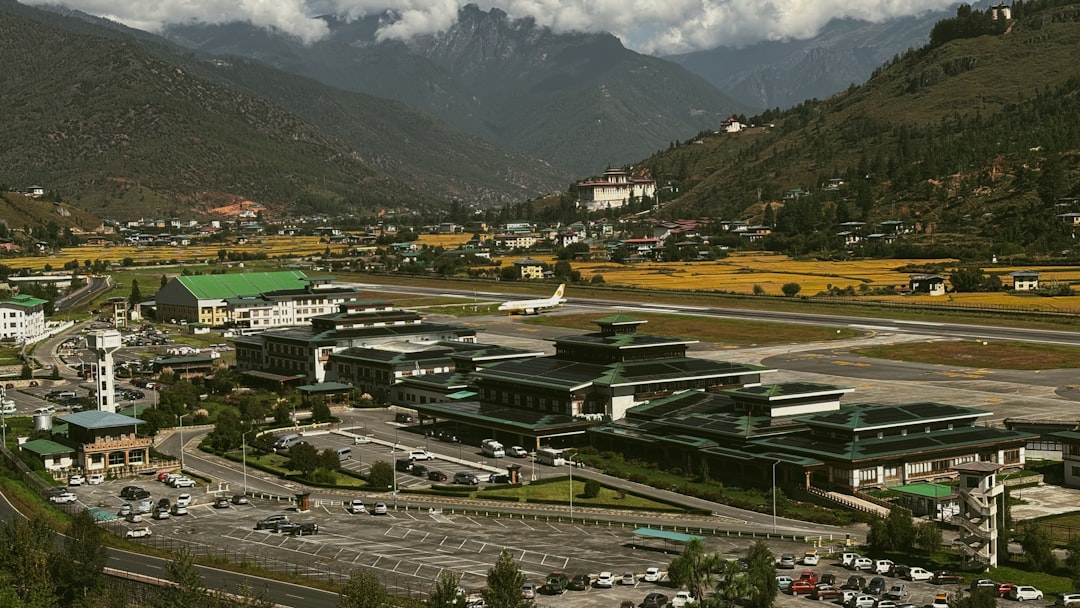
When cloud closes the Paro valley, your flight does not take off. Paro is flown on a visual approach, in daylight, between ridges that rise thousands of metres either side of the runway — there is no instrument procedure to fall back on. So a weather delay here is not a scheduling decision, it is a physical limit, and it is the same for every airline that flies there.
What actually happens next is predictable, and knowing it in advance turns an alarming morning into a manageable one. Inbound flights hold, return to Bangkok, or divert to Kolkata. Outbound flights wait for the valley to open. Most disruption clears within a few hours.

Why is the approach visual?
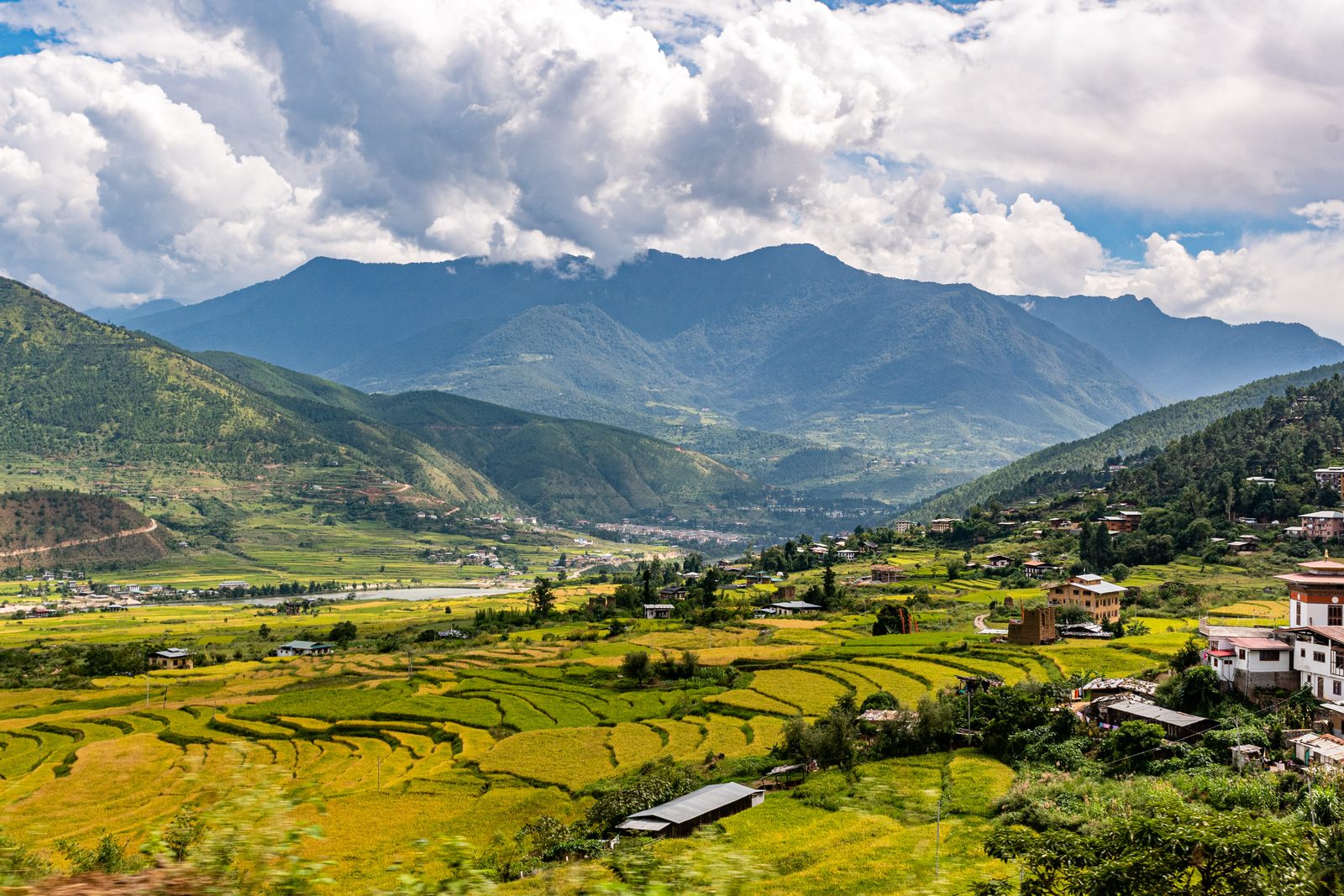
Because of the terrain. Paro International sits at 2,235 m in a narrow valley, and the approach follows the valley itself rather than a straight line to the runway, with the aircraft manoeuvring between ridges on the final few minutes of the descent.
That geometry rules out the instrument approaches that let aircraft land in poor visibility at an ordinary airport. Pilots must be able to see the terrain, which produces three hard constraints:
- Daylight only. There are no night operations.
- Cloud base and visibility minima are strict, and they are about seeing the valley, not the runway.
- Only specially certified crews fly the approach.
None of this indicates an unsafe airport. It indicates an airport with genuine limits that are respected rather than pushed, which is exactly what you want in that valley.
What happens to an inbound flight?
Three possibilities, in the order they are usually tried.
It holds. The aircraft waits, either on the ground before departure from Bangkok or airborne near Paro, for a gap. Valley cloud often lifts within an hour or two, and this resolves most delays.
It diverts to Kolkata. Where the routing allows, the aircraft continues to Kolkata (CCU) and waits there for the weather, then completes the sector when the valley opens. This is why the Kolkata sector matters operationally: it gives the flight somewhere useful to be.
It returns to Bangkok. If the window closes for the day, the flight comes back and you travel the next available day.
What happens to an outbound flight?
It waits on the ground at Paro until the valley opens, and if the day's window closes, it goes the following day.
The important thing to grasp is that this is the more disruptive direction, because you are on the wrong side of a mountain range with an onward connection ticking. It is also the reason the buffer night below is not an over-cautious suggestion.
What do we actually do when it happens?
As Bhutan Airlines' General Sales Agent in Thailand, this is the part we handle rather than describe.
We monitor the day's operation and contact you directly rather than waiting for you to discover the delay at the airport. If the flight is rescheduled, we rebook you onto the next available service and confirm the new time in writing. If a diversion means an unplanned night, we work with the operator in Bhutan on your accommodation and your onward arrangements. If a night is added inside Bhutan, the SDF and itinerary variation are handled between your operator and the Department of Tourism rather than being charged to you as a penalty — the mechanics are in our full guide to the Sustainable Development Fee.
What we will not do is guess. We tell you what is known and when the next decision point is, because on a weather day the honest answer is often "we will know in ninety minutes".
When is disruption most likely?
The seasonal pattern is clear enough to plan around.
| Season | Risk | Why |
|---|---|---|
| October to February | Lowest | Dry, stable air and the clearest skies of the year |
| March to May | Moderate | Morning cloud and pre-monsoon build-up |
| June to August | Highest | Monsoon cloud, heavy afternoon rain, low ceilings |
If your trip has a fixed end date, that table is the argument for autumn or winter travel. The month-by-month guide to visiting Bhutan sets out the wider seasonal trade-offs, and the short version is that the reliable months and the beautiful months are the same months.
How do you reduce the odds of it hurting?
You cannot change the weather, so change the exposure.
Leave a buffer night in Bangkok before any onward international departure. This is the single most effective thing you can do, and it costs one hotel night. Landing at Suvarnabhumi two hours before a long-haul flight is how a routine delay becomes a lost intercontinental ticket.
Travel in the drier months if your dates are movable.
Take the through fare on one ticket. If you self-connect on separate tickets, a weather delay means you have missed a flight you paid for, with no reaccommodation. On one ticket it is the airline's to solve. This is covered in when to book Bangkok–Paro flights.
Buy travel insurance that covers delay and missed connection, and read the delay clause rather than the headline figure. We do not sell insurance.
Do not schedule Taktsang for your departure morning. The Tiger's Nest hike takes most of a morning, and a weather day removes any margin you had.
Are you entitled to compensation for a weather delay?
Not in the way passengers arriving from a European route sometimes expect, and it is better to know that before it happens than to argue about it at a counter.
Weather is treated as an extraordinary circumstance outside the airline's control, so a delay caused by cloud at Paro does not attract the fixed cash compensation some jurisdictions mandate for airline-caused disruption. What you get instead is rebooking onto the next available service, and assistance with the practical consequences.
This is exactly the gap travel insurance is for. A policy with meaningful delay and missed-connection cover will address a hotel night and a re-booked onward ticket, which is the real financial exposure here. Read that clause specifically. We do not sell insurance, and we would rather you bought a good policy elsewhere than assumed you were covered.
The other protection is structural rather than financial: one ticket through to Paro means the airline carries the reaccommodation obligation, which separate tickets do not.
Does the same thing happen on the way home?
Yes, and it is the direction that costs people money.
An outbound delay from Paro leaves you on the wrong side of the Himalaya with a Bangkok connection running. The mechanics are identical — the valley has to open, in daylight — but the consequences land on your onward plans rather than on your first day in Bhutan.
This asymmetry is the whole argument for the buffer night. A delay arriving in Paro shortens your trip by a few hours. A delay leaving Paro can cost an intercontinental ticket. Plan the slack at the end, not the beginning.
What should you keep in your cabin bag?
Pack for the possibility of an unplanned night away from your checked luggage.
- Any prescription medication, in the cabin, always.
- A warm layer. Paro at dawn is cold and a terminal is not heated to Bangkok standards.
- Phone charger and a power bank.
- Your documents, including the visa clearance letter.
- A change of clothes, if you are travelling in the monsoon.
- Snacks and a water bottle. Catering at a small mountain airport on a disrupted day is limited.
- Some ngultrum in cash. Card acceptance is thin, as how money works in Bhutan explains.
Does this affect the Gaya route as well?
Not in the same way, and the contrast is instructive.
Bangkok–Gaya (BKK–GAY) serves the Bodh Gaya pilgrimage and lands on the Indian plain, where the airport has conventional instrument approaches and no valley to see into. Its disruption profile is ordinary: fog in the northern Indian winter is the main factor rather than monsoon cloud on a mountain approach.
So if you are planning a pilgrimage trip, the operational caution on this page is specific to Paro, and our guide to a first visit to Bodh Gaya is the relevant one. If you are combining both, plan the Bhutan leg with the buffer and the India leg normally.
Is it worth worrying about?
Genuinely, no — provided you build the buffer night in.
Most trips to Paro operate on schedule, and most delays that do occur resolve the same day. The travellers who have a bad experience are almost always the ones who had no slack: a same-day long-haul connection, or a hike scheduled for the morning of departure. The travellers who have a good experience got an extra half day in a Himalayan valley.
Plan the slack and this stops being a risk. Send your dates through Book & Hold and we will hold seats, return one written quote covering flights, SDF and visa, and flag any connection in your plan that looks too tight.
Fares are quoted in Thai baht, per person, inclusive of taxes and surcharges at the time of publishing, and start from the figure shown. Fares, seats and availability are confirmed in writing by OMG Experience, the appointed General Sales Agent for Bhutan Airlines in Thailand, before ticketing.