Bhutan charges most international visitors a Sustainable Development Fee (SDF) of USD 100 per person, per night in 2026. It is a government levy, paid online in advance alongside your visa, and it is entirely separate from your flights and hotels. The rate is half the USD 200 written into Bhutanese law, and it holds for trips starting on or before 31 August 2027.
That is the whole answer. The rest of this guide covers the parts that catch people out: how nights are counted, what the fee does and does not buy, what happens if your trip changes, and what five nights actually costs once flights and visa are added. Every figure was checked against the Bhutan Department of Tourism in August 2026.
If you have landed on an older page quoting USD 200 to USD 250 a day, that page is describing a system Bhutan abolished in September 2022. It is not simply out of date by a few dollars — the whole structure changed, and the comparison is more interesting than it looks. There is a section on that below.
What is the Sustainable Development Fee?
The SDF is a daily levy every tourist pays to the Royal Government of Bhutan for each night they spend in the country. It is collected through your licensed tour operator and remitted to the government, which is why it appears on your quote as its own line rather than buried in a hotel rate.
It exists to serve Bhutan's "High Value, Low Volume" tourism policy. Bhutan has never tried to maximise visitor numbers. The reasoning is straightforward: a country of roughly 780,000 people with a constitutional requirement to keep 60% of its land under forest cover cannot absorb mass tourism without becoming a different country. The SDF is the mechanism that lets a smaller number of visitors fund the same public good that a much larger number would otherwise have to.
How much is the SDF in 2026?
| Who | Rate per person, per night |
|---|---|
| Adults, most nationalities | USD 100 |
| Children aged 6 to 12 | USD 50 |
| Children who have not yet turned 6 | Nil |
| Indian nationals | Nu. 1,200, or the equivalent in Indian rupees |
The USD 100 is a concession, not the statutory rate. The Tourism Levy Act sets the SDF at USD 200 per night. From 1 September 2023 the government waived half of it as a time-limited measure to rebuild visitor numbers after the pandemic, and that waiver is what you are paying under today.
The children's rates work off age at the time of travel, not at the time of booking. If your child turns 6 between booking and departure, the USD 50 rate applies to the trip. If they turn 13, the full adult rate does. It is worth checking a birthday that falls close to your travel dates before you commit.
When does the USD 100 rate end?
The concession applies to trips that commence on or before 31 August 2027. The date that matters is the day your stay in Bhutan begins, not the day you booked and not the day you paid. What happens after that date is not yet decided; the SDF after August 2027 tracks what is confirmed and what is pending.
That distinction is worth money. A trip beginning 31 August 2027 is charged USD 100 for every night of the stay, even if most of those nights fall in September. A trip beginning 1 September 2027 is charged at whatever rate is then in force for all of its nights, including any that fall in August.
What comes after is not yet published. The widespread expectation is a return to USD 200, but the government has announced no figure, and it has extended concessions before. We do not guess at it: for any trip touching that window we confirm the rate that will apply to your specific start date in writing before you pay anything.
How are nights counted?
The SDF is charged per night of stay, not per day of presence. Arrive on a Monday and fly out on a Friday and you have spent four nights in Bhutan, so you pay four nights of SDF, not five.
This trips up people budgeting from a day count, because a "five-day trip" in a brochure is usually four nights. Count the sleeps.
Two edge cases are worth knowing. If a weather diversion or a cancelled flight forces you to stay an extra night, that night is chargeable in principle — see the section on trip changes below for how it is handled in practice. And if you transit Paro without staying overnight, which is rare on the Bangkok routing, there is no night to charge.
What does the SDF pay for?
This is where Bhutan differs from destinations that levy a tourist tax and let it disappear into general revenue. The government publishes what the SDF underwrites, and the list is specific: free public healthcare, free education, environmental conservation, cultural preservation, and training and wages in the tourism sector itself.
Bhutan is the world's only carbon-negative country — its forests absorb substantially more carbon than the country emits — and that status is a policy outcome, not an accident of being small and mountainous. It requires paid forest management, enforced protected areas, and a road and hydro programme that does not simply take the cheapest line through a valley.
So when people ask whether the fee is worth it, the honest answer is that the fee funds the thing they came to see. The quiet trail to Taktsang, the valley without a coach park, the town where the traditional building code is actually enforced: those are not happy accidents, and they are not free.

What the SDF does not cover
Almost everything you will actually spend money on. This is the single most common misunderstanding, and it comes directly from the system the SDF replaced.
The SDF does not include your hotel, your meals, your licensed guide, your driver and vehicle, your entry tickets to dzongs and museums, or your flights. All of those are quoted and paid separately. It is a levy, not a package.
Under the old Minimum Daily Package Rate, in force until September 2022, a visitor paid USD 200 a night in low season or USD 250 in high season, and that figure did bundle a three-star hotel, all meals, a licensed guide, and transport — with a USD 65 per night royalty inside it that funded the healthcare and education the SDF now funds directly. Solo travellers paid a USD 40 surcharge on top, pairs USD 30.
Compare honestly and the picture is not "Bhutan got cheaper". The 2022 reform unbundled the package: it removed the price floor on hotels and guiding, which is why Bhutan now has genuinely inexpensive homestays and genuinely expensive lodges, and it moved the government's share into a visible line item. For a traveller choosing modest accommodation, the total is often lower than the old MDPR. For a traveller choosing a well-known international lodge, it is very much higher. The reform changed what you are buying, not just what you are paying.
Who gets a discount or is exempt?
Beyond the children's rates, the cases that come up are narrow.
Indian, Bangladeshi and Maldivian nationals have historically been treated as regional visitors with different entry arrangements; today Indian nationals pay Nu. 1,200 per person per night. Diplomatic and official travel is handled outside the tourist system. Certain short visits to border towns in the south can be waived under a separate arrangement that has nothing to do with a fly-in trip through Paro.
For essentially everyone arriving from Bangkok, the planning number is USD 100 per adult per night, halved for 6 to 12s, nil for under-6s. If you think you might be an exception, ask before you build a budget around it.
How do you pay the SDF?
Online, in advance, in the same transaction as your visa application. The two are processed together and both must be settled before you fly.
You cannot pay the SDF on arrival at Paro, and you cannot board without it settled — the airline checks visa clearance at check-in in Bangkok. This is also the practical reason unguided independent travel is not available in Bhutan: the fee and the visa are filed through a licensed operator, and the filing requires a confirmed itinerary.
When you book with us, we calculate the SDF against your exact number of nights, file it with the visa application, and return one written quote covering flights, SDF and visa together. The wider entry rules are set out on our Bhutan travel information page, and the paperwork itself is covered step by step in our guide to the Bhutan visa for Thai and foreign passport holders.
What happens to the SDF if your trip changes?
Three scenarios come up often enough to plan for.
You shorten the trip. SDF is assessed on the nights in your approved itinerary. Reducing nights before travel means the fee is recalculated; refunds of amounts already remitted to the government take time and are not immediate.
You extend the trip. Additional nights attract additional SDF, filed as an amendment through your operator while you are in the country. It is administratively routine and worth raising with your guide as early as you know.
Weather strands you. Paro is a visual-approach airport ringed by ridges, and cloud closes it. If your outbound flight cannot operate and you spend an unplanned night in Bhutan, that is a variation of your itinerary rather than a penalty, and it is handled between your operator and the Department of Tourism. What we can tell you plainly is what happens to the flight, which is set out in what actually happens when Paro weather delays your flight. Build a buffer day before any onward international connection and this stops being a problem worth worrying about.
The USD 40 visa application fee is non-refundable in all three cases.
What does the SDF add to a real trip?
Here is where it becomes concrete. Take a five-night trip, flying Bangkok–Paro return with Bhutan Airlines, which is the most common first visit from Thailand.
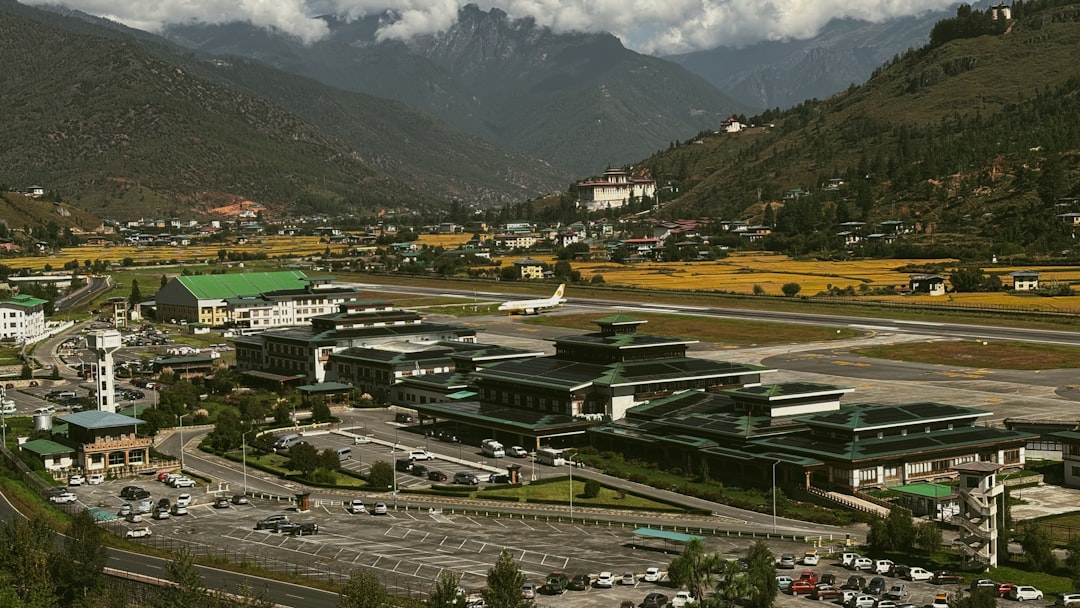
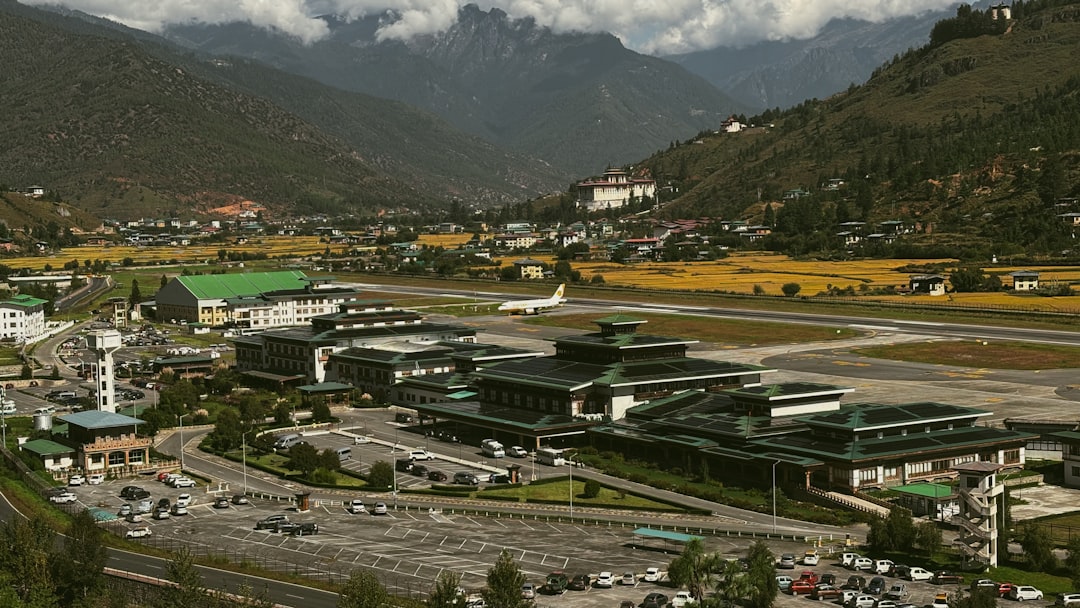
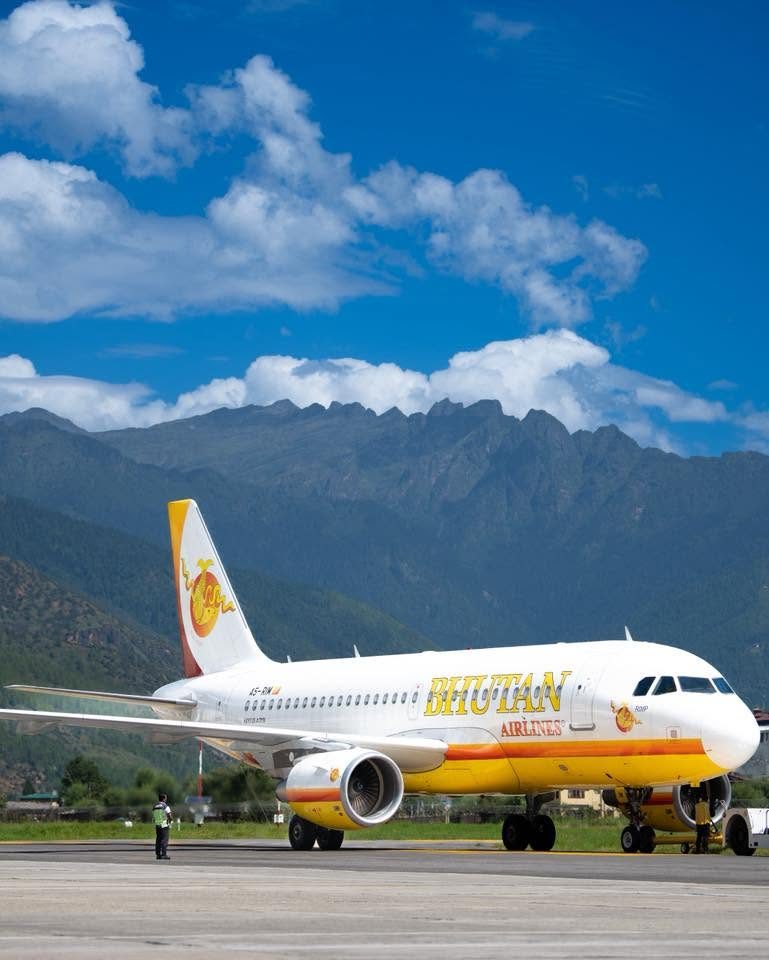
Bhutan Airlines operates the Airbus A320 between Suvarnabhumi (BKK) and Paro International (PBH), with some routings via Kolkata (CCU):
Bangkok to Paro
Paro to Bangkok
The fixed government and air costs for one adult:
- SDF: USD 100 × 5 nights = USD 500
- Bhutan visa: USD 40, one-time, non-refundable
- Return flight Bangkok–Paro: from THB 31,869 all-inclusive economy, our current published fare
At an illustrative THB 32.5 to the US dollar, used for the sums here and not a quoted exchange rate, USD 540 of government fees is roughly THB 17,550. So before a single hotel night, a five-night Bhutan trip carries about THB 49,400 of fixed cost per adult.
Scaled across common party sizes and lengths, in SDF alone:
| Nights | One adult | Two adults | Two adults + one child aged 8 |
|---|---|---|---|
| 3 | USD 300 | USD 600 | USD 750 |
| 4 | USD 400 | USD 800 | USD 1,000 |
| 5 | USD 500 | USD 1,000 | USD 1,250 |
| 7 | USD 700 | USD 1,400 | USD 1,750 |
| 10 | USD 1,000 | USD 2,000 | USD 2,500 |
The pattern is the one to plan around: the SDF is linear in nights and in adults, with no volume discount at any length of stay. A shorter trip is genuinely cheaper per trip, which is why the four and five-night itineraries dominate from Bangkok. If you want to see what those nights look like, our five-day, four-night Paro, Thimphu and Punakha itinerary is the standard shape.
Land arrangements sit on top: hotel, licensed guide, vehicle and driver, meals and entry fees, which vary widely with the standard of hotel. The full picture in baht is broken down in how much a Bhutan trip really costs from Thailand.
Travelling as a group of ten or more brings the flight to a group return fare from THB 29,500; the conditions are on our offers page. The SDF does not change with group size.
Can you legitimately reduce what you pay?
There is no discount to negotiate and no loophole worth your time. There are four honest levers.
Travel fewer nights. The fee is linear, so four nights instead of six saves USD 200 per adult outright. Four nights is enough for Paro, Thimphu and Punakha at a sane pace; it is not enough to add Phobjikha as well.
Travel with young children. An under-6 pays nothing, which materially changes the arithmetic for a family. A 12-year-old pays half. A 13th birthday before departure costs you USD 50 a night.
Take the group fare on the flight. The SDF is fixed, but the air fare is not: ten or more travelling together brings the return fare down, and on a five-night trip that saving is larger than a night of SDF.
Choose your accommodation deliberately. Since the 2022 unbundling, land costs vary by a factor of five or more between a licensed homestay and an international lodge. This is now the largest controllable number in a Bhutan budget, and the SDF is the smallest. A farmhouse night, of the kind described in our guide to a Paro farmhouse stay and hot stone bath, is both cheaper and more memorable than a mid-range hotel room.
What does not work: booking a shorter itinerary and extending on arrival, which simply attracts the same fee as an amendment, and hoping the concession is extended, which is not a plan.
Is the SDF worth paying?
That depends on what you are comparing it against, and the comparison people reach for is usually the wrong one.
Against a Himalayan trekking trip in Nepal, Bhutan is unambiguously more expensive as a line item: Nepal charges a modest visa fee and permit costs measured in tens of dollars, not hundreds. Against Tibet, where foreign visitors need a permit and an organised tour with a guide, the structural comparison is closer than the sticker price suggests.
The more useful question is what the fee buys in visitor experience rather than in public finance. Bhutan received a fraction of the annual visitors that a single popular Thai island receives. At Taktsang on a shoulder-season morning you will share the trail with dozens of people, not thousands. Whether that is worth USD 100 a night is a real question with a real answer, and the answer is different for different travellers. What it is not is a hidden charge or a tourist trap: it is published, it is fixed, and you know it before you book.
Common misconceptions
"The SDF replaced a USD 250 all-in package, so Bhutan is cheaper now." Only if you choose modest accommodation. The old rate included hotel, food, guide and transport; the SDF includes none of them.
"It is a visa fee." It is not. The visa is a separate USD 40 application fee. They are paid in one transaction, which is why they get conflated.
"You can pay it at the airport." You cannot. Nothing is payable on arrival, and you will not be accepted for the flight without clearance.
"Children travel free." Only under 6. From 6 to 12 it is USD 50 a night, and from 13 it is the full adult rate.
"It is charged per day." Per night. A five-day trip is normally four nights.
"There is a discount for longer stays." There is not. It is linear.
Before you put dates against these numbers
The fastest way to see your own total is to send us a Book & Hold request: give us your dates and party and we will hold your seats and return one written quote covering flights, SDF and visa.
Fares are quoted in Thai baht, per person, inclusive of taxes and surcharges at the time of publishing, and start from the figure shown. Fares, seats and availability are confirmed in writing by OMG Experience, the appointed General Sales Agent for Bhutan Airlines in Thailand, before ticketing. Nothing is payable online before you receive and approve the final quote.