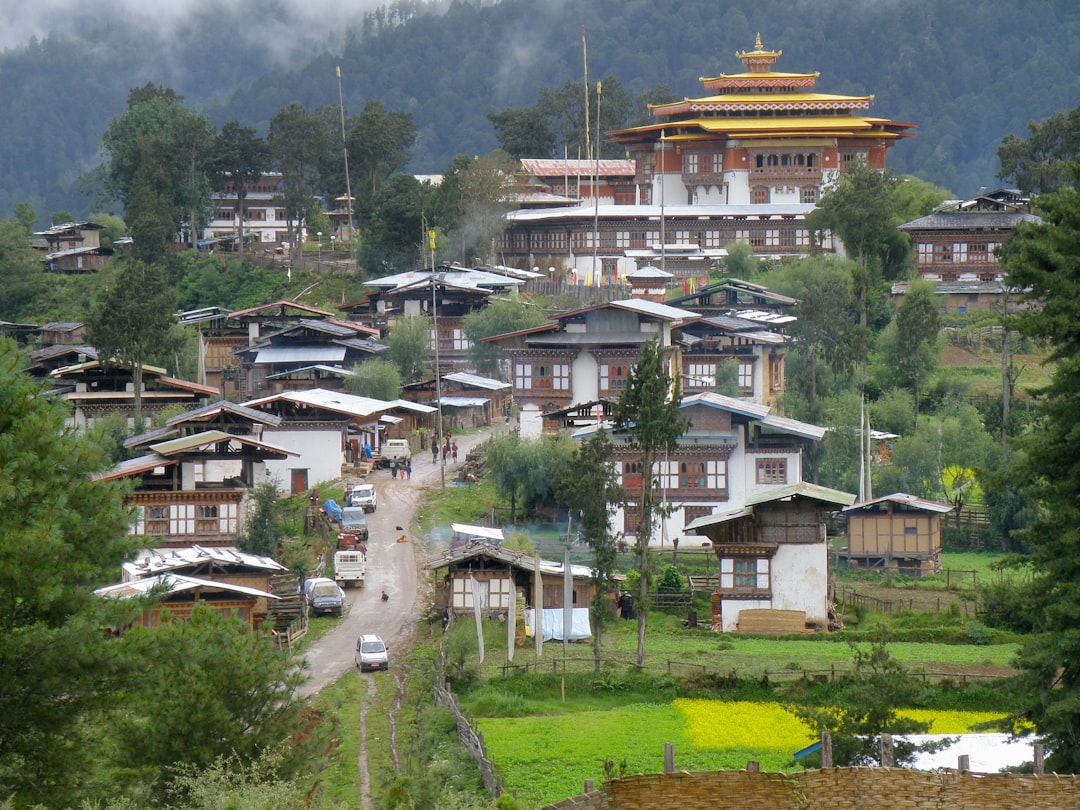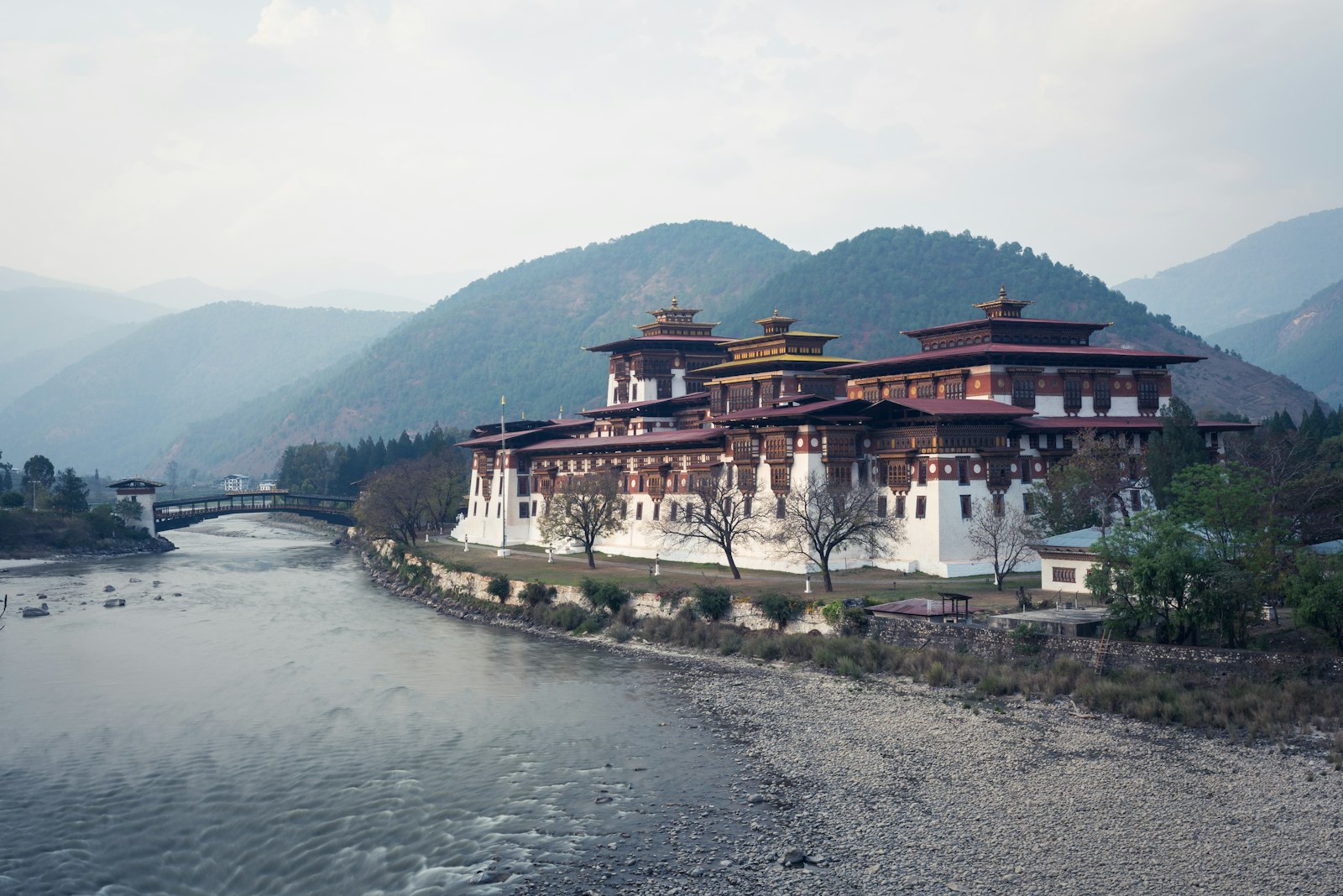
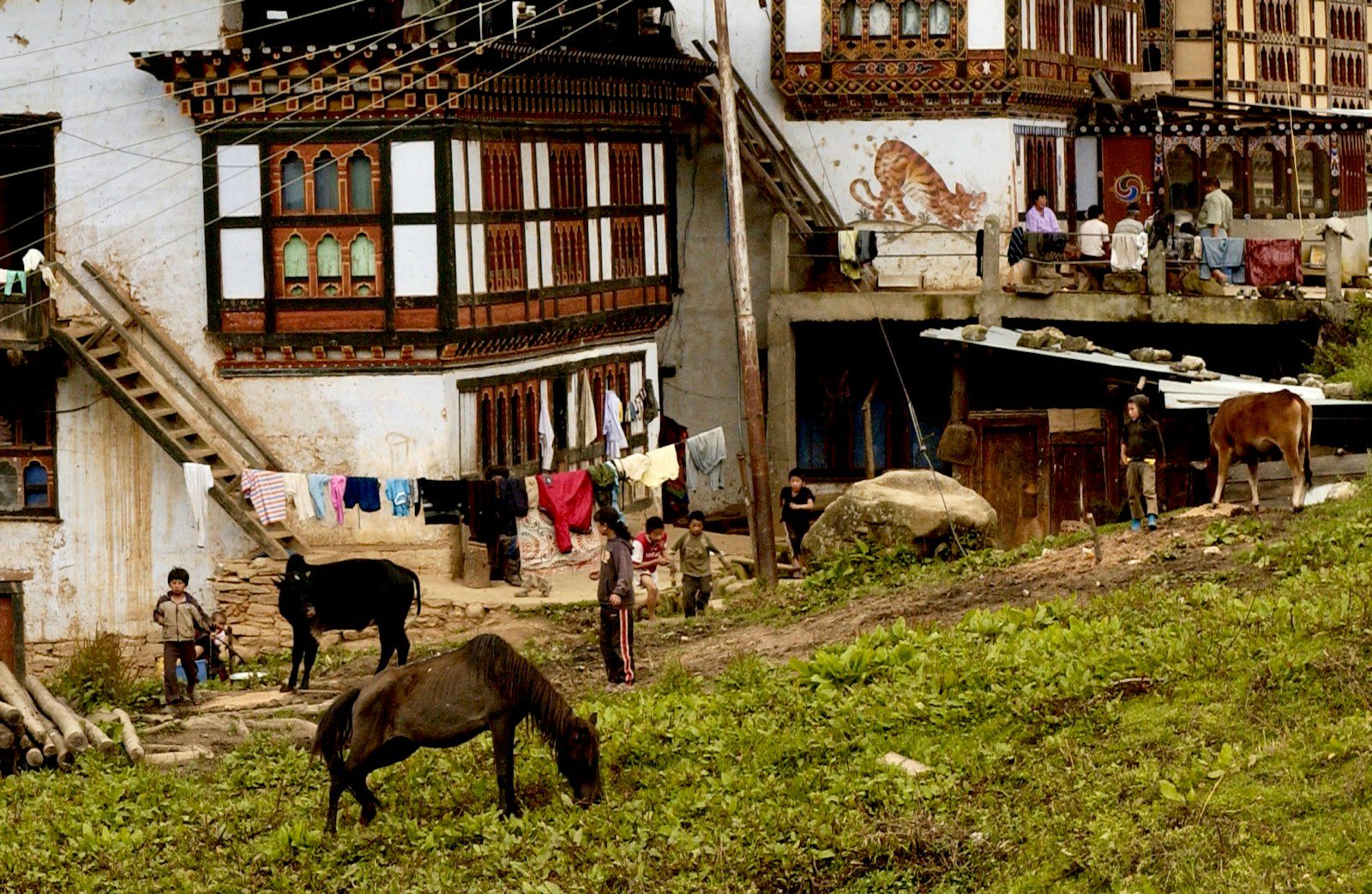
A farmhouse night in the Paro valley costs roughly USD 30 to 50 per person with dinner included, and the hot stone bath that usually comes with it is the single thing most travellers remember from a Bhutan trip. Both are arranged through your tour operator, because farmhouse stays are licensed, not booked online.
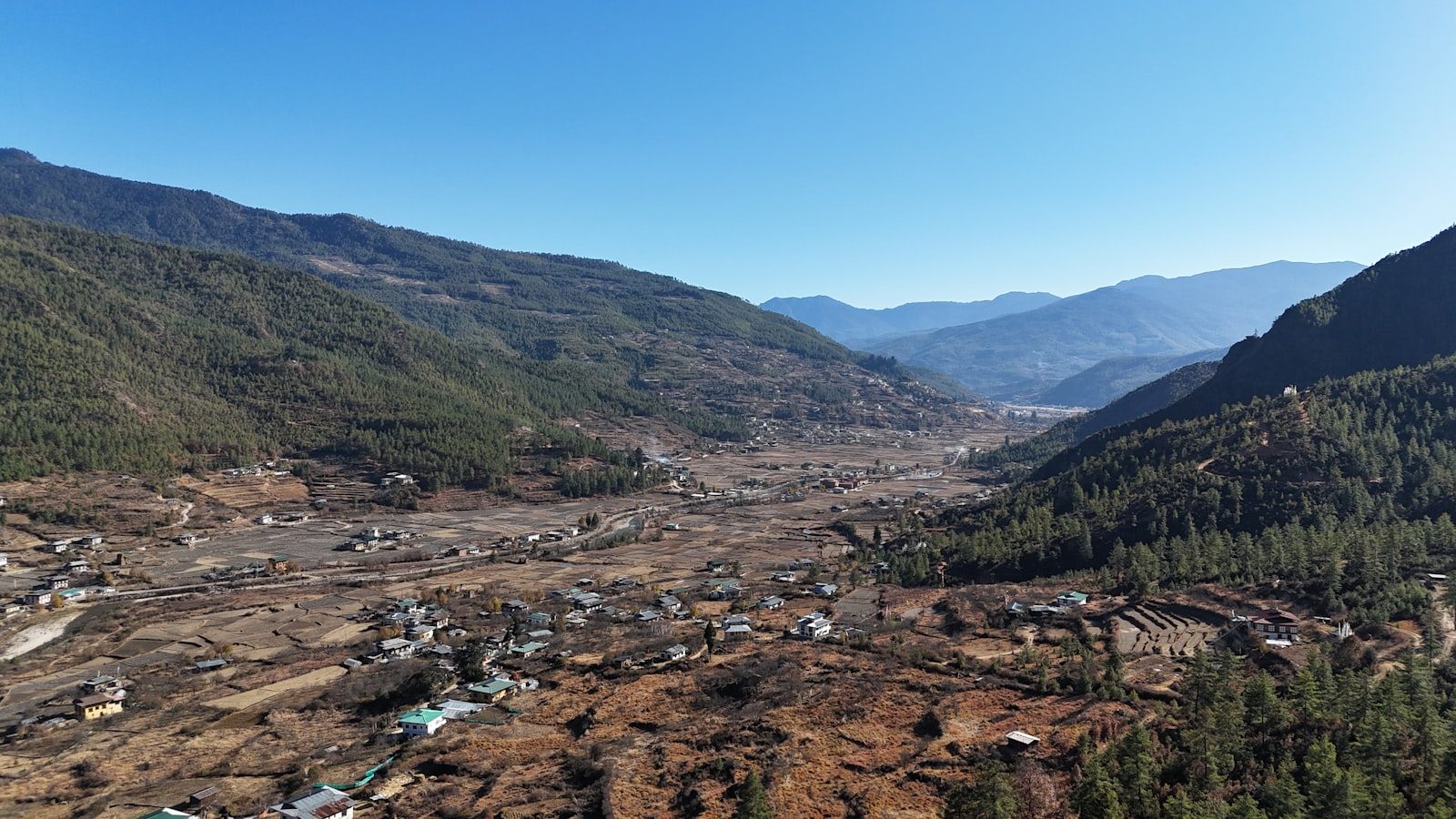
The valley sits at 2,235 m. In autumn the roofs are covered in drying red chillies, which is not a picturesque detail but a practical one: that is the winter supply going up.
What is a hot stone bath, actually?
River stones heated in an open fire until they crack, then dropped into a long wooden tub of water and wild artemisia leaves. The tub is usually pine, built for one person lying flat, with a slatted partition at one end so the stones go in without touching you.
The mechanics matter because they explain the experience. The water starts warm and gets hotter as more stones go in, so the bath is a gradient rather than a temperature — you tell whoever is tending the fire when to stop. It holds heat for about an hour, which is roughly how long you will want to be in it.
The artemisia — khempa in Dzongkha — is the local mugwort, added fresh, and it is what gives the water its smell. Bhutanese households use the bath medicinally, for joint pain and after heavy work, and it is genuinely good for tired legs after a long climb.
Two practical notes. The bath is usually outdoors or in a lean-to, so you dress and undress in cold air, and it is worth having the towel and warm clothes to hand. And it is a single-occupant tub, so a family or a group takes turns; ask how many baths the house can run in an evening before you plan around it.
What is the farmhouse itself like?
Traditional Bhutanese construction: rammed-earth or stone walls a foot thick, timber frame, and a pitched shingle roof set slightly above the walls so air moves through the gap. Historically the ground floor held livestock and the family lived above; most houses that take guests have converted the lower floor to rooms.
Expect:
- A simple room with a bed, a window and not much else. Some have a private bathroom, many share.
- A bukhari — a metal wood stove — in the living room, and often not in the bedroom. It is lit in the evening and out by dawn, so nights are cold from November to March.
- Electricity and hot water, usually, though the water is on a solar or wood-fired system and its enthusiasm varies.
- Patchy mobile signal and slower wifi than a hotel, which is part of the appeal and occasionally not.
- A choesum, the household altar room, which is the best-maintained room in any Bhutanese house. You may be shown it. Take your shoes off and do not photograph it without asking.
If you need consistent heating, a private bathroom and reliable connectivity, take a hotel and do a farmhouse dinner and bath without staying the night. That is a normal arrangement and no operator will find the request strange.
What do you eat?
The household meal, which is not the hotel buffet version of Bhutanese food.
Red rice — the short-grain Bhutanese variety grown in the terraces you drove past — with two or three curries. Ema datshi, chilli and cheese, is the national dish and it is properly hot; the kitchen will make a milder version if you ask, and asking is normal. Kewa datshi is the potato-and-cheese one, shamu datshi the mushroom, shakam paa dried beef with chilli.
To drink: suja, butter tea, which is salty and takes some adjusting to, or ngaja, sweet milk tea, which does not. Ara, the home-distilled spirit, appears after dinner and is stronger than it looks.
Dinner is early, around 19:00, and the household goes to bed not long after. What to eat in Bhutan covers the whole cuisine.
Where does the farmhouse night go in an itinerary?
After the climb, not before.
The Tiger's Nest is a 900 m ascent and takes most people four to five hours return. A hot stone bath that evening is close to the perfect end to it. The same bath the night before means a poor night's sleep and stiff legs at the trailhead. The Tiger's Nest guide has the climb in detail.
On a five-night trip the shape that works is: two nights Paro, one Thimphu, one Punakha, then back to Paro with the climb on the second-to-last day and the farmhouse that night. The 5D4N itinerary sets that out properly.
And do not climb on the day you land. Paro is at 2,235 m and you arrived from sea level in three and a half hours; how to acclimatise explains what that actually feels like.
What else is in the valley worth an afternoon?
Three things, none of which needs a full day.
Drukgyel Dzong, at the head of the valley, was built in 1649 to commemorate a victory over Tibetan forces and burned down in 1951. Restoration began in 2016 and the ruin has been progressively rebuilt since. On a clear morning Jomolhari (7,326 m) stands behind it.
Kyichu Lhakhang, one of the oldest temples in Bhutan, with a core dating to 659 CE and two orange trees in the courtyard that fruit year round. Go early, before the vehicles.
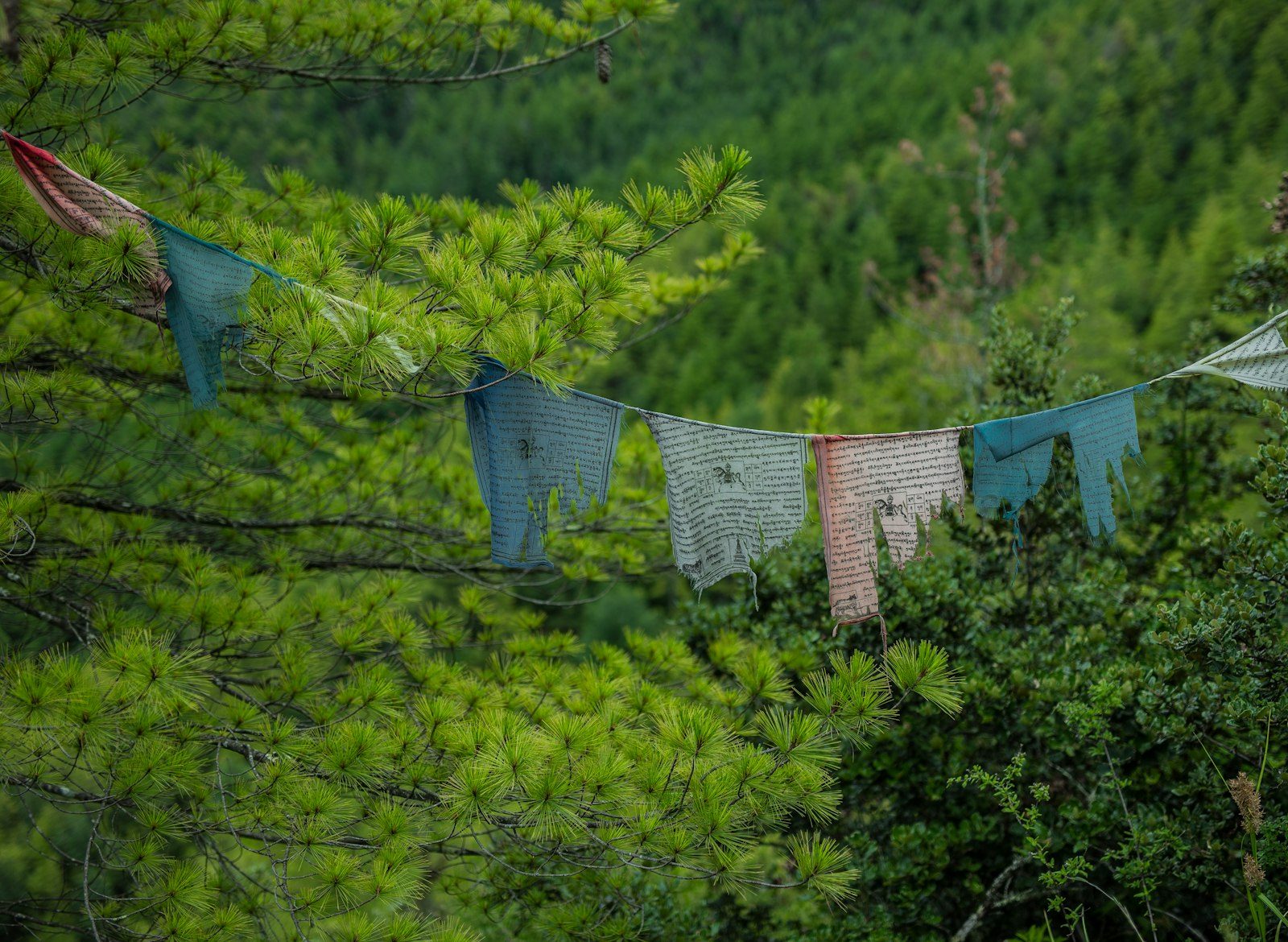
The upper valley lanes, on foot. Prayer flags across streams, roadside chortens, and farmers who will point you at the next temple. Vertical flags are darchor, the horizontal strings are lungdar, and a set of 108 is usually raised for someone who has died — worth knowing before you photograph them.
What should you pack for a farmhouse night?
Short list, and it is different from the rest of the trip.
- A warm layer for indoors, not just outdoors. The bukhari heats one room and the bedroom is not it.
- Thermal base layers or thick socks from November to March. The bed will have enough blankets; your feet are the problem.
- Flip-flops or slides for the walk between the bath and the house, which is usually across a yard.
- A head torch. Outdoor lighting is minimal and the yard is uneven.
- Any medication you take, since the nearest pharmacy is in Paro town.
- A small gift if you would like to — fruit, or something from Bangkok — handed over at the start rather than left behind.
Leave the hairdryer and anything that needs a stable socket. The full Bhutan packing list covers the trip as a whole.
How do you behave in someone's house?
Bhutanese hospitality is not staged for visitors, and the etiquette is straightforward.
- Accept the tea. Refusing is the one thing that lands badly. You do not have to finish it.
- Take your shoes off indoors, and your hat off inside any temple or altar room.
- Walk clockwise around chortens, prayer wheels and temple interiors.
- Do not point your feet at the altar or at an elder while sitting.
- Ask before photographing people, and expect to be asked to put the camera away in the altar room.
- Tipping is not expected and is not refused. If you want to give something, a contribution handed to your guide for the household is the least awkward route.
When should you do this?
September to November is harvest: chillies on the roofs, rice being cut in the terraces, clear skies, and the busiest and most photogenic version of the valley.
March to May is spring — blossom, longer light, warmer evenings, and the second-best time to be outdoors here.
December to February is cold and very clear, the cheapest season, and honestly the best time for a hot stone bath. Nights in a farmhouse are genuinely cold, so this is the season to ask about extra blankets rather than assume them.
June to August is the monsoon. Green, quiet, muddy, and the mountains mostly hidden. The month-by-month guide has the full picture.
Ask for it by name
Farmhouse nights are not a line item on a booking site. Send your dates through Book & Hold and say you want one, and we return a written quote with the property named and the bath on a night that makes sense.
Published Bangkok–Paro return economy fares start from THB 31,869 including taxes and surcharges at the time of publishing. On top of the fare, Bhutan charges the Sustainable Development Fee of USD 100 per adult per night, held at that concessionary rate through 31 August 2027, plus a one-off USD 40 visa. Fares are quoted in Thai baht, per person, and start from the figure shown. Fares, seats and availability are confirmed in writing by OMG Experience, the appointed General Sales Agent for Bhutan Airlines in Thailand, before ticketing.