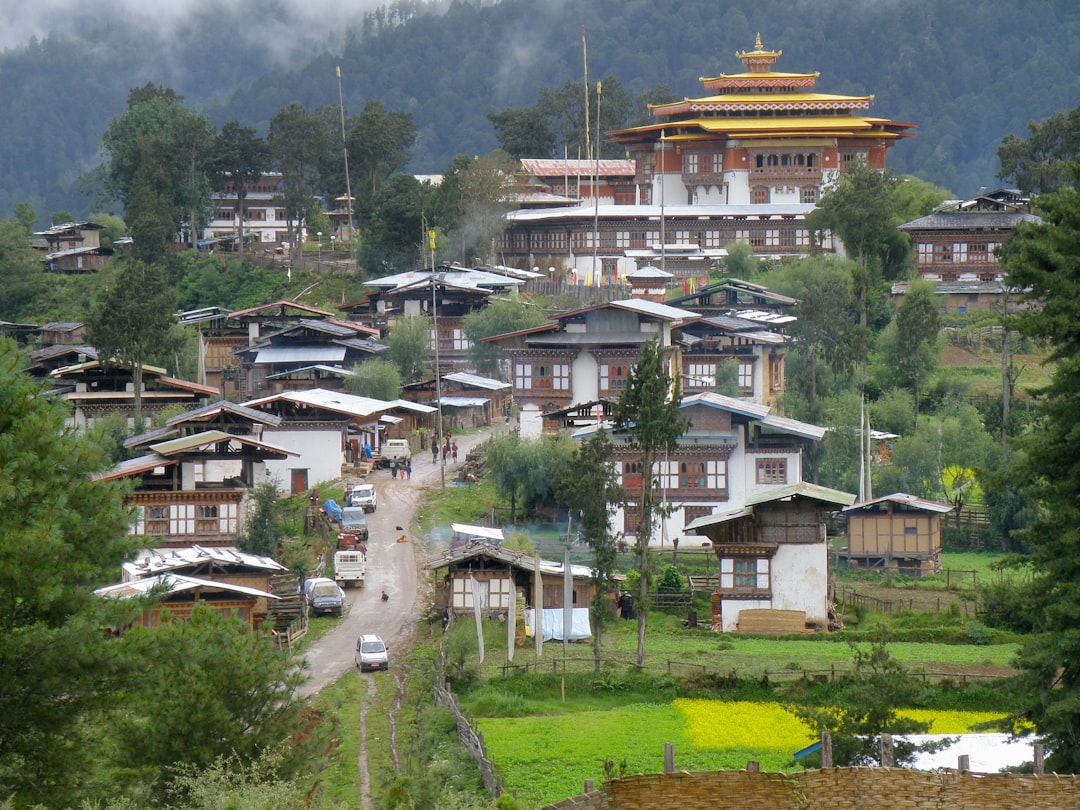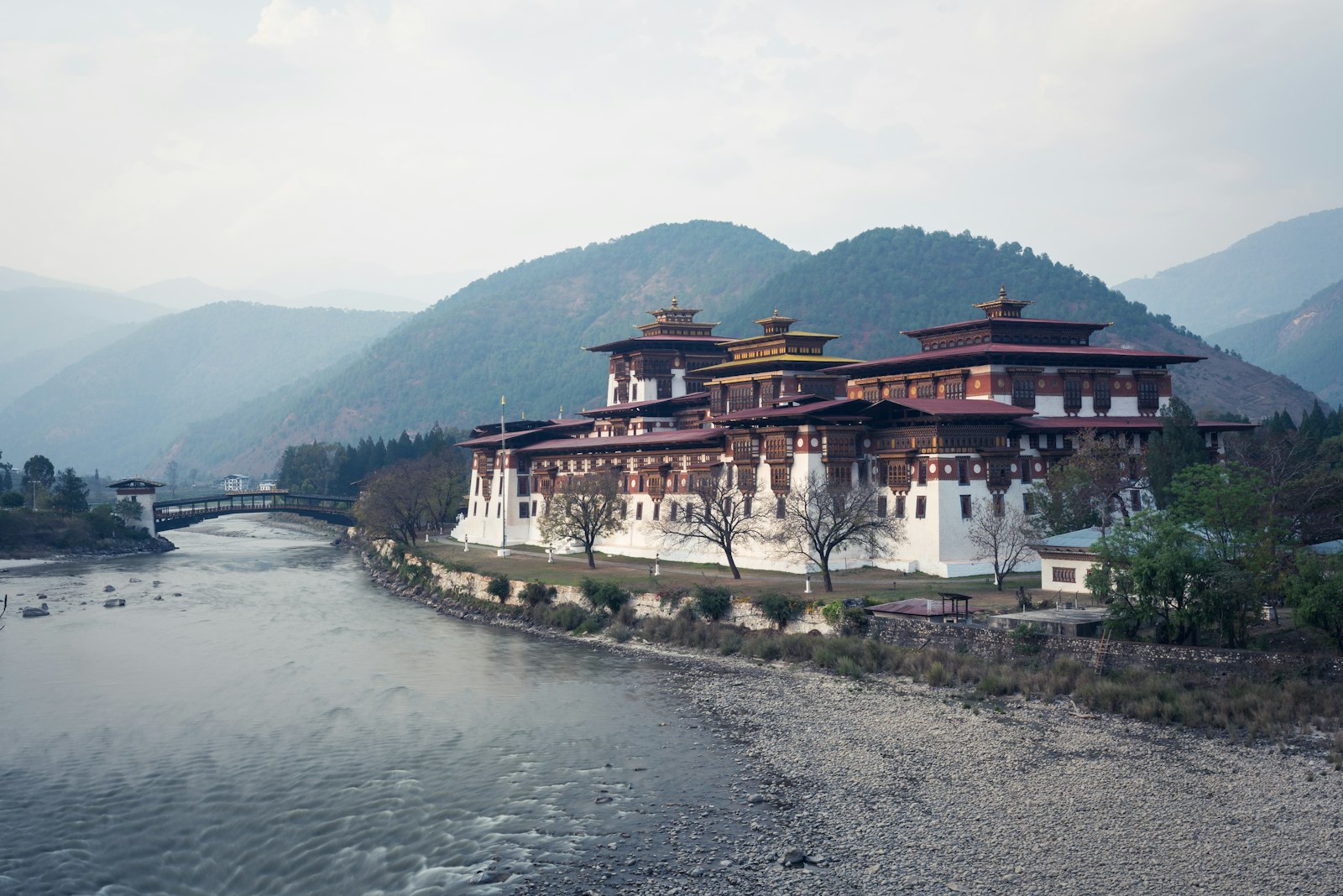
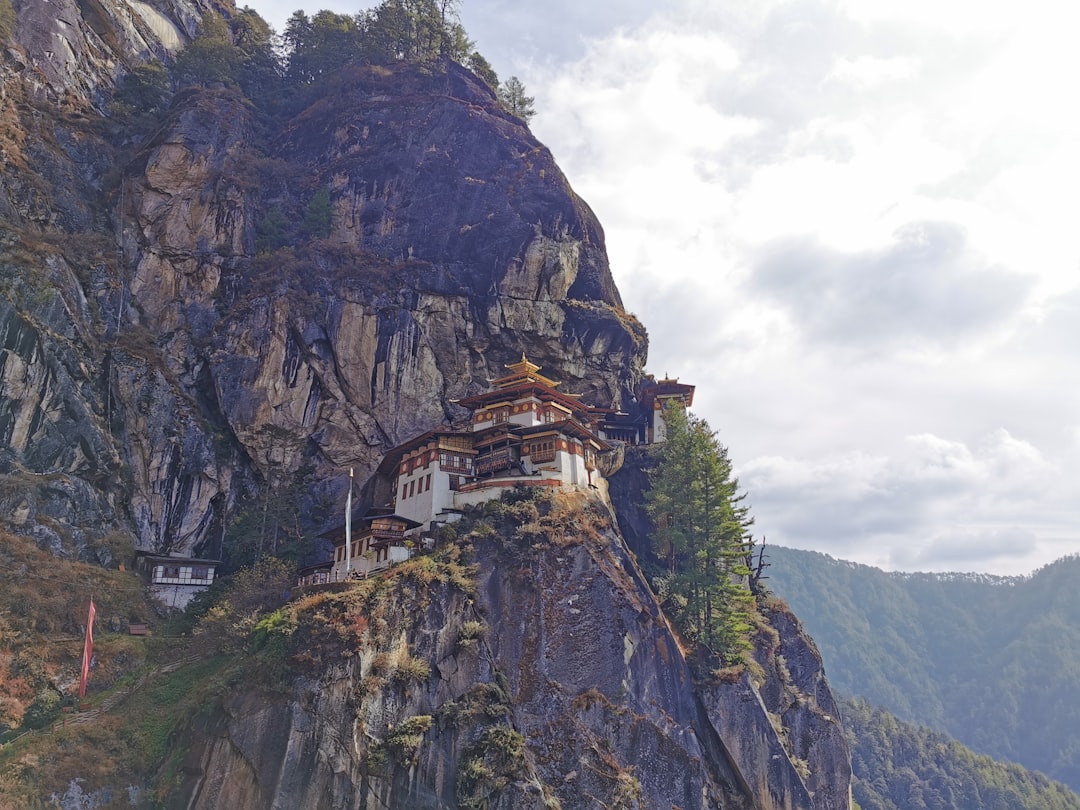
Paro Taktsang — the Tiger's Nest — sits on a cliff about 900 m above the Paro valley floor, at roughly 3,120 m. The hike from the car park takes most people four to six hours including time inside, and the difficulty is altitude rather than technical ground. There is one genuinely awkward section: a descent of about 100 m of stone steps into a gorge near the end, and the climb back up to the monastery door.
It is the one thing almost every visitor to Bhutan does, and the one most often underestimated — usually by fit people who assume that a walk with no scrambling cannot be hard. At this altitude, it can be. This guide covers what the climb actually involves, stage by stage, what to carry, when to go, and how to fit it into a trip so that you enjoy it.

Where is Tiger's Nest, and why does everyone hike it?
Taktsang Palphug is about 10 km north of Paro town, a short drive up the valley from the airport. The monastery clings to a granite cliff with a sheer drop beneath it, and the walk is the only way in.
Its significance is not architectural. Guru Rinpoche is held to have flown to this cliff on the back of a tigress in the eighth century and meditated in the cave the monastery was later built around — which is why the site sits at the centre of Bhutanese Buddhism rather than merely on its tourist trail. The buildings you see are largely a careful reconstruction following a fire in 1998.
So the hike is a pilgrimage that visitors are welcome to join, and the atmosphere reflects that. You will pass Bhutanese families climbing it as an act of devotion, often faster than you.
How hard is the Tiger's Nest hike?
Moderately hard, and hard in a specific way that catches people out.
The gradient is steady rather than brutal, the path is a wide dirt trail for most of its length, and there is no exposure or scrambling — nothing that requires a head for heights beyond ordinary comfort near a railing. What makes it work is the air. You start at about 2,600 m and finish near 3,120 m, and at that altitude most visitors from Bangkok are breathing perhaps 30% less oxygen per breath than at home.
The honest description is a long uphill walk that feels harder than the same walk at sea level, followed by a stair section that hurts the legs on the way back. A reasonably active person with no altitude problems will find it satisfying rather than gruelling. A very fit person who arrived yesterday and skipped breakfast may struggle, and that ordering matters more than gym hours.
Timings to plan against, one way:
| Stage | Ascent | Typical time |
|---|---|---|
| Car park to cafeteria | about 350 m | 45–75 minutes |
| Cafeteria to viewpoint | about 200 m | 30–45 minutes |
| Viewpoint to monastery, via the steps | down 100 m, up again | 30–45 minutes |
Add an hour at the monastery and a break at the cafeteria, and five hours car to car is a realistic plan. Nobody has ever regretted allowing six.
The route, stage by stage
Car park to the cafeteria. A broad, dusty, relentlessly uphill track through blue pine hung with lichen and prayer flags. This is the section where people go too fast in the first fifteen minutes and pay for it. Walk slower than feels natural. Horses use the same trail, so step to the inside when they pass.
The cafeteria. Roughly halfway by height, with tea, a toilet and the postcard view of the monastery across the gorge. This is where a good number of visitors stop, and it is a perfectly respectable place to stop — the view from here is the photograph you have seen. Be honest with yourself about the remaining hour.
Cafeteria to the viewpoint. Narrower path, more prayer flags, occasional steps, and the monastery growing steadily closer across the ravine. The gradient eases a little.
The steps. From the viewpoint the path descends around 100 m on stone stairs into the gorge, passes a waterfall and a small shrine, then climbs back up the far side to the monastery entrance. Going down is where knees complain; coming back out of the gorge at the end of the day is the hardest ten minutes of the whole hike. The steps are uneven and can be wet near the fall.
Inside. Bags, cameras and phones are left in lockers at the entrance — there is no photography inside. Shoulders and knees covered, hats off, shoes off in the shrine rooms. Allow proper time; the interior is the reason for the climb, and rushing it to make a lunch reservation is a poor trade.
What should you wear and bring?
Nothing technical, and less than you think.
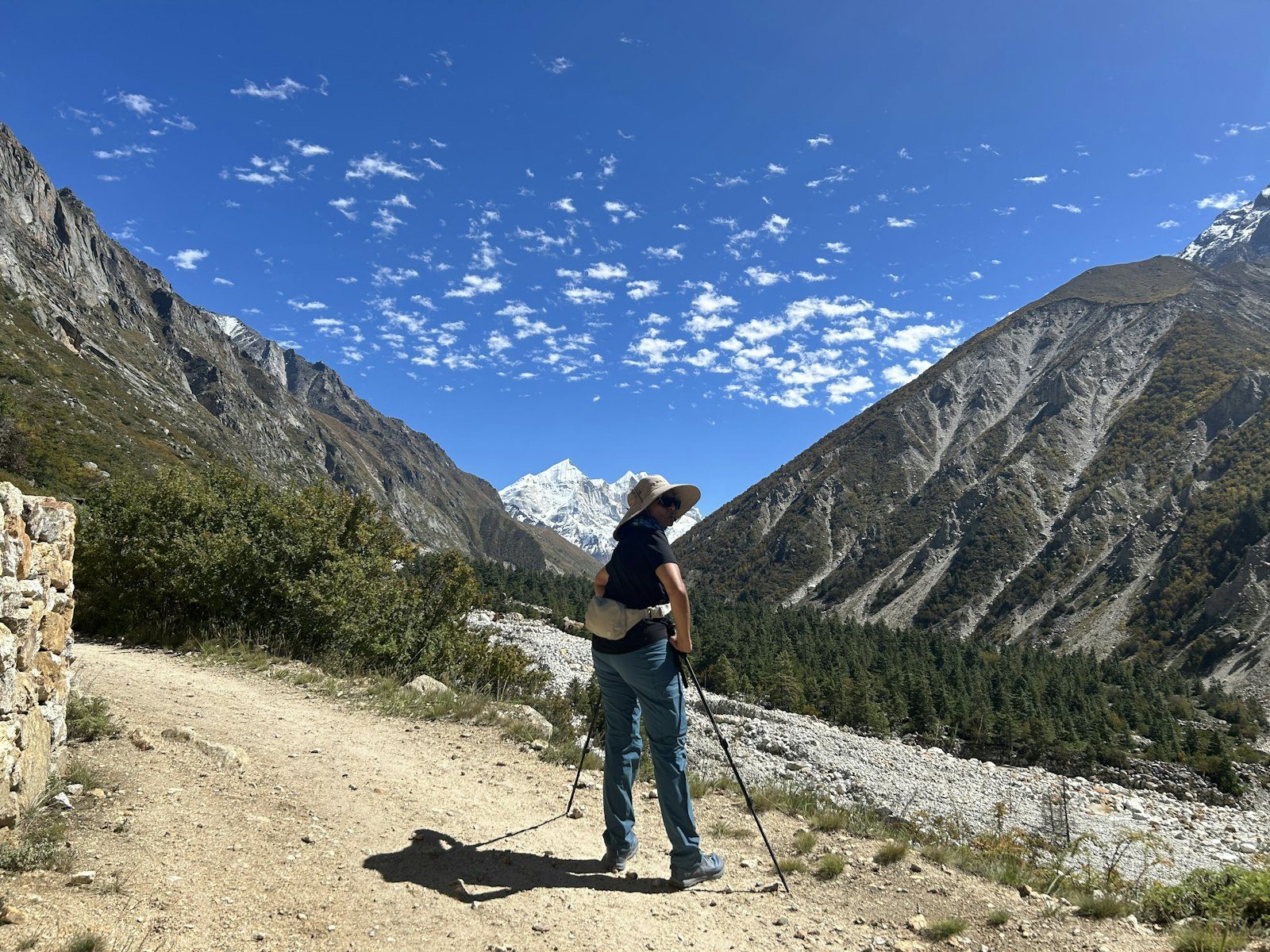
- Broken-in shoes with grip. Trail shoes or light boots. Not new, and not smooth-soled trainers on those steps.
- Layers. Cold at dawn in the car park, warm by mid-morning on the climb, cold again in the shade of the gorge.
- One to one and a half litres of water. More matters at altitude than in the same effort at home.
- Sun protection. Thin air at 3,000 m burns faster than Bangkok sun. Hat, sunglasses, sunscreen.
- Something to eat. Nuts, chocolate, fruit. The cafeteria is not a certainty for a full meal on your timing.
- A light shell, in any month. Weather changes quickly.
- Cash, in ngultrum, for tea and pony hire.
- A walking pole, if your knees have opinions. It earns its place on the steps.
Leave behind the tripod and the large camera bag: they go into a locker at the door anyway. The full seasonal kit list is in the Bhutan packing list.
When should you go, and at what time of day?
Start early. Be walking by 07:00 or soon after. You get cool air for the climb, softer light on the cliff, fewer people on the narrow sections, and a margin if you are slower than expected. Afternoon cloud is common and the monastery keeps its own visiting hours.
Best months: October and November first, for dry ground and clear air, then March to May. Winter is entirely feasible and often beautifully clear, but the steps can carry ice in the shade and an early start is colder than it sounds. The monsoon makes the trail muddy and slick and the cliff is often invisible in cloud — the view is the point, and in August it may not be there. The month-by-month guide to Bhutan sets out the wider trade-offs.
Note the monastery closes to visitors on some religious days, and hours shift seasonally. Your guide will know; this is one of the things a guide is genuinely for.
Do you need a guide, and can you ride up?
A licensed guide is required, as it is everywhere in Bhutan. That is a function of how the visa is issued rather than a rule about this trail specifically, as the Bhutan visa guide explains. In practice it is an advantage here: your guide sets a sustainable pace, knows the day's closures, and interprets what you are looking at inside.
Horses and mules can carry you as far as the cafeteria, arranged at the car park and paid locally. Two honest caveats. They go up only, not down, because descending steep trail on horseback is more dangerous than walking. And they cannot pass the cafeteria, so the second half — including the steps — is on foot regardless. Riding is a real help for someone who would otherwise not get to see the monastery at all; it is not a way to skip the hard part.
How does altitude affect the hike?
More than gradient does, and the fix is scheduling rather than fitness.
Paro town sits at 2,235 m, the trailhead near 2,600 m, the monastery near 3,120 m. Arriving from Bangkok at sea level, you are asking your body to work hard at an altitude it has not adjusted to. Mild breathlessness and a slower pace are normal. A headache, nausea or dizziness are not, and the response is to stop climbing rather than to push through.
The single most effective thing you can do is not hike Taktsang on your first day in Bhutan. Give yourself a day in the valley first — Rinpung Dzong, Kyichu Lhakhang, the National Museum — and do the climb on day two or three. Sleep, hydrate, go easy on alcohol the night before. How to acclimatise properly in Bhutan covers the symptoms worth knowing.
Most itineraries build it this way already, including the standard five-day, four-night Paro, Thimphu and Punakha route, which places the hike after a night or two at altitude.
Can you do it with children, or if you are not a hiker?
Often, yes, with the expectations adjusted.
Children who are used to walking generally manage it, and many reach the cafeteria happily and the monastery with encouragement and a long lunch afterwards. Very young children are carried, which is hard work at altitude. There is no minimum age and no barrier beyond stamina.
Older travellers do this hike constantly. The determining factors are knees on the steps and time, not age. If the full route is not realistic, the cafeteria is a genuine destination with the classic view, and a pony gets you there.
If any of that applies, say so when you book rather than on the morning. The itinerary can be shaped around a slower ascent, and it is a much better outcome than a rushed attempt.
What is actually inside the monastery?
Worth knowing, because visitors who treat the door as the finish line tend to spend ten minutes inside a place they climbed three hours to reach.
Taktsang is not one hall but a cluster of small temples and shrine rooms built into and around the cliff on several levels, linked by narrow stairs and passages. The heart of it is the cave in which Guru Rinpoche is held to have meditated. Interiors are dark, low, thick with butter lamps and juniper smoke, and often occupied by monks going about the day's rituals rather than arranged for viewing.
Expect to take your shoes off, to duck, and to move slowly in confined spaces. You may be offered blessed water. There is a small waterfall and shrine on the approach through the gorge that is easy to walk past and worth stopping at.
What there is not: photography of any kind inside, seating, or a route that lets you see everything quickly. Allow a genuine hour. The frequent regret we hear is not about the climb but about having booked lunch too early.
If the religious context interests you, the valley's other temples read very differently once you have seen this one — the first-timer's guide to Paro covers Kyichu Lhakhang and Rinpung Dzong.
How should you prepare in the weeks before?
Nothing heroic, and the useful preparation is specific rather than general fitness.
Walk uphill, with a load. Stairs, a footbridge, a treadmill on incline — twenty to forty minutes, two or three times a week, for a month. Continuous ascent is the thing the hike asks for and the thing a flat run does not train.
Wear the shoes you will use. At least two or three long walks in them. Blisters on the descent are the most common preventable misery on this trail.
Look after your knees. The 100 m of steps punishes untrained quads on the way down. If you know your knees are a weak point, bring a pole and use it from the top of the steps rather than after they start hurting.
Do not try to pre-acclimatise in Bangkok. It is not possible at sea level. The only lever you have is the order of your days in Bhutan.
Sleep, and skip the drinks the night before. Altitude amplifies dehydration, and a mild hangover at 3,000 m is a different experience from one at sea level.
What does the hike cost?
Very little on the day, because most of it sits inside your land arrangements.
Monument entry is normally included in a licensed land package — confirm that Taktsang specifically is on the list when you get your quote, since it is the one people ask about afterwards. Your guide and vehicle are already covered.
Payable locally, in ngultrum cash: pony or mule hire to the cafeteria, tea and snacks at the cafeteria, and any offering you choose to leave inside. Tips for your guide are customary at the end of the trip rather than for this walk alone. Card acceptance on the mountain is nil, so bring notes — how money works in Bhutan covers what to carry and why the ATMs are unreliable at festival time.
What if you cannot do the full hike?
There are three honest options, and none of them is a wasted day.
Ride to the cafeteria and stop there. You get the view that appears on every poster, the atmosphere of the trail, and a shorter walk down. Many visitors do exactly this by choice.
Walk to the first viewpoint and turn back. Even thirty or forty minutes up the trail gives you the pines, the prayer flags and a first sight of the monastery across the valley.
Choose the valley instead. Rinpung Dzong, Kyichu Lhakhang, the National Museum in the old watchtower and the ruins at Drukgyel Dzong make a full and genuinely rewarding day at valley altitude with no climbing at all. The first-timer's guide to Paro sets out that day.
Tell us at booking rather than on the morning, and the guide and vehicle are planned around it.
What do people get wrong?
Scheduling it for day one. The most common error and the most avoidable.
Starting late. A 10:00 start means climbing in full sun and descending tired in the afternoon.
Wearing new shoes. The steps find every flaw in unfamiliar footwear.
Carrying too much. Everything except water and a jacket goes into a locker anyway.
Assuming the cafeteria is the monastery. It is the halfway viewpoint. Know which one you are aiming for.
Booking a departing flight for the same afternoon. Do not. The hike takes the morning, the drive takes time, and Paro's weather does not consult your plans.
Build the hike into your trip
Every one of our Bhutan packages places Taktsang after time to acclimatise, on a morning rather than squeezed against a flight. Send your dates through Book & Hold and we will hold seats and return one written quote covering flights, SDF and visa.
Fares are quoted in Thai baht, per person, inclusive of taxes and surcharges at the time of publishing, and start from the figure shown. Fares, seats and availability are confirmed in writing by OMG Experience, the appointed General Sales Agent for Bhutan Airlines in Thailand, before ticketing.