Bodh Gaya is where the Buddha attained enlightenment, and the Mahabodhi Temple — a 50 m brick tower beside a descendant of the original Bodhi tree — is its centre. It is the holiest of the four great pilgrimage sites and a UNESCO World Heritage Site since 2002. Bhutan Airlines serves Gaya (GAY) seasonally, about 20 minutes by road away.
Go at first light. The complex opens around 05:00, and the two hours before the coach groups arrive are quiet, cool and the reason people come back.
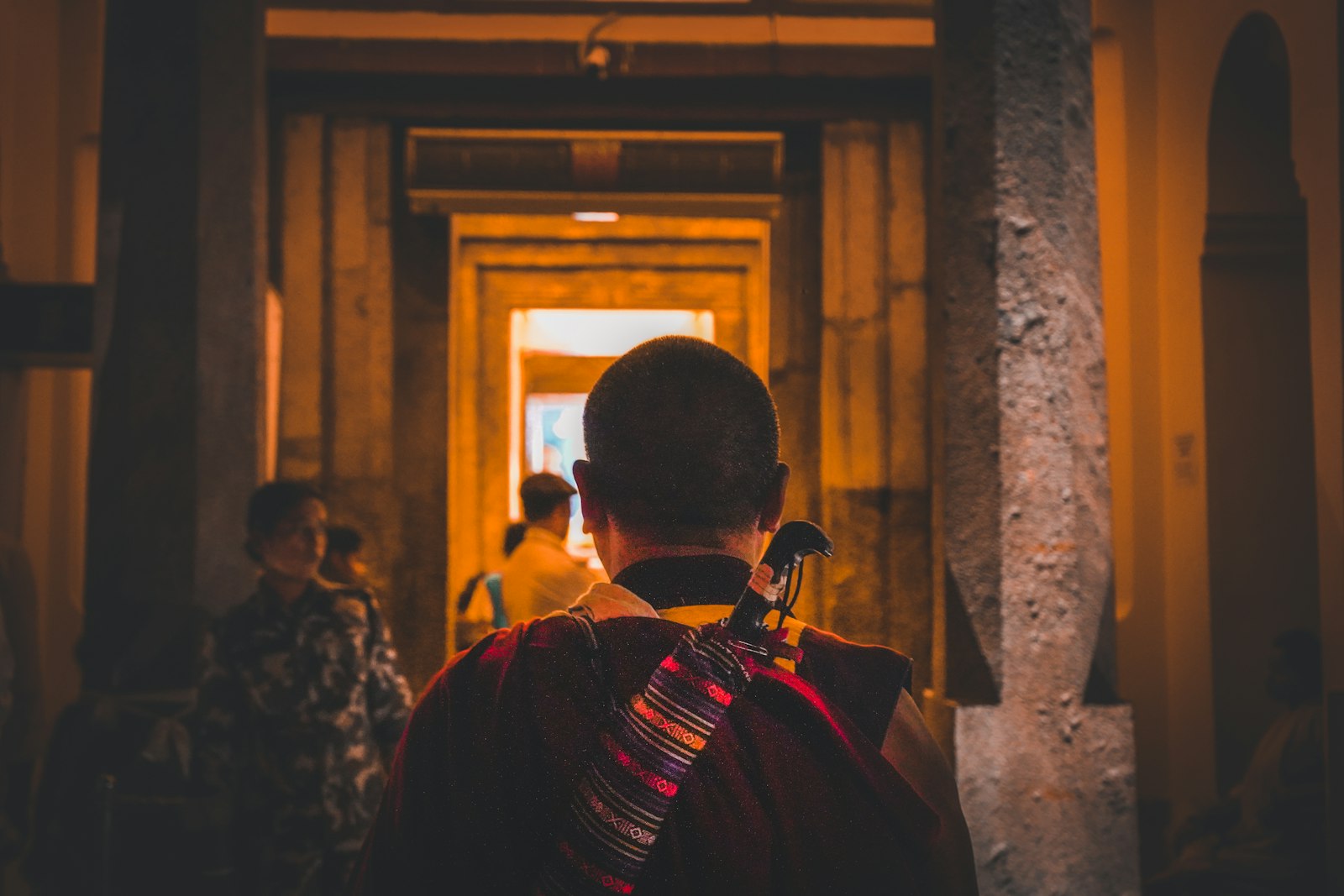
What can you actually take inside?
This is the practical thing nobody tells first-time visitors, and it costs groups half an hour at the gate.
Mobile phones are not permitted inside the inner complex. Security has been tight since the 2013 explosions, and the rule is enforced. There are paid cloakrooms and lockers immediately outside the main entrance where you leave your phone, and a separate small camera fee if you want to bring a camera in. Bags are searched.
Practically: carry your passport copy, water, and either a camera with a ticket or nothing. Leave the phone at the hotel or in the locker, and decide which before the group arrives rather than in the queue.
Shoes come off before the inner complex. There is a shoe deposit, and the stone gets hot from late morning, which is one more argument for the early start.
When is the best time to come?
November to February is the cool, dry season and the one to plan for. Mornings sit around 8 to 12°C in December and January — genuinely cold at dawn, which surprises groups arriving from Bangkok — and afternoons are comfortable in the low twenties. It is also the busiest season, because it is when the Tibetan Monlam gatherings and most organised pilgrimages happen.
March and October are warm but workable. April to June reaches 40°C and above in Bihar and is the reason the India e-Visa fee drops in that window. July to September is the monsoon: green, humid, and much quieter.
If your group can only travel in the hot months, front-load everything into the first three hours of daylight and rest in the afternoon. That is how local practice works, and fighting it does not go well.
What do you actually see in the complex?
More than most visitors realise, because the eye goes to the tower and stops there.
- The Mahabodhi Temple itself. The present brick structure dates to the 5th to 6th century CE, on a site Emperor Ashoka marked in the 3rd century BCE.
- The Bodhi tree on the western side, descended from the tree the Buddha sat beneath.
- The Vajrasana, the polished sandstone slab Ashoka placed to mark the exact seat of enlightenment. It sits between the tree and the temple wall and is easy to walk past.
- The seven sacred spots, one for each of the weeks the Buddha is said to have spent nearby after enlightenment, including the Animeshlochana Chaitya where he stood gazing at the tree, and the Muchalinda lake with its cobra-sheltered image.
- The circumambulation paths, inner and outer. Walk them clockwise.
- The votive stupas, hundreds of them, left by pilgrims over roughly fifteen centuries.
Sitting is the point rather than walking. There is space on the lawns and under the tree, and nobody will hurry you.
How should you dress and behave?
Shoulders and knees covered, for men and women. Shoes off inside the inner complex. Walk clockwise around the temple and the stupas. Keep your voice low, and do not step over or in front of someone who is prostrating or meditating.
Photographing monks and nuns needs asking first, every time — a nod is enough, and it is almost always given.
Thai groups will find the etiquette familiar. The differences worth flagging are that the tree and the Vajrasana are railed off and you do not touch them, and that offerings are made at designated points rather than anywhere you like.
Beyond the Bodhi tree
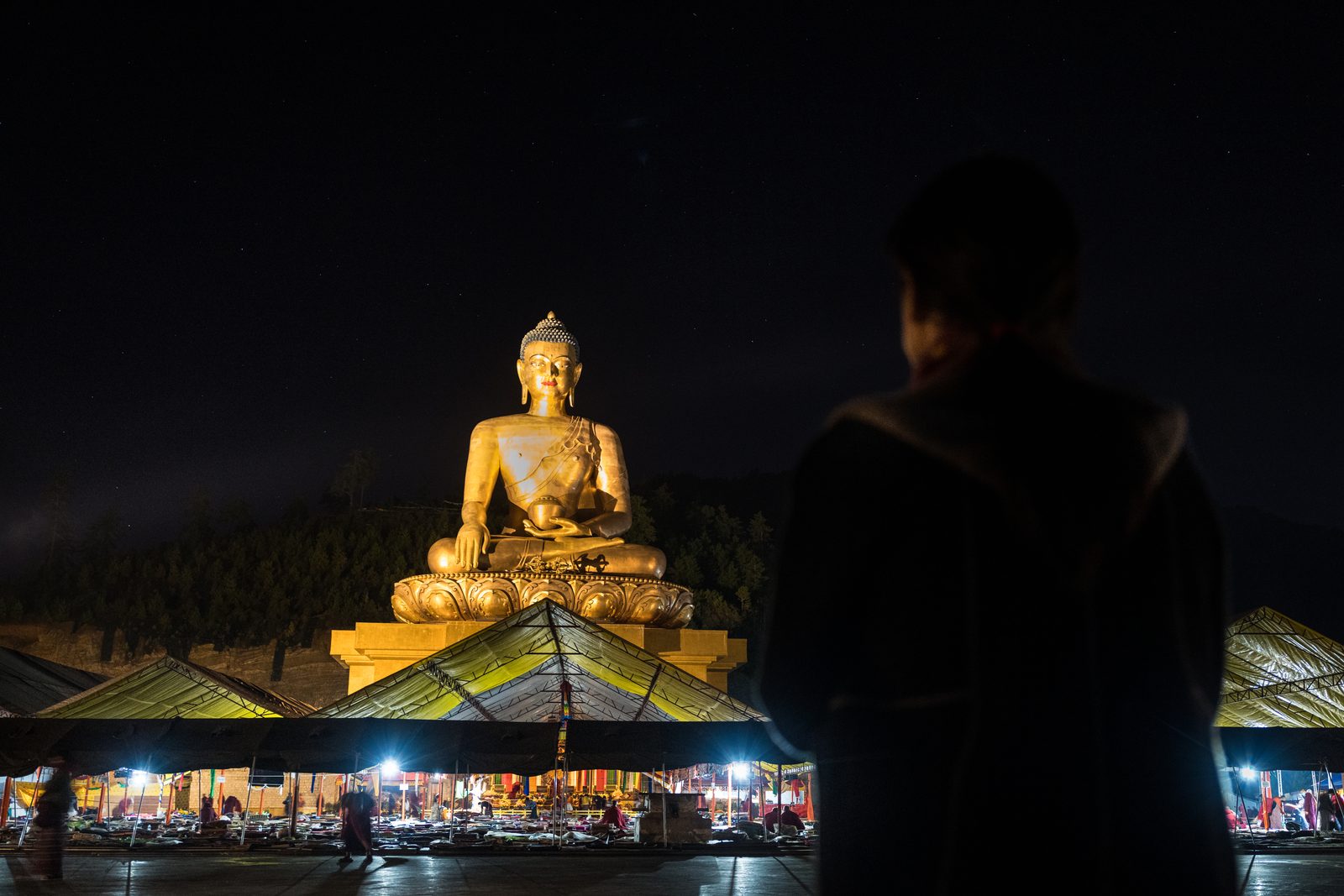
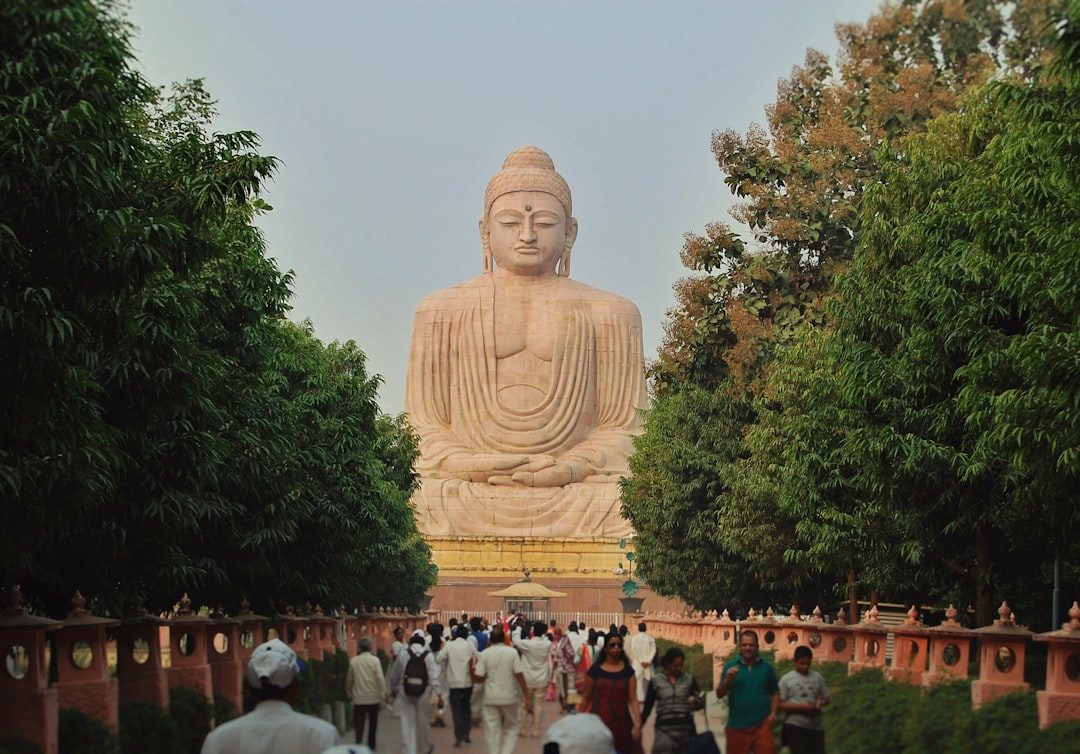
The Great Buddha statue, a 25 m sandstone and granite figure unveiled in 1989, is a fifteen-minute walk from the temple and worth the detour. The ring of international monasteries around it is the other half of Bodh Gaya, and the monasteries of Bodh Gaya covers that walk in detail.
Further out, with a car and a half day:
- Dungeshwari caves, about 12 km, where the Buddha is said to have practised austerities before abandoning them.
- Sujata Stupa, across the Falgu river, marking the village of the woman who gave him the rice-milk that ended his fast.
- Rajgir and Nalanda, 70 and 90 km away, which together make a long but rewarding day — Vulture's Peak, the hot springs, and the excavated ruins of the university.
What is the rhythm of a day there?
Worth knowing, because the complex feels like a different place at different hours and most groups only see one of them.
05:00 to 08:00. Gates open, the air is cold, and the people present are almost all here to practise. Chanting starts in several languages at once around the tree and the inner shrine. This is the hour that people describe afterwards.
08:00 to 11:00. Coaches arrive, the queue at the cloakroom lengthens, and the outer path fills. Still good, considerably busier.
11:00 to 15:00. Hot, bright and thin. Most monastery halls close, the stone is uncomfortable underfoot, and this is the window to eat and rest rather than push through.
15:00 to 18:00. The light drops, groups come back, and the monasteries reopen. A good stretch for the walk outside the complex.
18:00 to 21:00. Butter lamps and electric light, chanting again, and the temple lit from below. The complex closes around 21:00. If you only get one visit, take the dawn; if you get two, take dawn and last light.
What happens during the big gatherings?
Three that reshape the town, and one that raises hotel prices for a month.
The Tibetan Monlam prayer festivals run from December into February, drawing thousands of monks and lay practitioners from across the Himalaya to Tergar and the other Tibetan foundations. The town is at its most alive and its most full.
Teachings by His Holiness the Dalai Lama at the Kalachakra ground happen in some winters and not others. When they do, accommodation across Bodh Gaya sells out and rates rise sharply, so it is worth confirming before you fix dates.
Buddha Purnima, the Vesak full moon in May, is the anniversary of the enlightenment itself and is observed at the temple with processions and lamps. It falls in the hottest month, which keeps the crowds smaller than winter but makes the middle of the day unusable.
Thai groups often travel for Tipitaka chanting ceremonies hosted at Wat Thai Buddhagaya, which cluster in the cool season. If your programme is built around one, book flights before hotels: the seats go first.
How many nights do you need?
Two nights covers the temple properly and the monastery walk without rushing: arrive, temple at dawn on the full day, monasteries in the late afternoon, temple again at dawn before you leave.
Three nights adds Rajgir and Nalanda, or a second unhurried morning, which most people who have been say they would rather have.
Stay in Bodh Gaya itself, not in Gaya town. The temple is then a short walk away, which is what makes the dawn visit possible at all. There is accommodation from simple monastery guesthouses to a handful of comfortable hotels, and it fills months ahead for the Monlam and teaching seasons.
What about money, water and food?
Rupees only, and ATMs in Bodh Gaya are limited and occasionally empty in high season — draw cash at Gaya airport or bring some in. Cards work at the larger hotels and almost nowhere else.
Drink bottled or filtered water and be conservative for the first two days. Vegetarian food is easy to find, much of it aimed at pilgrims, and several monastery kitchens serve simple meals. Thai groups will find Thai food at and around Wat Thai Buddhagaya, which is a genuine relief on a longer programme.
Bring any medication you rely on rather than expecting to buy it. There are pharmacies, but not a reliable range, and the nearest substantial hospital is in Gaya rather than Bodh Gaya.
Getting there, and holding your dates
Bhutan Airlines flies Bangkok–Gaya (BKK–GAY) seasonally on the Airbus A320, in the pilgrimage window. Every fare includes 25 kg checked and 7 kg cabin baggage in economy, 30 kg in business, and a meal. You will need an India e-Visa first, and the step-by-step e-Visa guide has the timing.
Send your dates through Book & Hold. We hold seats free for 48 hours and return one written quote. Group fares start from THB 15,000 return per person for ten or more. Fares are quoted in Thai baht, per person, inclusive of taxes and surcharges at the time of publishing, and start from the figure shown. Fares, seats and availability are confirmed in writing by OMG Experience, the appointed General Sales Agent for Bhutan Airlines in Thailand, before ticketing.