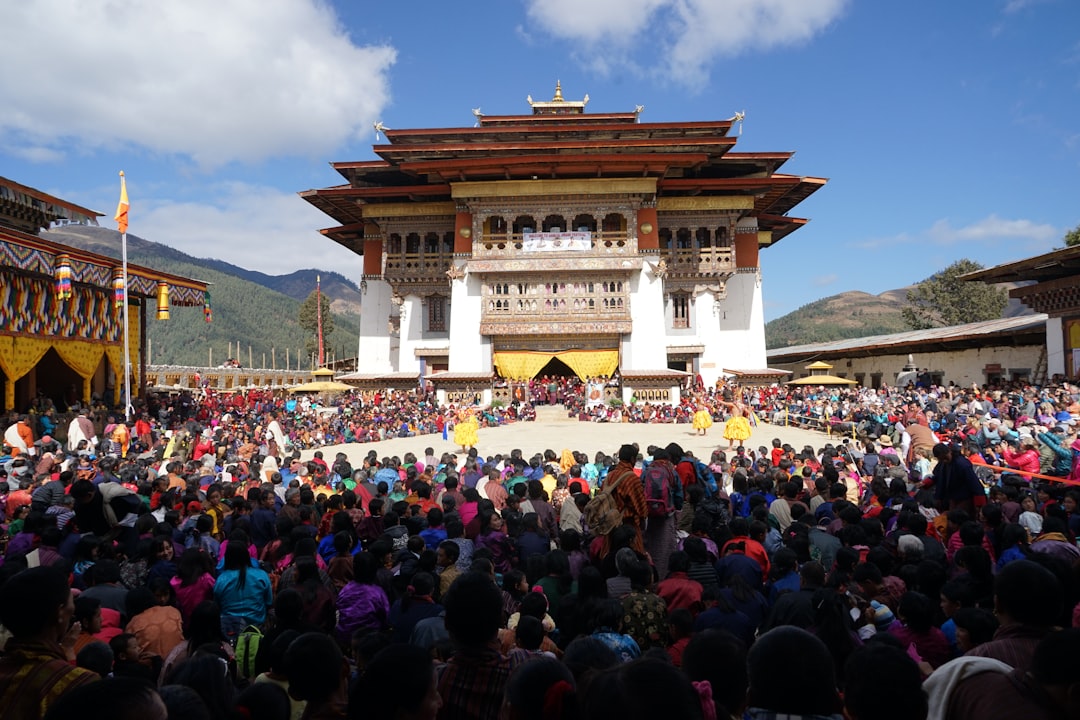
Paro Tshechu 2027 runs from 18 to 22 March at Rinpung Dzong in Paro, with the Thongdrel unveiled before dawn on the last day, 22 March. These are the Department of Tourism's tentative dates, set by the lunar calendar. The whole festival falls inside the confirmed USD 100 SDF window, and Bhutan Airlines lands in Paro mid-morning, so you can fly from Bangkok on the opening day.
When is Paro Tshechu 2027, and which day is the Thongdrel?
| Festival day | Date (tentative) | What it means if you fly from Bangkok |
|---|---|---|
| Day 1 | Thu 18 Mar | Opening day. On the 2026 schedule you'd land at 09:55 and reach the dzong by early afternoon |
| Day 2 | Fri 19 Mar | Arrival day if you leave Bangkok on the 19th |
| Day 3 | Sat 20 Mar | A good day for Thimphu, whose weekend market runs Saturday and Sunday |
| Day 4 | Sun 21 Mar | The Tiger's Nest day in our plan below |
| Day 5 | Mon 22 Mar | Thongdrel before dawn, then the final day of dances |
The Paro Dzongkhag administration describes the Thongdrel as a silver-embroidered image of Guru Rinpoche's eight manifestations and two consorts. It is carried in procession from the dzong to the festival ground at Deyangkha, unfurled at 3 a.m. so that it covers a three-storey building, and taken back to the dzong before sunrise.
Three smaller festivals, Talo, Gasa and Zhemgang Tshechu, run on 16–18 March. Talo Gonpa is in Punakha, so a six- or seven-day trip can take in Talo first and finish in Paro. Every other 2027 date is in the Bhutan festival calendar for 2027.
How crowded is Paro Tshechu, and how do you get a good spot?
Crowded, and most of all on the last morning. BBS describes the five days as drawing "thousands from in and around Paro, and tourists", and reports that thousands gather before dawn for the Thongdrel. Bhutanese families arrive in their best gho and kira, and for many of them this is a day of blessing first and an outing second.
What helps:
- Arrive before the dances start. Locals come early with something to sit on, and the places at the edge of the ground go first. Your guide will know where people from the valley sit and where visitors can stand without blocking anyone.
- For the Thongdrel, plan to be at Deyangkha well before first light. If it is unfurled at 3 a.m. and rolled up before sunrise, the window is a few hours in the dark and the cold.
- Don't stand in front of seated people, and never walk across the dance ground, even between dances. The dance ground is part of the ritual, not a stage, and Bhutanese spectators notice when visitors treat it as one.
- Bring cash. Festival days strain the cash machines in a small town. Small notes for offerings and snacks make the day easier.
What should you wear to the festival?
DoT says there are no rules on what visitors wear, but at places of religious significance, smart-casual clothing that covers you from shoulders to knees is appropriate and appreciated. A tshechu is held in and beside a working dzong, so dress for that:
- Long trousers or a long skirt, and a top with sleeves. A collared shirt is the safe choice.
- Closed shoes. The festival ground is dusty and you'll stand a lot.
- Take your hat off when you enter the dzong.
- Bring layers. Paro sits at 2,235 m, and the pre-dawn Thongdrel is the coldest part of the trip.
You don't need to wear a gho or kira. Some visitors do for the festival, and it's taken as a mark of respect when it's worn properly. If you'd like to, ask your guide in advance whether one can be arranged for the day rather than buying in a hurry.
Is photography allowed at the festival?
Generally yes, in the open festival ground, with limits:
- Ask your guide before photographing or filming inside the dzong's temples and chapels. In some places it isn't permitted.
- No flash during the dances, and never step onto the dance ground for a shot.
- Ask before close portraits, especially of monks and older people.
- Leave the drone at home. DoT says tourists are generally not permitted to bring drones into Bhutan, and flying one needs a permit obtained in advance.
The Thongdrel is shown in the dark and early light, which is hard on cameras. Follow your guide's lead on when it's appropriate to photograph it, and keep your phone screen dim while people are praying.
Can you combine Paro Tshechu with Tiger's Nest in one trip?
Yes, and on a five-day trip you should. Taktsang, the Tiger's Nest, is in the same valley. Entry is Nu 1,000, half price for ages 6 to 18 and free for 5 and under, under the DoT monument fee notice. Rinpung Dzong itself charges no entry fee.
Two rules for timing it. Don't climb on landing day: Paro sits at 2,235 m and the hike gains about 900 m, so give yourself a day or two to acclimatise first. And don't put it on the Thongdrel morning, when you'll have been up since the small hours. Horses for the trail must be booked in advance under a 2023 DoT rule, so tell us when you book if anyone in your party will need one.
What does a 5D4N Paro Tshechu trip from Bangkok look like?
Our suggested plan leaves Bangkok on Friday 19 March and returns on Tuesday 23 March. It includes the Thongdrel with a full day after it, so the early start doesn't collide with a flight. Flight times are from the 2026 schedule; recheck them against the 2027 timetable.
| Day | Date | Plan |
|---|---|---|
| 1 | Fri 19 Mar | B3 701 leaves Bangkok at 06:30 and lands in Paro at 09:55. Check in, lunch, afternoon at the festival. Night in Paro |
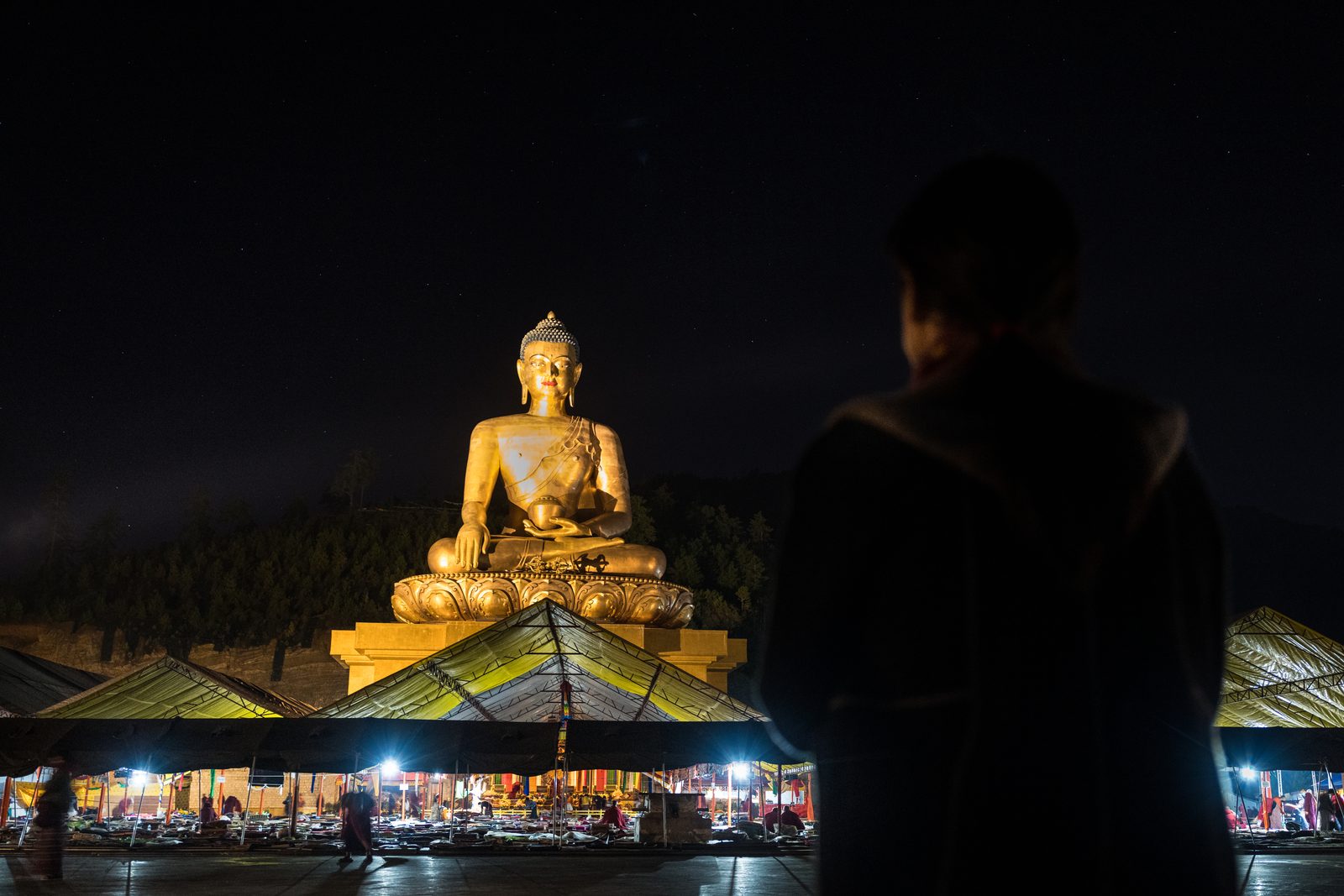
| 2 | Sat 20 Mar | Drive to Thimphu, 55 km and about 90 minutes. Buddha Dordenma, the weekend market, Tashichho Dzong. Night in Thimphu |
| 3 | Sun 21 Mar | Early drive back to Paro and the Tiger's Nest hike. Night in Paro |
| 4 | Mon 22 Mar | Thongdrel at Deyangkha before dawn, breakfast, the final day of dances, a quiet afternoon. Night in Paro |
| 5 | Tue 23 Mar | B3 700 leaves Paro at 10:35 and reaches Bangkok at 16:05 via Kolkata |
The alternative: Thursday 18 to Monday 22 March. You catch the opening day, go to Thimphu on day 2, return for the festival on day 3 and climb Tiger's Nest on day 4. The Thongdrel then falls on your departure morning. Paro airport is minutes from town and we'd allow two hours at the airport, so it works only if the 2027 timetable keeps a morning departure close to 10:35. It's tighter, and we'd only build it if you accept that.
Either plan is a festival version of Bhutan Essential, our private five-day trip. For 2026 travel it costs THB 67,000 per person for two sharing, including the Bangkok–Paro flight, hotels, all meals, a licensed guide, driver and vehicle, monument fees, the SDF and the visa. For festival week we swap the Punakha night for extra time in Paro, and we confirm the March 2027 price in writing, since hotels near the festival may price that week differently.
When should you book Bangkok–Paro flights for festival week?
Now. We advise booking six to nine months ahead for Paro Tshechu, which for March 2027 means between now and December 2026. Festival-week seats sell first, and hotels in Paro fill months ahead.
Our published Bangkok–Paro return fare starts from THB 31,869 in economy, including taxes, and the fare for your dates is confirmed in writing. Book & Hold keeps your seats free for 48 hours while we do that. Once you've confirmed, you pay by bank transfer or by card through a Stripe link our team sends; how card payments work explains the separate card fee.
The government fees are fixed for these dates. Four nights of SDF is USD 400 per adult, plus the USD 40 visa, because the festival ends well before the 31 August 2027 cut-off. What happens to Bhutan's SDF after August 2027 explains why autumn trips can't say the same yet.
What is the weather like in Paro in late March?
DoT describes Bhutan's spring, from early March to mid-April, as generally dry, with nature in full bloom. In Paro that usually means sunny days and cold nights and early mornings, which matters most on the Thongdrel morning. Pack layers, a warm jacket for before dawn and sun protection for the afternoons; the Bhutan packing list covers it season by season.
Dry doesn't mean guaranteed. Paro is a visual-approach airport, and cloud can still hold a flight. If it happens, here's what actually happens to your flight. For the town, the valley and what else to do while you're there, see our Paro destination guide.