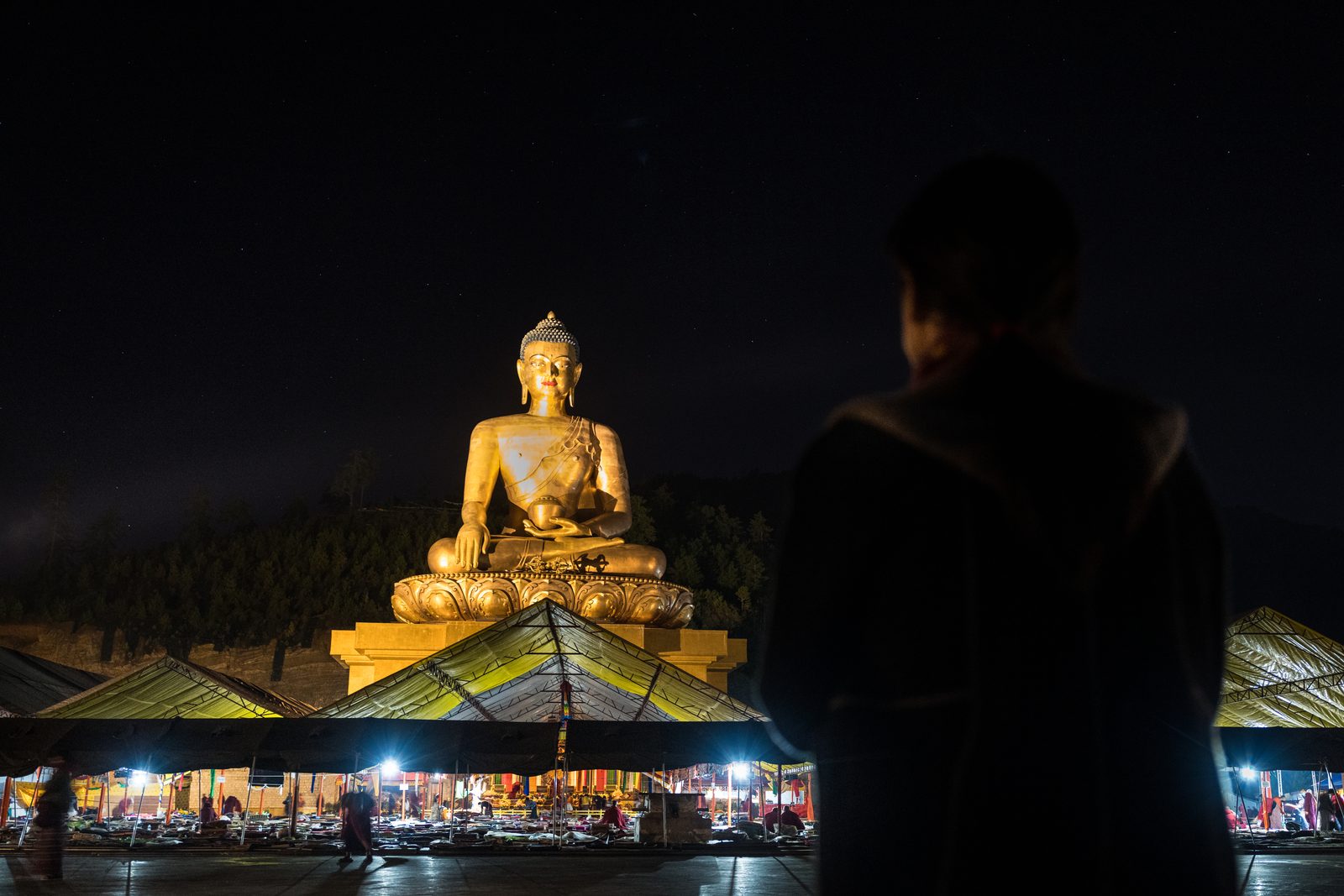
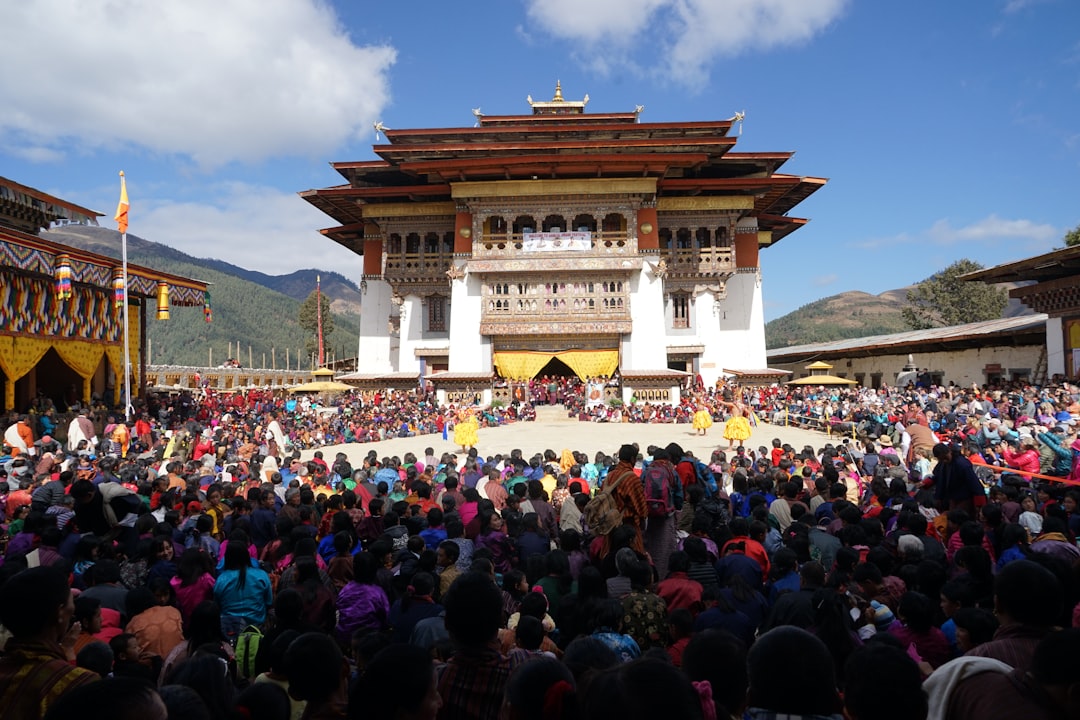
The Black-Necked Crane Festival falls on 11 November 2026, in the courtyard of Gangtey Goenpa in the Phobjikha valley. It is a single-day village festival, held in the valley where the cranes winter, and it is one of the few events in Bhutan built around wildlife rather than a monastic calendar.
Two things to get straight before planning around it. The festival is one day; the cranes are there for four months, from late October into February. And Phobjikha is not a day trip from anywhere — at roughly 3,000 m, four to five hours east of Punakha over a high pass, it needs two nights added to a western circuit.
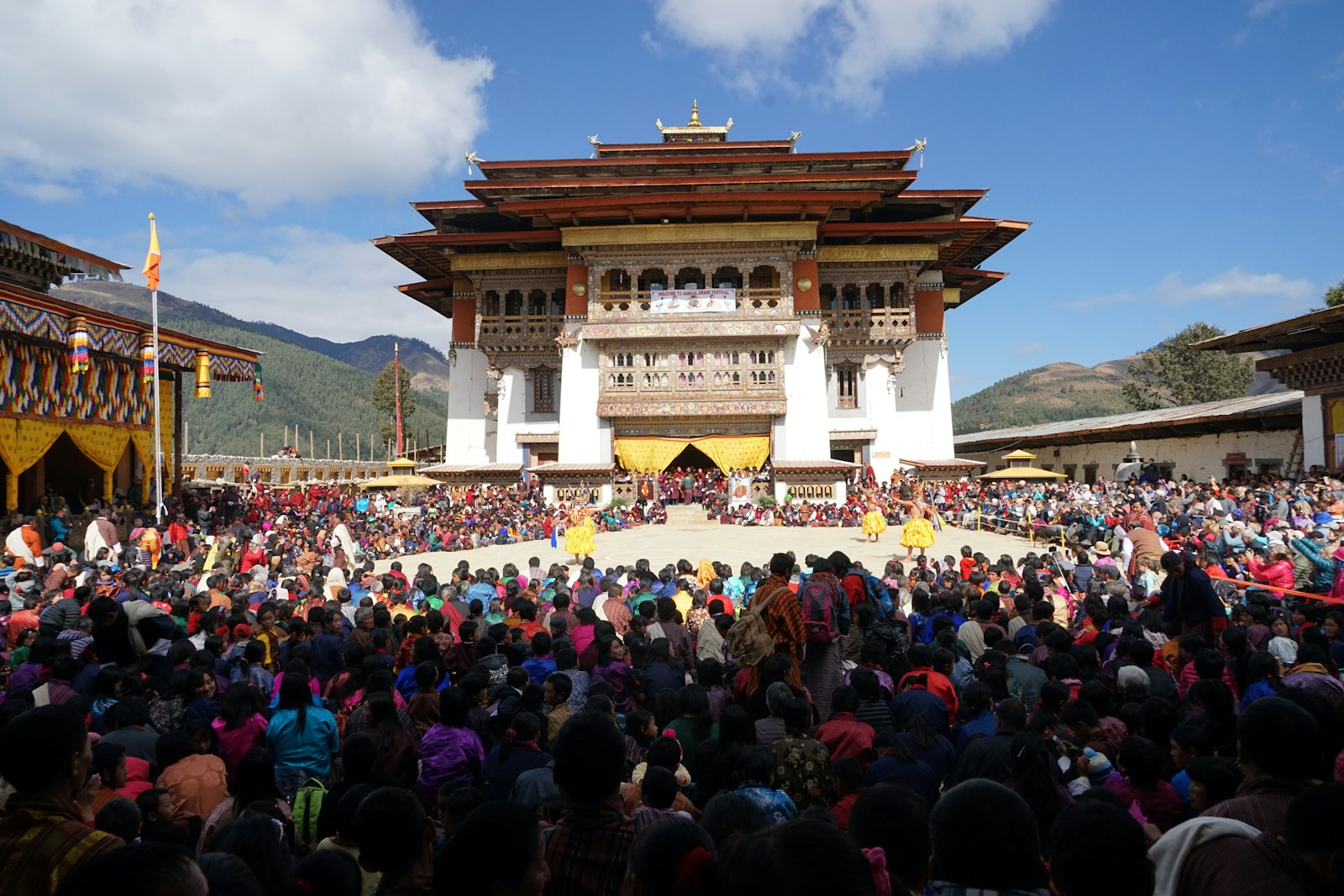
What actually happens on the day?
A school-and-village festival with a conservation purpose, in a monastery courtyard, on a valley floor at 3,000 m in November. Dress for cold.
The programme starts mid-morning and runs to the early afternoon. Masked dances performed by monks sit alongside crane dances performed by local schoolchildren in costume, folk songs, short speeches, and displays by the conservation centre. The crowd is villagers, schools, monks and a modest number of visitors, and it is the schoolchildren rather than the monks who make it memorable.
It began in 1998 as a way of giving the valley an economic reason to protect the birds and their wetland, and that origin still shows. This is not a grand city tshechu with centuries of ritual behind it. It is a village doing something well.
The festival is organised by the Royal Society for Protection of Nature, and the date is confirmed year by year — 11 November is the 2026 date and it is not a fixed annual calendar slot. The 2027 edition is also listed for 11 November; the 2027 festival calendar has it alongside every other tshechu.
What are black-necked cranes, and when are they there?
Grus nigricollis, a large grey crane with a black head and neck and a red crown, which breeds on the Tibetan plateau and flies south across the Himalaya to winter in a handful of valleys. Phobjikha is the most important of Bhutan's wintering grounds, with typically several hundred birds on the wetland each season.
They arrive from late October, numbers build through November and December, and they leave through February and early March. So the festival sits near the start of the season rather than at its peak.
The valley takes them seriously. Power lines were laid underground at considerable expense to keep the flight paths clear, which is the single most persuasive fact about Bhutanese conservation policy anyone can offer you.
For actually watching the birds, the festival day is the worst hour of the season: several hundred people, amplified sound, and the cranes keeping their distance. A dawn walk on the 12th, or any quiet morning in the following weeks, is far better. The Crane Information Centre at the valley edge has spotting scopes and a hide, and is the reliable option.
How do you get to Phobjikha?
By road from Punakha, four to five hours east, crossing Pele La at about 3,400 m and then turning off the main highway up into the valley. From Paro the whole journey is a long day, which is why nobody sensible attempts it in one.
The practical circuit: land in Paro, two nights; Thimphu, one night; Punakha, one night; Phobjikha, two nights including 10 November; then back to Paro for the Tiger's Nest climb and the flight home. That is seven nights rather than four, and it is the honest shape of a festival trip.
Sleep in the valley on 10 November. The festival starts mid-morning and the road in is not something to do at 05:00 in the dark.
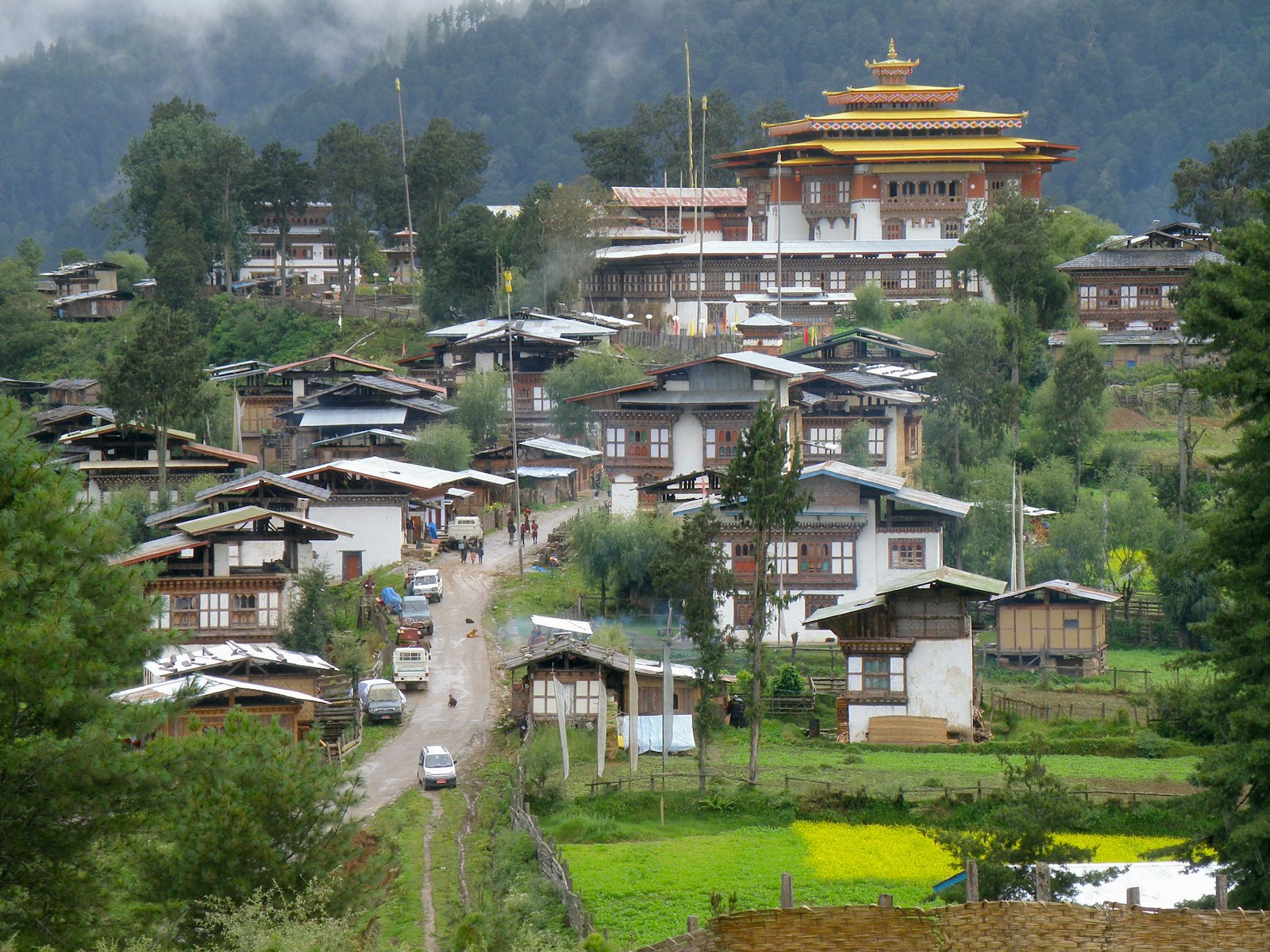
The valley itself is a broad glacial bowl — unusual in Bhutan, which is mostly steep — with dwarf bamboo, a wetland down the middle, and Gangtey Goenpa on a hill at one end. The drive up from the main road is the moment most people realise they have left the standard itinerary behind.
Where do you stay, and how cold is it?
A handful of small lodges and farmstays, plus one or two higher-end properties. Total capacity in the valley is modest, and festival week fills first, so this is a booking decision made months ahead rather than weeks.
On heating: at 3,000 m in November, nights fall well below freezing. Many properties use wood stoves — a bukhari — rather than central heating, and hot water can be scheduled rather than constant. Ask specifically what the heating is when you book, and pack as if the answer is a stove.
For the day itself: thermal base layer, fleece or down, windproof shell, hat, gloves, and something warm to sit on, because you will be on stone or grass for two hours. The packing list covers the rest, and note that Phobjikha at 3,000 m is higher than anywhere you sleep on a standard circuit — acclimatise properly first.
Should you build the trip around the festival or the birds?
Honestly, it depends on which you came for, and the answer is not the same.
Come for the festival if you want the village day, the schoolchildren's crane dance, and a valley at its most social. Then 11 November is the fixed point and everything else moves around it, at autumn peak prices with the tightest availability of the year.
Come for the cranes and you have four months of options, better birding, far easier hotels, and lower fares. Late November through January gives you higher bird numbers, empty trails and a valley that is quiet in the way it usually is. December and January are cold and clear and genuinely lovely.
Both are good trips. Only one of them requires you to book nine months out.
What else is there in the valley?
Gangtey Goenpa itself, a seventeenth-century Nyingma monastery on the hill, recently restored, with a monastic school and a view down the whole valley.
The Gangtey Nature Trail, an easy ninety-minute downhill walk from the monastery through farmland and pine to the wetland edge. One of the most pleasant short walks in Bhutan and no altitude effort beyond the height you are already at.
The Crane Information Centre, with scopes, a hide, and staff who know exactly where the birds are that week.
The wetland boardwalk, closed to visitors in parts during the season to keep disturbance down, which tells you something about the priorities here.
Which other festivals should you compare it with?
Worth doing, because "a Bhutanese festival in November" has more than one answer and the crane festival is the smallest of them.
Thimphu Tshechu in September or early October and Paro Tshechu in spring are the two big ones, held in dzong courtyards in the valleys you are already visiting, with centuries of monastic ritual and crowds in the thousands. Either fits a five-day circuit without adding a valley.
Jakar, Trongsa and Gangtey hold their own tshechus further east, all of which need a seven-night trip minimum.
The crane festival is different in kind rather than in scale. It is a village day with a conservation purpose and a strong element of school performance, in a valley most visitors never reach. If you have seen a tshechu and want the other thing, it is the better choice. If this is your first trip to Bhutan and you want the masked dances at full weight, take a tshechu and come back for the cranes.
Whatever you pick, festival dates follow the lunar calendar, are confirmed year by year, and are the one part of a Bhutan itinerary you cannot move.
How far ahead should you book?
Six to nine months for the festival window, and that is not a sales line. Autumn is Bhutan's peak season, the 7–14 November window is the busiest part of it, and valley accommodation is genuinely limited.
Published Bangkok–Paro return economy starts from THB 31,869 including taxes and surcharges at the time of publishing, and the government charges are separate: USD 100 per adult per night of Sustainable Development Fee and a one-off USD 40 visa fee. On a seven-night festival trip the SDF alone is USD 700 per adult, so this is worth costing early — see the full trip cost in baht.
One operational point. Paro is flown visually in daylight only, and a weather delay in November is possible. If the festival is the reason for the trip, arrive with a day of margin rather than landing on 10 November — what happens when Paro weather delays your flight.
Hold seats for the festival window
Send your dates through Book & Hold. We hold Bangkok–Paro seats for the November window and return one written quote covering flights, SDF and visa, with the Phobjikha nights placed so you are in the valley the evening before.
Fares are quoted in Thai baht, per person, inclusive of taxes and surcharges at the time of publishing, and start from the figure shown. Fares, seats and availability are confirmed in writing by OMG Experience, the appointed General Sales Agent for Bhutan Airlines in Thailand, before ticketing.