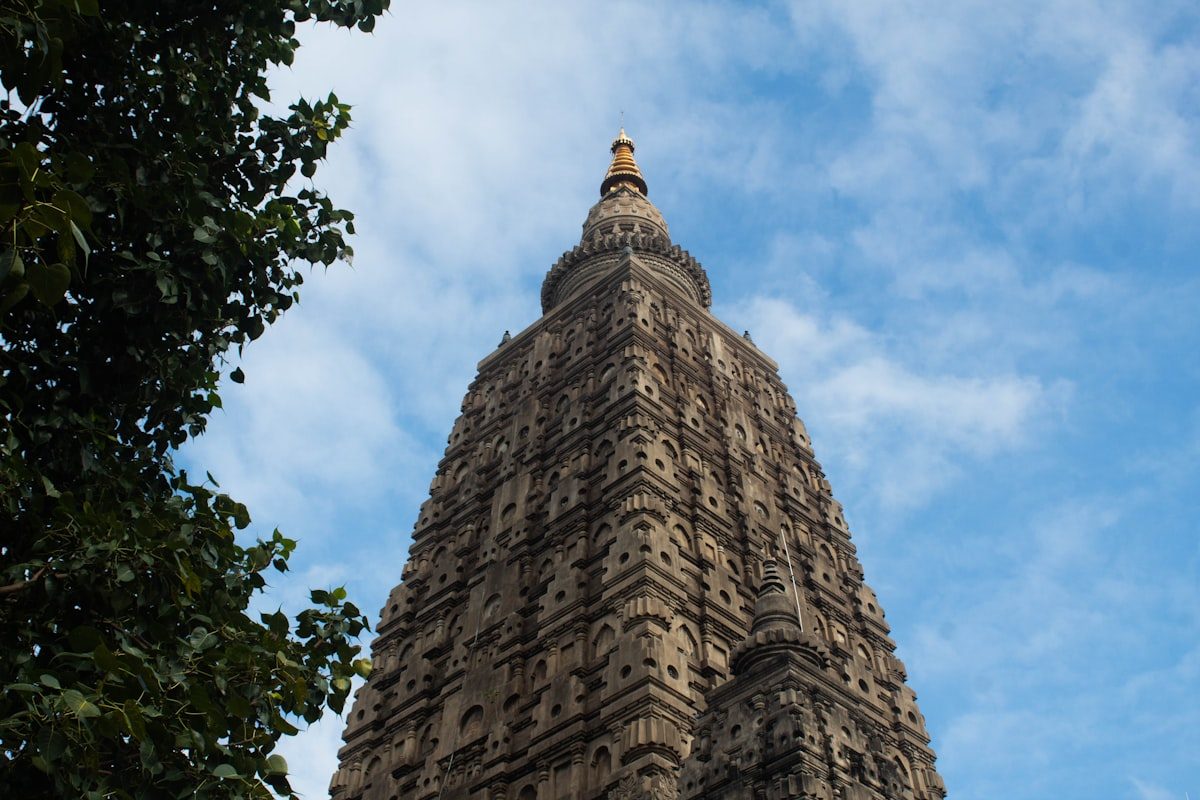
Around twenty Buddhist nations have built a monastery at Bodh Gaya, each in its own architecture, and almost all of them sit within 1.5 km of the Mahabodhi Temple. You can walk the whole circuit in an afternoon. Most open roughly 06:00 to 12:00 and 14:00 to 18:00, closing through the midday heat, and entry is free everywhere.
It is the only place in the world where you can stand in a Thai bot, a Japanese hall, a Tibetan gompa and a Bhutanese lhakhang inside two hours, and the contrast tells you more about how Buddhism travelled than any museum.
Which ones should a Thai group not miss?
Three, and one of them is ours.
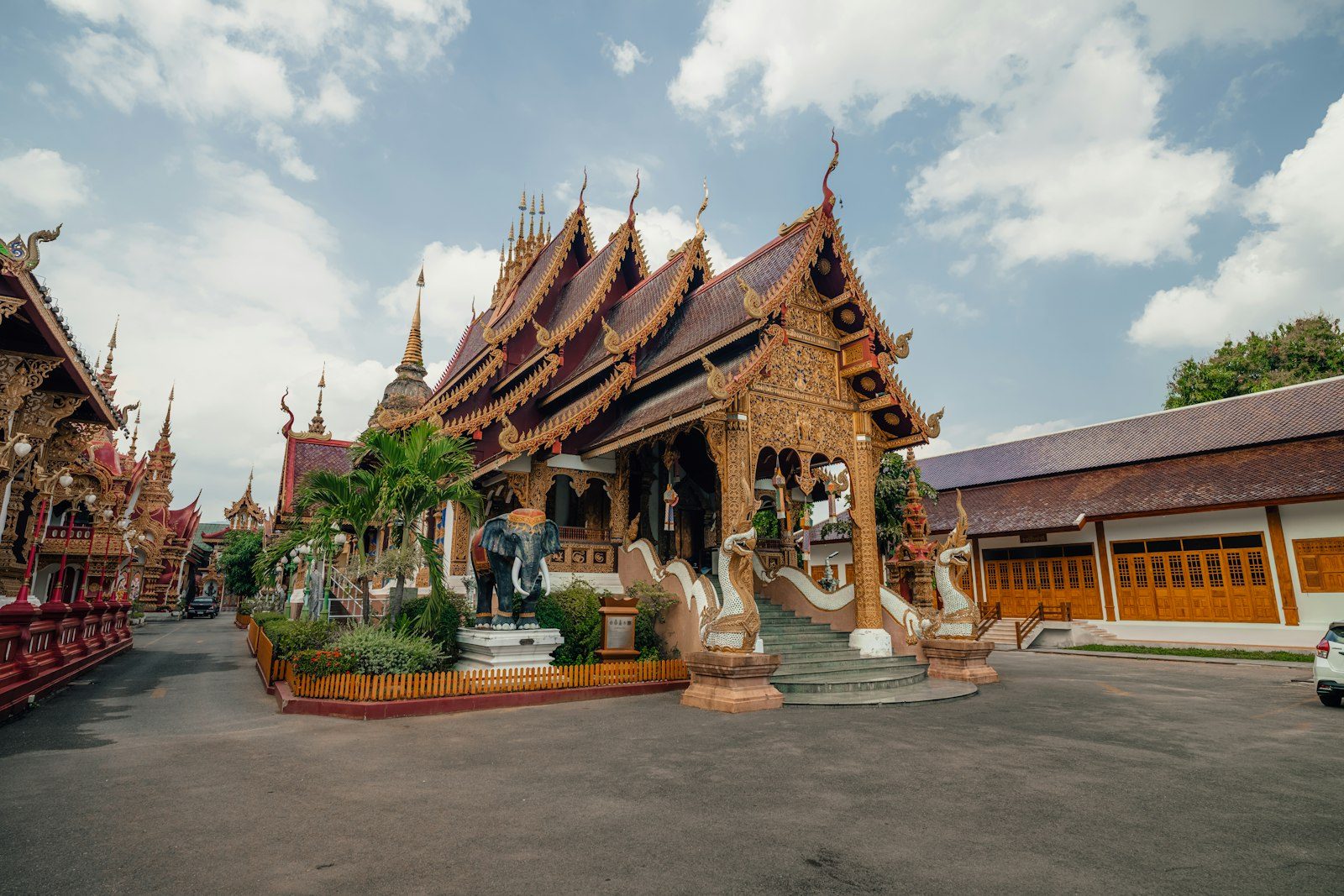
Wat Thai Buddhagaya was founded in 1957, the first foreign monastery built at Bodh Gaya, established with Thai government support. The gilded, tiered roof is the most photographed profile in the town. Inside, chanting is in Thai and Pali on the Thai monastic timetable, the monks are Thai, and a Thai group that arrives at the right hour can simply join. For many pilgrimage groups this is the emotional centre of the trip rather than a stop on it.
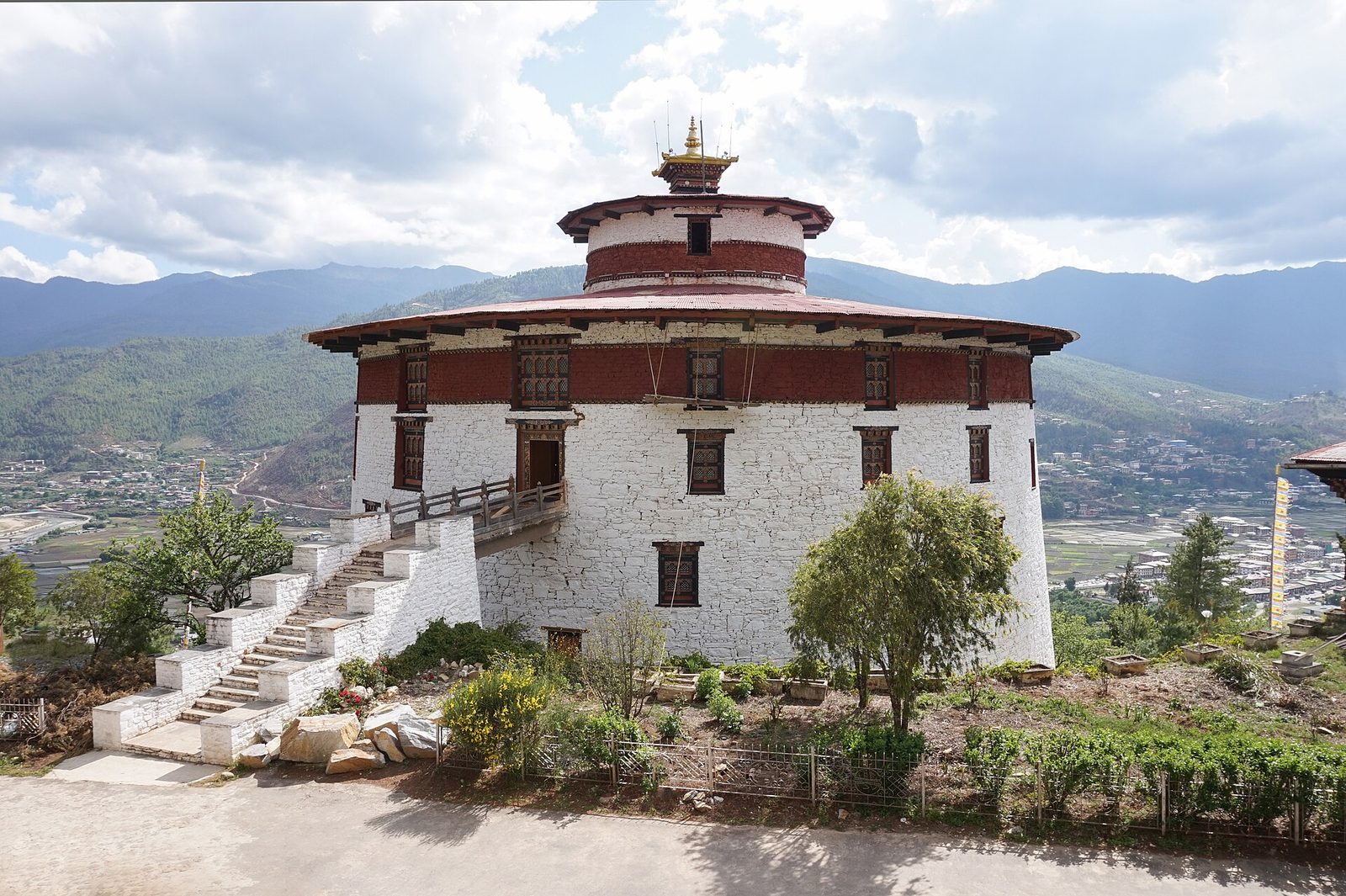
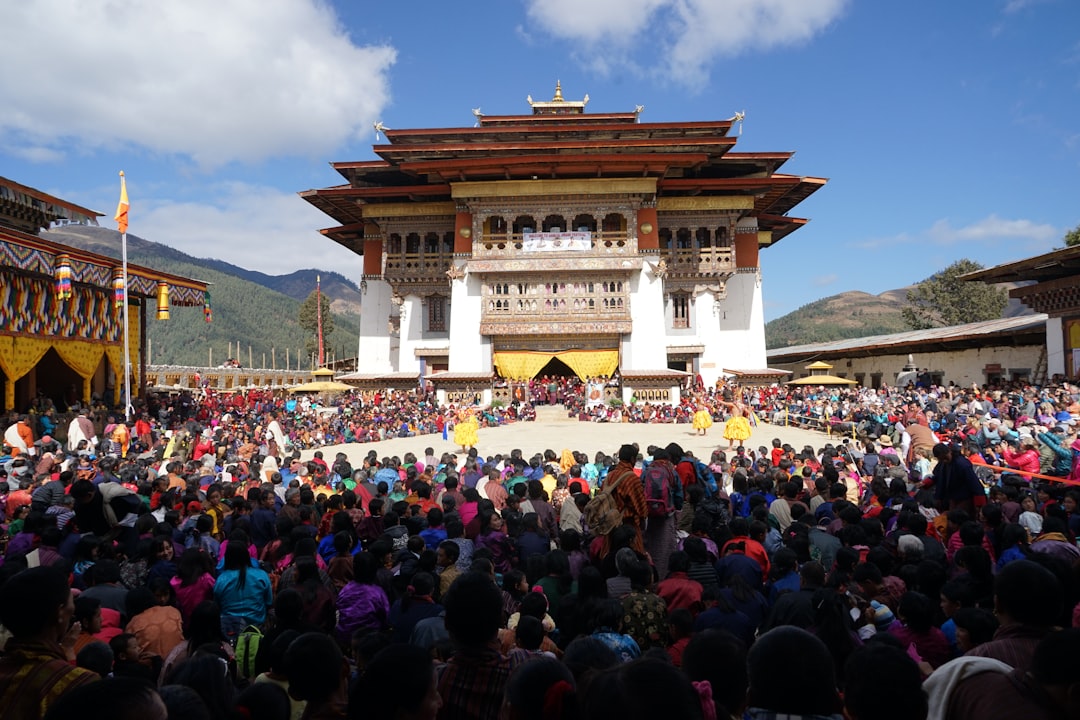
The Royal Bhutan Monastery is a short walk from the main temple and is worth going inside rather than photographing from the road. The interior is painted floor to ceiling by Bhutanese artists in exactly the idiom you see in the Paro valley temples — the same palette, the same figures, the same close, butter-lamp smell. Travellers who have been to Bhutan recognise it immediately; travellers who have not now have a reason to go.
Indosan Nipponji, the Japanese temple built in 1972, is the opposite of both: plain wood, almost bare, with a single image and a great deal of silence. Morning chanting starts early and visitors may sit at the back.
What else is on the circuit?
The rest of the walk, roughly in the order the road takes you.
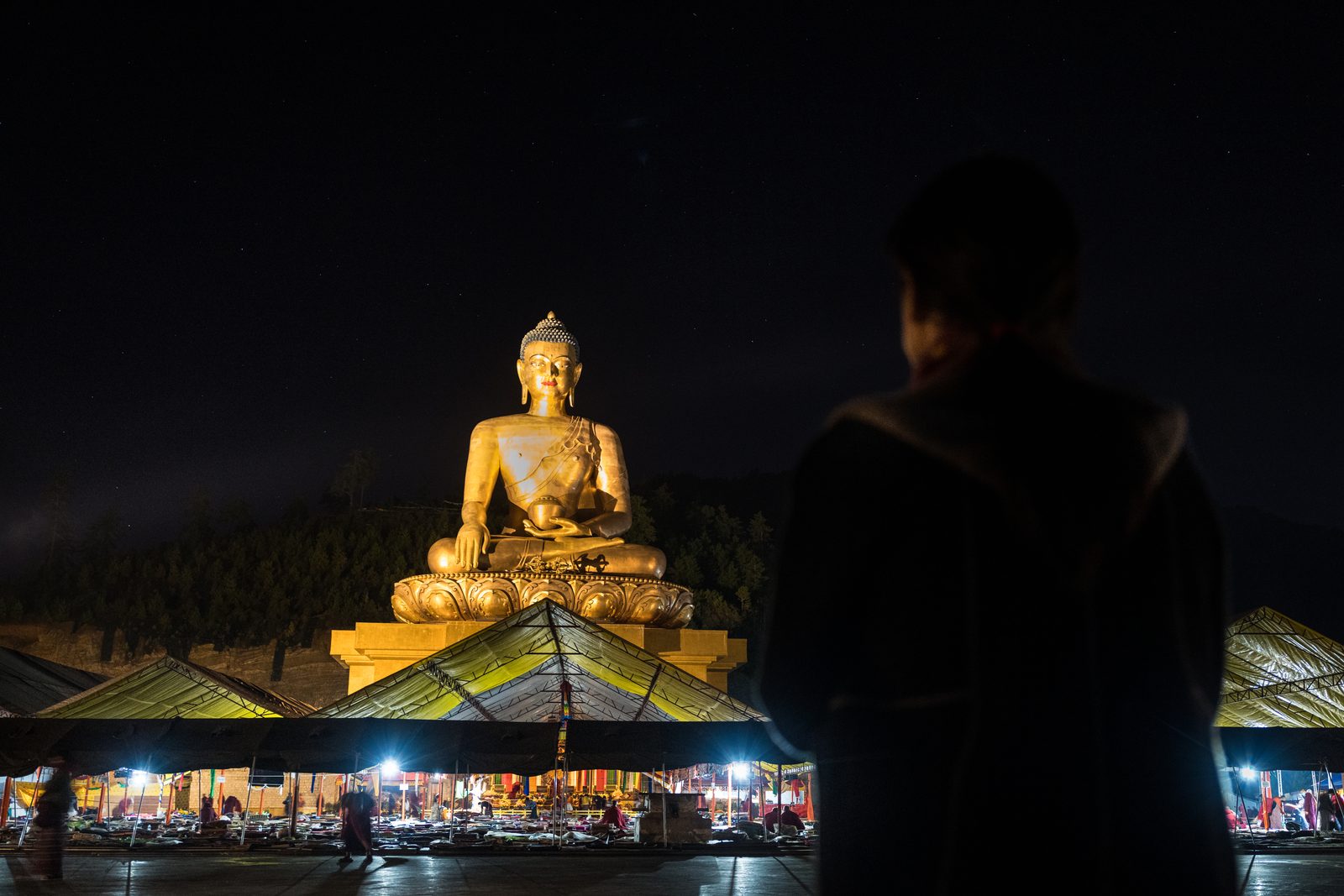
- The Great Buddha statue, a 25 m sandstone and granite figure unveiled in 1989 and built by the Daijokyo sect of Japan. It is the landmark you navigate by.
- The Tibetan monasteries — Tergar, Karma, Shechen, Namgyal and others — cluster together, several with large prayer wheels and vivid murals. Tergar is the seat of the Kagyu Monlam, which fills the town each winter.
- The Mahabodhi Society of India, founded in 1891 by the Sri Lankan reformer Anagarika Dharmapala, whose campaign is the reason the Mahabodhi Temple was restored to Buddhist care at all. The least visually striking building on the walk and the most historically important.
- The Myanmar Vihara, among the older foreign foundations here, with the tiered spire of Burmese practice.
- The Vietnamese, Chinese, Korean, Taiwanese, Cambodian, Lao, Nepali and Bangladeshi temples, each a small essay in its own national style.
- The Root Institute, a Tibetan Gelug centre that runs structured meditation courses for visitors rather than functioning purely as a monastery.
How long does the walk take?
Half a day, unhurried. The distances are short — a kilometre and a half covers nearly everything — but the heat and the shoe-off, shoe-on rhythm slow you down more than the map suggests.
The workable shape is the temple at dawn, breakfast, rest through the middle of the day, and the monasteries from about 15:00 until dusk, when the light is low and the chanting starts. Trying to do the monasteries and the Mahabodhi Temple in the same continuous stretch is how a group ends up looking at its fourth shrine without seeing it.
If you have only two hours, do Wat Thai, the Bhutan monastery and the Great Buddha, in that order. They are close together and they are the three that stay with people.
Why are there so many national monasteries here?
Because Bodh Gaya was, for several centuries, largely abandoned as a Buddhist site — and getting it back was a deliberate campaign.
Buddhism had faded from the Indian plains by the medieval period, and by the nineteenth century the Mahabodhi Temple was in the hands of a Hindu monastic estate. In 1891 the Sri Lankan reformer Anagarika Dharmapala founded the Mahabodhi Society with the explicit aim of restoring the site to Buddhist care. That campaign ran for decades and was only settled by legislation after Indian independence.
Once the site was secure, Buddhist nations began asking for land beside it. Thailand was first, in 1957, with government backing — which is why Wat Thai Buddhagaya has the oldest foreign foundation and the most prominent position. Japan, Myanmar, Tibet in exile, Bhutan, Vietnam, Korea, China and more followed across the second half of the twentieth century, each building in its own national idiom rather than in a local one.
So the circuit is not a themed park of world architecture. It is a record of which countries came back, and when.
Can you stay or practise here?
Yes, in three different ways, and none of them requires you to be ordained.
Monastery guesthouses. Several foundations, including the Thai, Burmese and Tibetan houses, offer simple rooms to pilgrims. Expect a bed, a fan, shared bathrooms, an early curfew and a donation rather than a rate. They fill first in the cool season.
Structured retreats. The Root Institute runs introductory and longer meditation courses on fixed dates through the winter, in English, open to visitors with no background. Tergar also runs programmes around the Monlam season.
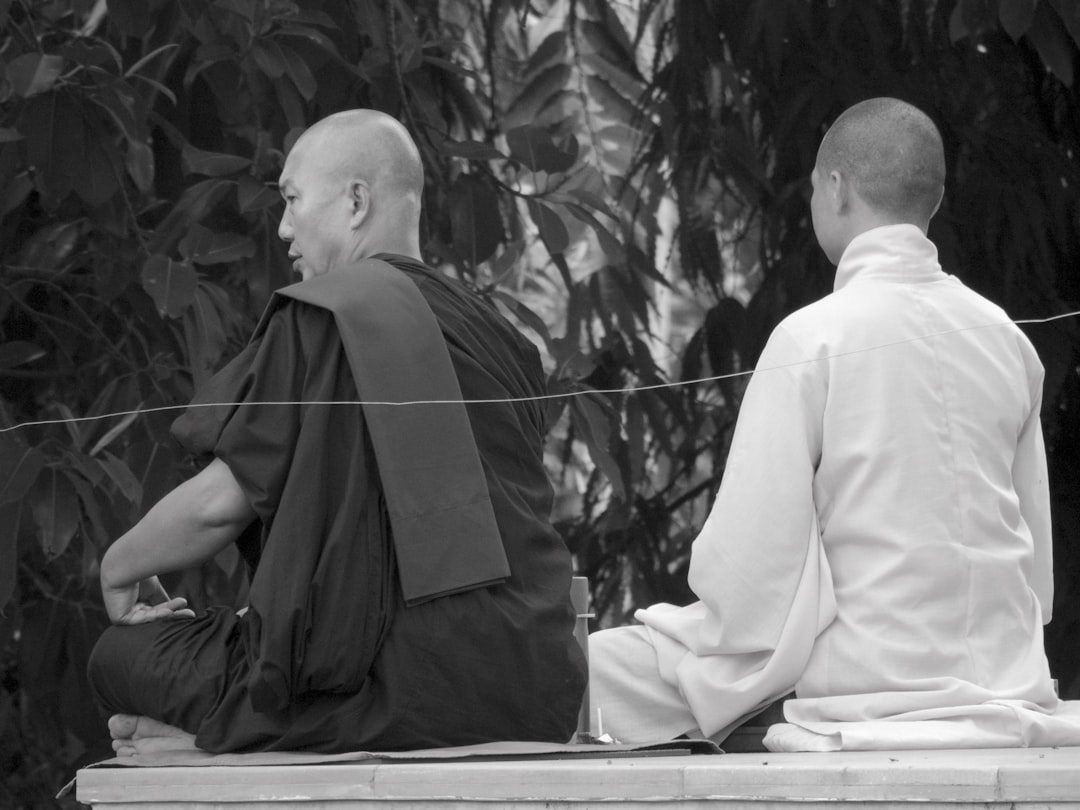
Simply sitting. Indosan Nipponji and several of the Tibetan halls hold morning and evening chanting that visitors may join by sitting quietly at the back. Nobody will ask who you are. This is the least organised option and often the most useful one.
If your group wants any of this built into a programme, decide before you book flights — the retreat dates are fixed and the flights are not.
How do you visit respectfully?
The rules are the ones you would expect, with two that catch visitors out.
- Shoes off where indicated, which is almost everywhere indoors.
- Dress covered — shoulders and knees, in every monastery regardless of nationality.
- Silence during prayers. If you walk in on chanting, sit at the back or step out; do not cross the hall.
- Ask before photographing monks, every time. Inside a prayer hall, ask before photographing anything.
- Do not point your feet at an image or at a monk while sitting. This is second nature to a Thai visitor and genuinely unknown to many others.
- In Theravada monasteries — the Thai, Myanmar, Sri Lankan and Lao foundations — women do not hand objects directly to monks or sit beside them. Offerings go on a cloth or a table.
Entry is free everywhere. There are donation boxes, and a small note is the normal courtesy rather than an obligation.
When is the best season for this?
November to February, the same cool window that suits the Mahabodhi Temple. Afternoons are in the low twenties, which matters when the walk is on foot, and the winter is when the Tibetan monasteries are most alive — Monlam gatherings run from December into February and the town fills with monks from across the Himalaya.
That liveliness is also crowding. Accommodation in Bodh Gaya books out months ahead for Monlam and for any year in which His Holiness the Dalai Lama teaches at the Kalachakra ground. If your group wants the quiet version, late October or March gives you the same walk with a fraction of the people.
April to June is 40°C and above, and this is a walking itinerary. July to September is monsoon: humid, green, very quiet, and the murals look better in that soft light than in any other season.
How does this fit into a pilgrimage itinerary?
One full day at the Mahabodhi Temple and one half-day on the monasteries is the honest minimum, which means two nights in Bodh Gaya. Your first visit to Bodh Gaya sets out the temple day, including the rule about mobile phones that costs groups half an hour at the gate.
Add a third night if you want Rajgir and Nalanda, or if the group is large enough that everything takes longer than planned. It usually is.
Bhutan Airlines serves Gaya (GAY) seasonally from Bangkok on the Airbus A320, about 20 minutes by road from Bodh Gaya, and you will need an India e-Visa — the step-by-step guide covers the four-day cut-off and the e-Arrival Card.
Hold a Gaya fare
Send your dates and passenger numbers through Book & Hold. We hold seats free for 48 hours and return one written quote covering the fare and the group conditions.
Group fares on Bangkok–Gaya start from THB 15,000 return per person for parties of ten or more, and temple communities of 50 to 60 can propose their own dates. Fares are quoted in Thai baht, per person, inclusive of taxes and surcharges at the time of publishing, and start from the figure shown. Fares, seats and availability are confirmed in writing by OMG Experience, the appointed General Sales Agent for Bhutan Airlines in Thailand, before ticketing.