Buy your Bhutanese SIM after you clear immigration at Paro, or in a Thimphu shop that evening. There are two networks, TashiCell and B-Mobile, both adequate in the western valleys for maps, messaging and calls home, and a tourist package costs a few hundred ngultrum rather than anything you need to budget for seriously.
The decision to make before you fly is not which network. It is whether you want a physical SIM, an eSIM, hotel wifi, or Thai roaming — because that choice is easier to make on a connection you already have.

Which network should you choose?
TashiCell and B-Mobile (Bhutan Telecom) are the only two, and for a five-day western circuit the difference is marginal.
Both give reliable 4G in Paro, Thimphu and Punakha town centres, and enough on the main highway between them for messaging. B-Mobile is the older state operator with slightly broader rural reach; TashiCell is generally the easier one for visitors to buy from and is the one usually quoted for eSIM.
If your itinerary stays west, take whichever is available at the counter in front of you. If you are heading east to Bumthang or Trashigang, ask your guide which network their own phone is on and match it.
Where do you buy one, and what do you need?
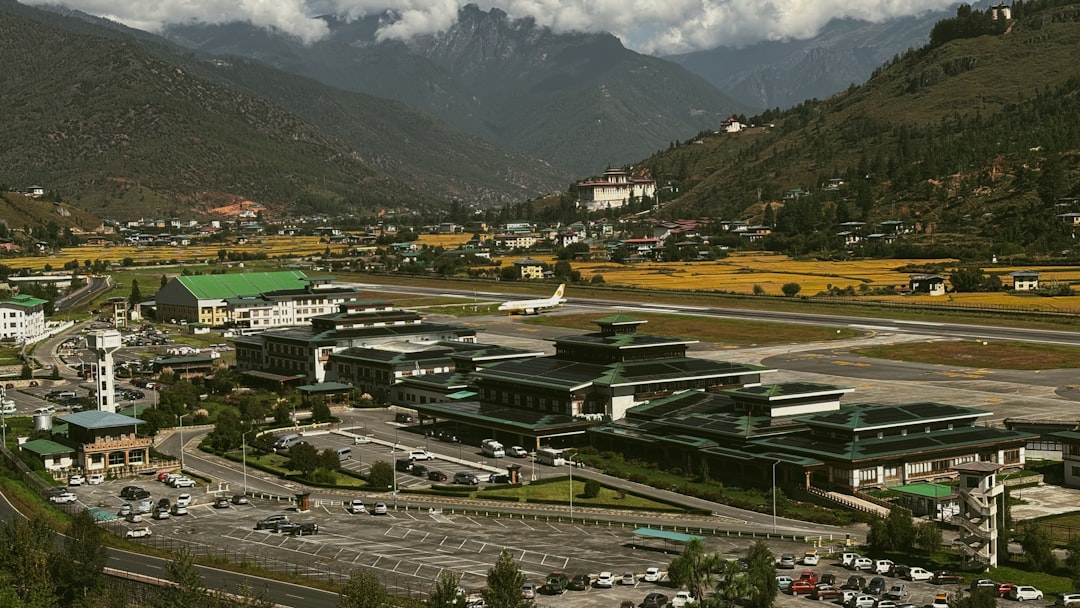
At Paro airport, there is often a telecoms desk in the arrivals hall. Often, not always — it depends on the flight and the day, so do not build a plan around it.
In town is the reliable option. Both networks have shops on the main streets of Paro and Thimphu, and your guide can walk you to one on the first afternoon or on the Thimphu evening of a five-day circuit.
Take your passport — registration is required, as it is in Thailand — and cash in ngultrum. Card acceptance at a small telecoms counter is not something to rely on; how money works in Bhutan covers getting hold of local currency.
Expect a tourist data package in the range of a few hundred ngultrum for several gigabytes over a week or two. Recent reporting puts a TashiCell data eSIM at around Nu. 600 for 5 GB, data only with no voice number, which is ample for a short trip that is mostly spent looking at mountains.
Is an eSIM better than a physical SIM?
For most visitors on a short trip, yes — with one condition: set it up before you fly.
An eSIM avoids the airport queue, avoids swapping your Thai SIM out and losing bank one-time passcodes, and is active the moment you land. The catch is that installing and activating one usually needs a working data connection, which is exactly what you do not have in the arrivals hall.
So the sequence is: buy and install in Bangkok, leave it disabled, and switch it on after landing. Check your handset supports eSIM, and check it is carrier-unlocked, which is worth confirming in Thailand where an unlock is easy rather than in Paro where it is not.
A physical SIM still makes sense if you want a local voice number, if your phone is older, or if you would rather deal with a person than an app.
Where does the signal actually drop?
Predictably, and in ways that are easy to plan around.
Reliable: Paro town and the airport, Thimphu, Punakha town, the highway between them, and most hotels in all three.
Patchy: the climb up to and over Dochula at 3,100 m, side valleys off the main road, and the middle sections of the Taktsang path, where you may have a bar at the cafeteria and nothing in the gorge.
Effectively none: high passes such as Chele La, remote farmhouse valleys, and much of the east and the trekking routes.
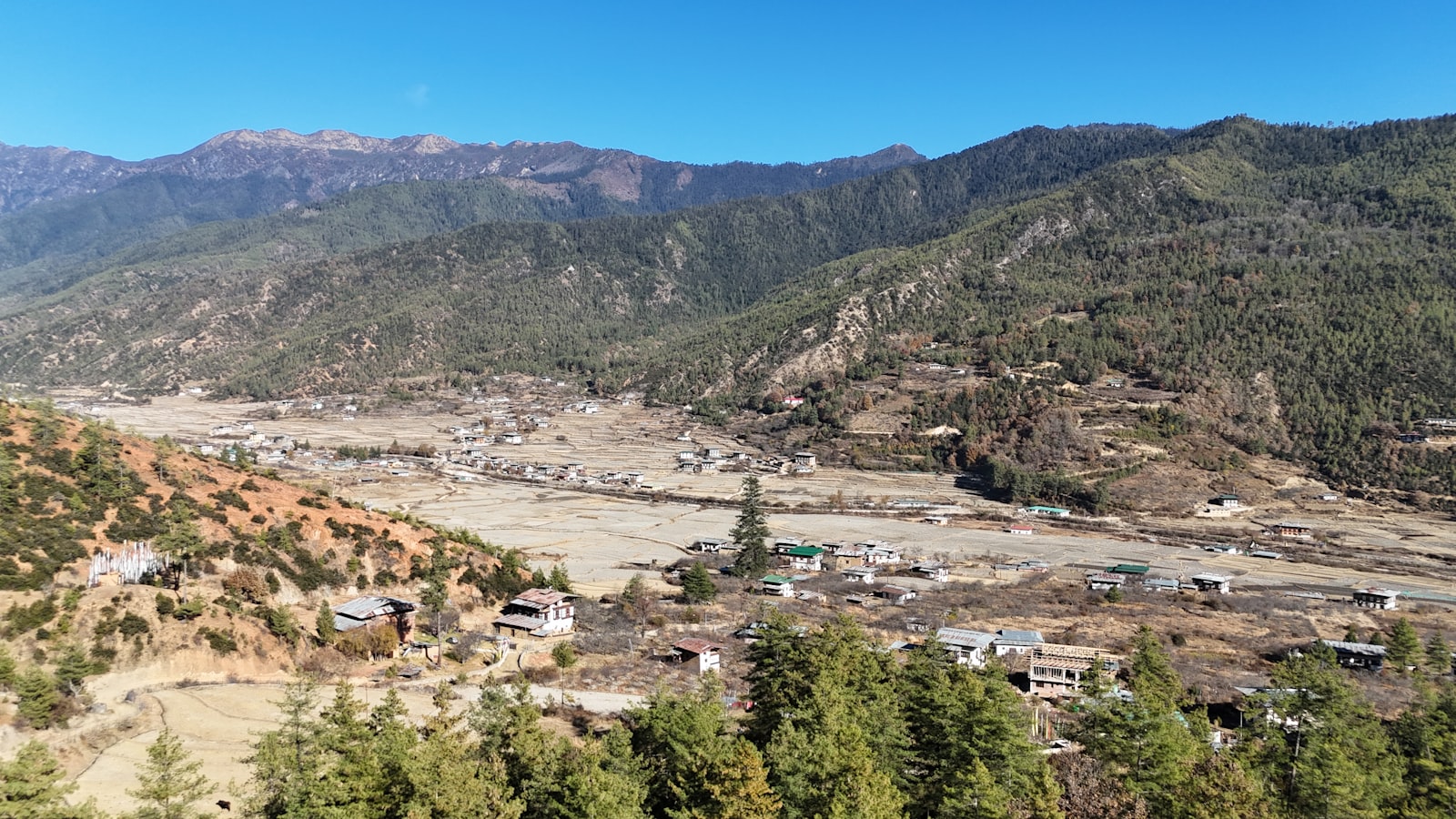
Two habits solve nearly all of this. Download offline maps for the whole of western Bhutan before you leave Bangkok, and tell people at home you will be intermittent rather than trying to be reachable on a mountain. Your guide carries a phone and knows where the signal is, which matters more than your own coverage.
Is hotel wifi enough on its own?
For a lot of travellers, honestly, yes.
Most hotels above the budget tier have wifi in rooms or at least in the lobby, and it is generally fine for messaging, mail and uploading photographs in the evening. Video calls are hit and miss, and speeds drop sharply when a tour group arrives.
What wifi does not give you is a connection during the day, which matters if you want live maps, want to be reachable for work, or are travelling separately from your guide at any point. If none of those apply, skipping the SIM entirely is a legitimate choice and costs nothing.
Will your Thai number roam?
Thai operators do have roaming agreements covering Bhutan, and your handset will usually find a network. Whether you want to use it is a different question: standard roaming data rates are high enough that a local SIM or eSIM is cheaper within a day or two, and the roaming packages sold for the region often exclude Bhutan or price it separately.
Check your operator's Bhutan rate specifically before you fly rather than assuming your usual Asia package covers it. Then either buy a package deliberately, or turn data roaming off and use local data.
Keep your Thai SIM active for SMS one-time passcodes if your bank uses them. This is the single most common connectivity regret we hear: a traveller who swapped their SIM out, then could not authorise a card transaction.
What works, and what is slower than you expect?
Messaging and mail work normally. LINE, WhatsApp, Messenger and Google Maps are all fine. Social platforms work. Streaming video works in a hotel and struggles on mobile data.
What is slower or occasionally blocked: some news sites, some VPN connections, and anything requiring a large upload. Thai bank apps generally work but token delivery by SMS can be delayed, which is a reason to set up an in-app token before you leave.
There is no meaningful censorship for a visitor to worry about. What you are dealing with is a small mountain country's bandwidth, not a firewall.
How do you call home, and who do you call in an emergency?
International dialling works normally from a local SIM, and a data eSIM plus any messaging app covers most people's needs without a voice number at all.
The numbers worth having written down rather than stored in an app: your guide's mobile, your hotel's landline for each night, our office line, and your insurer's 24-hour emergency number. Bhutan's national emergency numbers are short and your guide knows them; what your guide cannot do is find your policy number for you.
Save all of it somewhere readable offline — a note on the phone that does not need a connection, plus one printed copy in the case. A flat battery and a dead signal tend to arrive together.
Can you rely on your phone for maps and photos?
Yes, with offline maps downloaded in advance. Google Maps covers Bhutan's road network reasonably and the western valleys well enough to follow where you are, and offline mode gives you position from GPS with no data at all.
Two limits to know. Walking directions inside monastery complexes and off the main trails are unreliable, so on the Taktsang path your eyes and your guide beat the phone. And photo backup will not run on mobile data at any useful speed, so if you shoot a lot, back up over hotel wifi each evening rather than trusting an automatic upload that silently stalls.
Airplane mode with wifi on is the practical default for a day out: GPS still works, the battery lasts, and nothing tries to sync on a bar and a half of signal.
What about power and charging?
Bhutan uses 230 V with Indian-style round-pin sockets, so a Thai two-pin plug will not fit every socket. Take a universal adapter, and take a power bank — cold drains phone batteries fast, and you will be photographing more than usual.
Rural power is not always steady, and a farmhouse night may mean charging from a single socket in a shared room. The packing list has the rest of the small-items detail.
One quote, before you worry about any of this
A SIM is not in our quote and never will be, because burying a tourist data pack inside an airfare is the kind of thing that makes a quote hard to read. Send your dates through Book & Hold and we will hold your seats and return one written quote covering flights, SDF and visa.
Fares are quoted in Thai baht, per person, inclusive of taxes and surcharges at the time of publishing, and start from the figure shown. Fares, seats and availability are confirmed in writing by OMG Experience, the appointed General Sales Agent for Bhutan Airlines in Thailand, before ticketing.