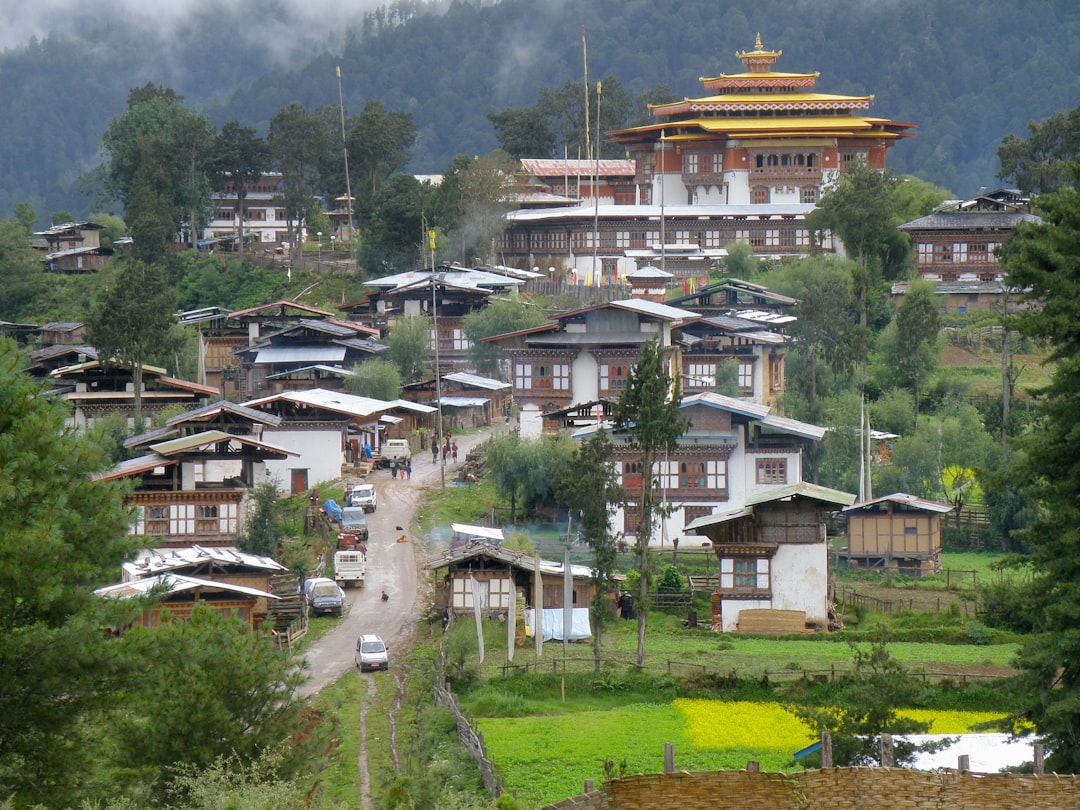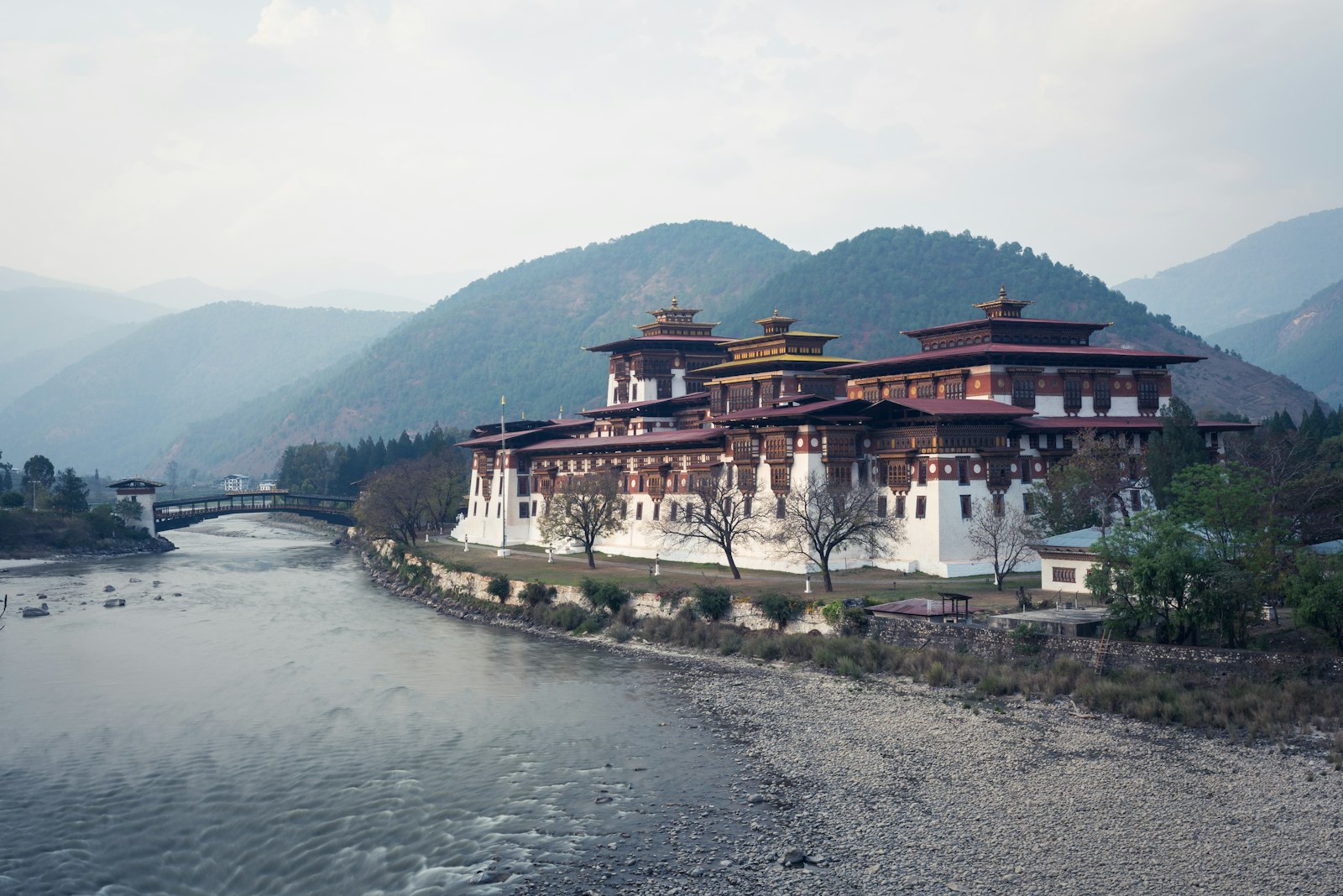
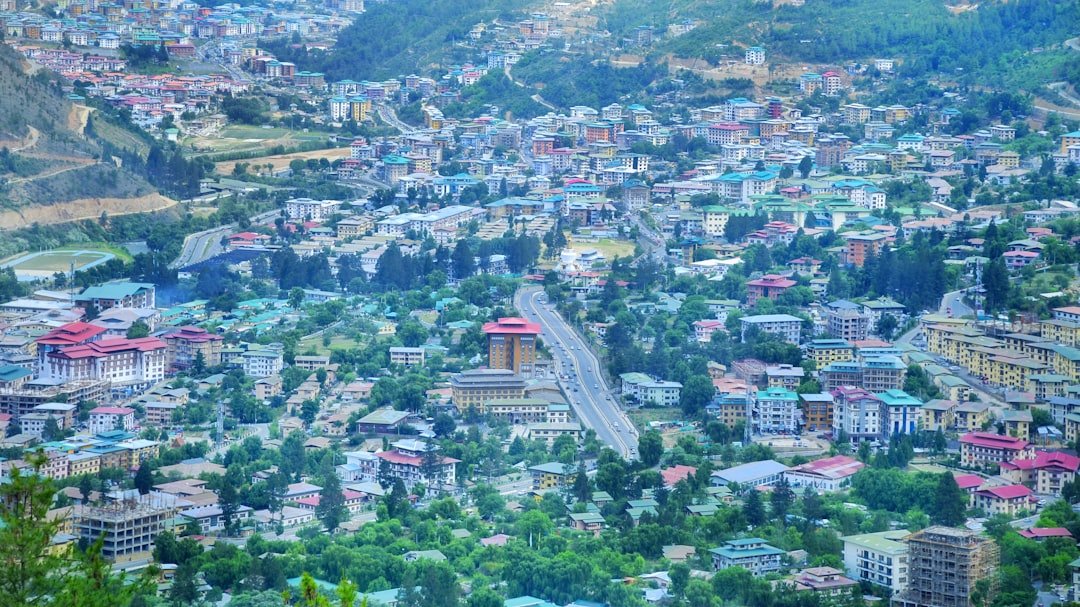
One full day covers Thimphu on a first trip, and the four things worth building it around are Buddha Dordenma, Tashichho Dzong, the Memorial Chorten and — if you happen to land on a Saturday or Sunday — the weekend market. Add a second night only for a festival or if you want the museums properly.
Thimphu is a small capital of a few hundred thousand people at 2,320 m, and the most quoted fact about it is true: it is the only capital city in the world with no traffic lights. A policeman directs the main junction from a booth, and the city is small enough that this works.
What are the essential stops?
Four things carry the day, and a further few are worth it if you have longer.
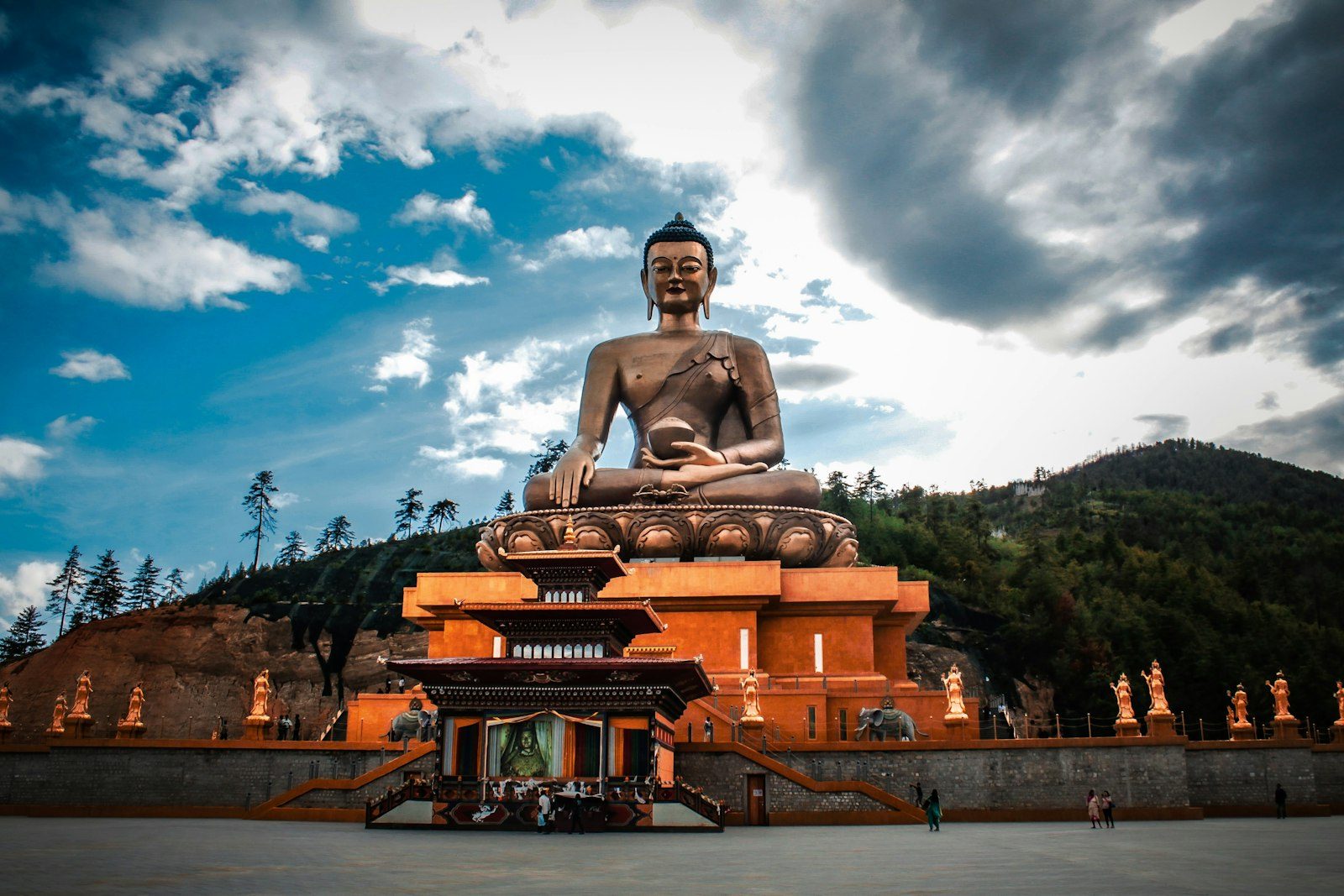
Buddha Dordenma. A 51 m gilded Shakyamuni Buddha on a ridge above the southern approach to the city, with more than a hundred thousand smaller Buddha figures inside the base. It is newer than almost everything else you will see in Bhutan and none the worse for it. Go as much for the view down the whole Thimphu valley as for the statue.
Tashichho Dzong. The seat of the government and of the central monk body, and the working heart of the country. The courtyards are open to visitors in the late afternoon after office hours, which is also when the light is best on the whitewashed walls. Shoulders and knees covered.
The Memorial Chorten. A white stupa built in 1974 in memory of the third king, and the most consistently busy religious site in the city. Bhutanese pilgrims circle it clockwise all day, particularly in the early evening. Ten minutes here tells you more about everyday Bhutanese practice than an hour in a museum.
The weekend market. Saturday and Sunday by the Wang Chhu river, and the single best hour in Thimphu if your dates line up. Chillies in mounds, dried yak cheese on strings, ferns, incense, betel, and produce carried in from valleys you will not visit. Bring cash — see how money works in Bhutan.
Beyond those: the Folk Heritage Museum, a restored three-storey farmhouse that makes sense of every rural building you have driven past; the National Textile Museum, which explains why good weaving costs what it does; the Zorig Chusum arts and crafts school, where students learn the thirteen traditional crafts; and the takin preserve at Motithang, for the national animal, which looks like a committee designed it.
How long do you actually need?
One night on a five-day circuit, which is what the standard Paro–Thimphu–Punakha itinerary allows, and it is enough.
Thimphu is an interesting small capital rather than a destination city. The mistake is giving it two nights on a short trip at the expense of a second Paro night, because Paro is where the Tiger's Nest climb needs you to be rested.
Two nights are worth it in three cases: your day in the city is a Saturday or Sunday and you want the market unhurried; the Thimphu Tshechu is on; or you are genuinely interested in the museums and the crafts school rather than ticking the four highlights.
Because Thimphu is only 85 m higher than Paro, the night here is effectively a second acclimatisation night at valley level. That is useful, and it is a reason not to spend the day driving up to a viewpoint. How to acclimatise in Bhutan has the detail.
What is the Thimphu Tshechu, and should you plan around it?
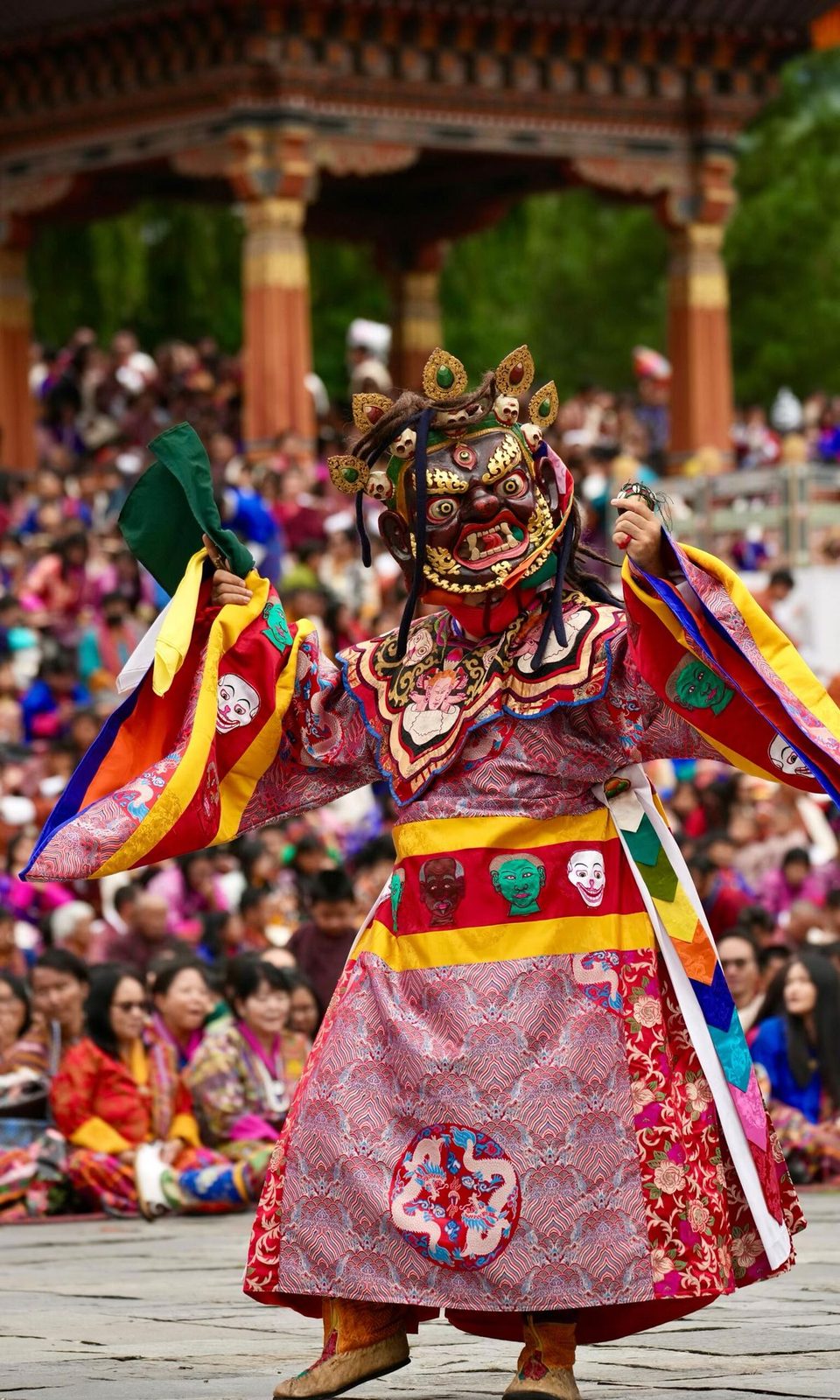
The capital's annual festival, held over three days in the courtyard of Tashichho Dzong in September or early October, with masked dances performed by monks and a crowd that is overwhelmingly Bhutanese and dressed for it.
It is one of the two festivals a five-day western circuit can absorb without redesigning the trip, the other being Paro Tshechu in spring. If you want it, the itinerary is built around the dates rather than the dates fitted around the itinerary — and festival week is the hardest time of year for seats and hotels, so this is a six-to-nine-month decision.
Dates follow the lunar calendar and are confirmed annually. Ask us rather than assuming a month.
Where should you eat?
Thimphu has the widest choice in the country, which is a low bar cleared comfortably.
Hotel dinners will be buffets pitched at visitors. The better move is one lunch in town: there is a small genuine café culture, several decent Indian restaurants, and a handful of places cooking Bhutanese food properly for locals rather than for tour groups. Ask your guide to take you to the second kind, and ask for the real chilli level rather than the tourist one.
This is also the best place in the country to try ema datshi as it is actually eaten. What to eat in Bhutan covers the plate.
What should you buy, and what should you sort out while you are here?
Thimphu is the practical stop of the trip. Three errands worth doing here rather than anywhere else:
- A SIM card or eSIM top-up. Both networks have shops on the main street, and this is easier than a rushed airport counter. See SIMs and eSIMs in Bhutan.
- Cash. The best ATM coverage and bank rates in the country, and the machines here are the least likely to be empty.
- Anything you forgot to pack. A supermarket, a pharmacy and a genuine outdoor shop or two, all with narrower choice and higher prices than Bangkok.
For buying rather than errands: handwoven textiles are the honest purchase, and the good pieces are expensive because they take months on a loom. Handmade paper, incense and beaten metalwork are all genuine. Antiques and religious artefacts need an export clearance certificate, which is checked at Paro on departure, so buy from a shop that can document the piece.
Is there anything to do in the evening?
Some, and less than a city of this size elsewhere would offer, which most visitors find restful rather than disappointing.
The Memorial Chorten in the early evening is the best of it — locals circling, butter lamps, no tour groups. There are a handful of bars and a small live-music scene, a cinema, and an archery ground where you may find a match in progress; archery is the national sport and a match is genuinely worth stopping for.
Two practical notes. Tuesday is a national no-alcohol day. And alcohol at 2,320 m on your second night in the country is not the friend it appears to be.
How do you get around?
Your quote includes a private vehicle, driver and licensed guide throughout, so getting around is not something you arrange. Within the city, the centre is walkable end to end in half an hour and taxis exist for short hops.
What surprises people is how compact it is. The four main sights are within fifteen minutes of each other by car, which is why one day genuinely does cover them.
What is worth skipping?
If you have one day, choose one museum, not three. The Folk Heritage Museum and the Textile Museum are both good and doing both plus the crafts school turns a pleasant day into a march.
The takin preserve is a fifteen-minute stop and a curiosity rather than a highlight. The giant prayer wheel, the mini zoo and the various viewpoints are all fine and none of them is why you flew here.
What not to skip: the market if it is a weekend, and the dzong in the late afternoon.
What is Thimphu actually like as a city?
Worth saying plainly, because visitors arrive with two wrong expectations and Thimphu disappoints both.
It is not a medieval mountain town preserved for tourism. It has offices, a hospital, banks, phone shops, a nightclub or two, schoolchildren in gho and kira waiting at bus stops, and traffic that has grown faster than the roads. Nearly all of it is built to Bhutanese architectural code — timber-framed windows, painted lintels, sloping roofs — because the code applies to new buildings too, which is why a bank looks like a temple with a cash machine.
Nor is it a city with a skyline. Nothing is tall, the valley walls are always visible, and you can walk out of the centre into pine forest in twenty minutes.
What that adds up to is a capital that feels like a large market town with a government in it. Most travellers find one day exactly right and would not have wanted three.
Where does Thimphu sit in a first trip?
Night two of a five-day circuit, after a Paro landing day and before the drive over Dochula to Punakha. That sequence keeps you low for two nights, gives you the capital properly, and leaves the Tiger's Nest climb for a day when you are acclimatised.
For departures we operate with hotels and dates already fixed, see our Bhutan packages.
Build the itinerary around your dates
Send your dates through Book & Hold. We hold your seats and return one written quote covering flights, SDF and visa, and we will tell you plainly whether your dates catch the weekend market or the tshechu.
Fares are quoted in Thai baht, per person, inclusive of taxes and surcharges at the time of publishing, and start from the figure shown. Fares, seats and availability are confirmed in writing by OMG Experience, the appointed General Sales Agent for Bhutan Airlines in Thailand, before ticketing.