Every Bhutan Airlines fare includes 25 kg of checked baggage, 7 kg in the cabin and a hot meal in economy — 30 kg checked in business — with no add-ons to select at checkout. The route is flown by Airbus A320, Bangkok (BKK) to Paro (PBH) in about three and a half hours direct, with some routings via Kolkata (CCU).
The parts worth knowing before you fly are the ones nobody puts on a booking page: why the departure is so early, which side of the aircraft the mountains are on, and what is genuinely not in the fare.
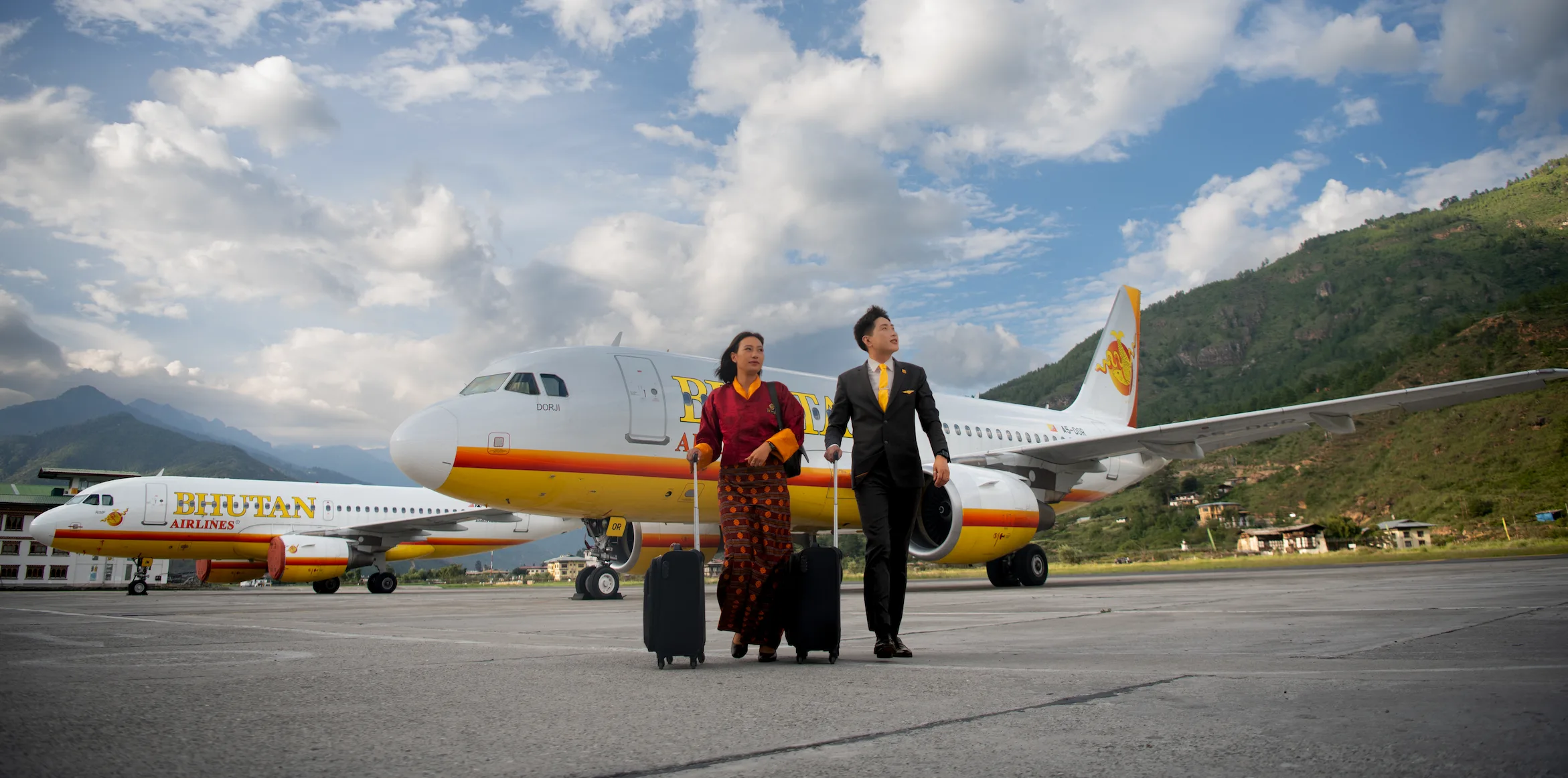
What is included in the fare?
Four things, in both cabins.
- Checked baggage: 25 kg in economy, 30 kg in business. One piece or several, within the weight.
- Cabin baggage: 7 kg, plus a personal item.
- A meal, hot on the Paro sector, with a Bhutanese option alongside an international one. Drinks are included.
- Seat selection and a boarding pass without a surcharge.
What is not in the fare, and this is the number that surprises people: the Sustainable Development Fee of USD 100 per adult per night, which is a Bhutanese government levy rather than an airline charge, plus a one-off USD 40 visa fee. It is quoted separately on every quote we issue. What the SDF actually pays for sets it out in full.
What if you are carrying more than 25 kg?
Excess is charged per kilogram at the airport, and the rate is confirmed at the time — ask us when you book if you know you will be over, because it is cheaper to plan for than to discover at the counter.
Three categories that need telling us in advance rather than turning up with:
- Ritual items — statues, ceremonial umbrellas, framed images. Pilgrimage and temple groups routinely carry these and they need handling rather than stacking.
- Instruments, which may need a cabin seat of their own on a full flight.
- Sports and outdoor equipment, including bicycles and long tripods.
For what to bring in the 25 kg, the Bhutan packing list is the specific answer, and it is shorter than most people expect.
Why is the departure so early?
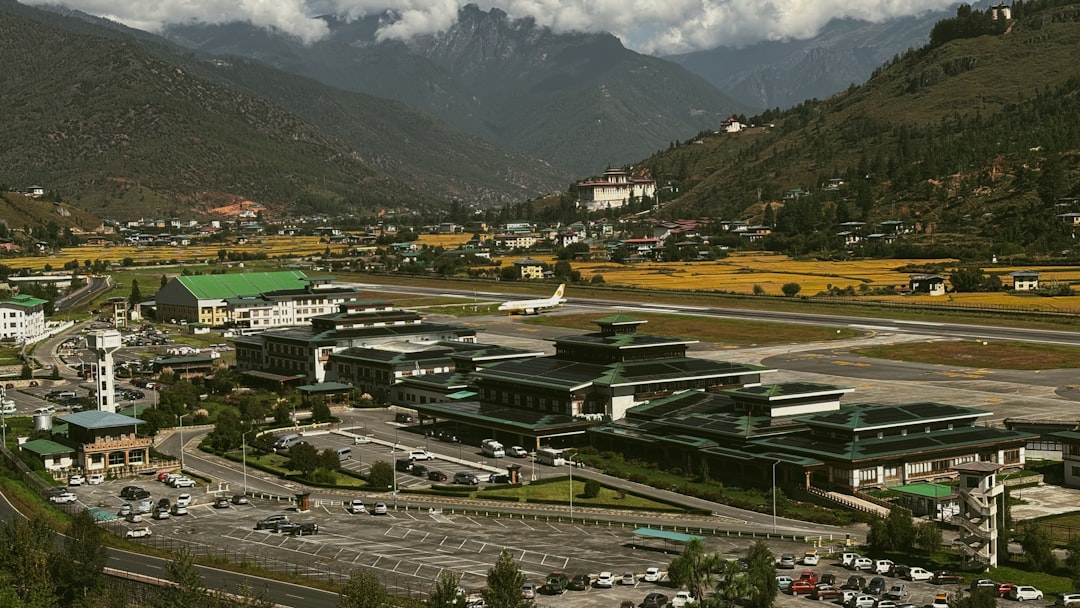
Because Paro is a visual approach airport, operated in daylight only.
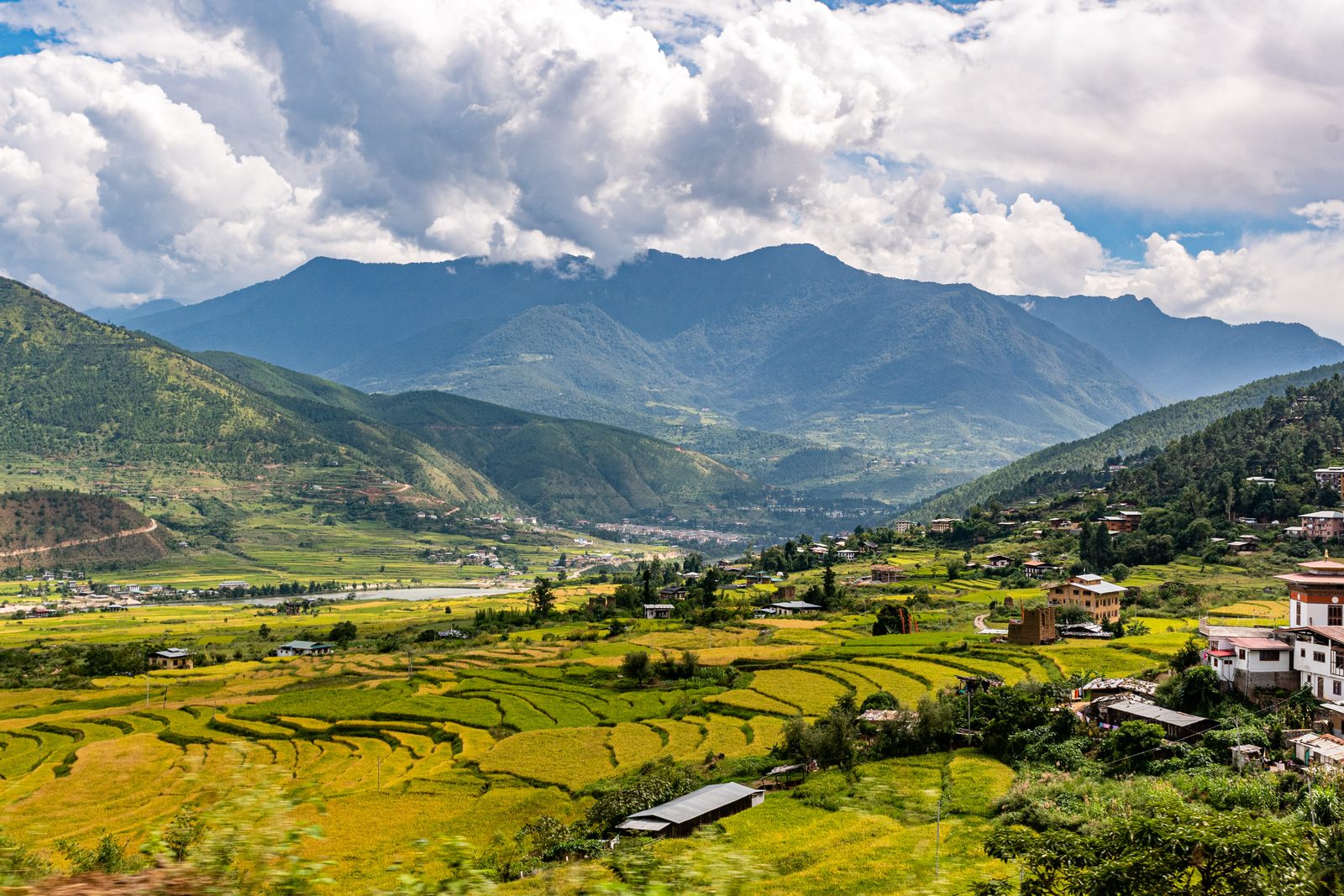
The runway is short, sits at 2,235 m, and is enclosed by ridges rising to well over 4,000 m on both sides. There is no instrument approach that flies you down through cloud onto it — the crew must be able to see the valley. Pilots operating into Paro are separately qualified for that airport, and the number of them worldwide is small.
Two consequences for your day:
Departures are scheduled for the morning. Valley winds build through the afternoon and the light matters, so the operating window is early. That is why a Bangkok–Paro flight leaves Suvarnabhumi before most people would choose to be awake.
Cloud stops flights, and it is not negotiable. If the valley is not visually clear, the aircraft holds, returns or diverts — most often to Kolkata. This is a safety rule working exactly as intended rather than a service failure, and it happens most in the monsoon. What actually happens when Paro weather delays your flight explains the operational sequence and what we do about it.
Which side should you sit on?
Flying into Paro, whether direct from Bangkok or on the Kolkata–Paro leg, the aircraft heads north towards the range, and the high peaks lie to the west of the track. Sit on the left-hand side of the aircraft on the way in and the right-hand side on the way back to Bangkok. On a clear morning that view includes Kangchenjunga, and on the best of them Everest as well.
Two honest caveats. Routings vary, and so does cloud — the range is reliably visible in the October to February window and often not in the monsoon. And the approach into the Paro valley itself involves turns between ridgelines, so the last ten minutes are worth watching from either side.
If the view is the reason you are choosing a seat, say so when you book and we will put you where the day's routing favours.
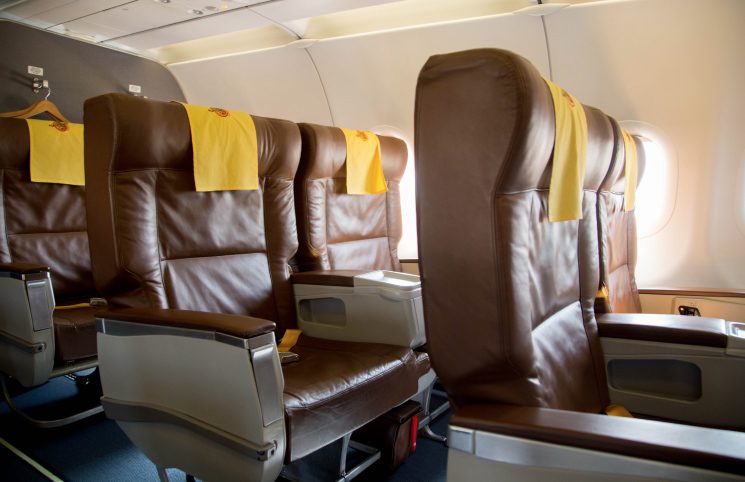
What is the difference between economy and business?
On a three-and-a-half-hour flight, less than on a long-haul, and the differences that matter are on the ground.
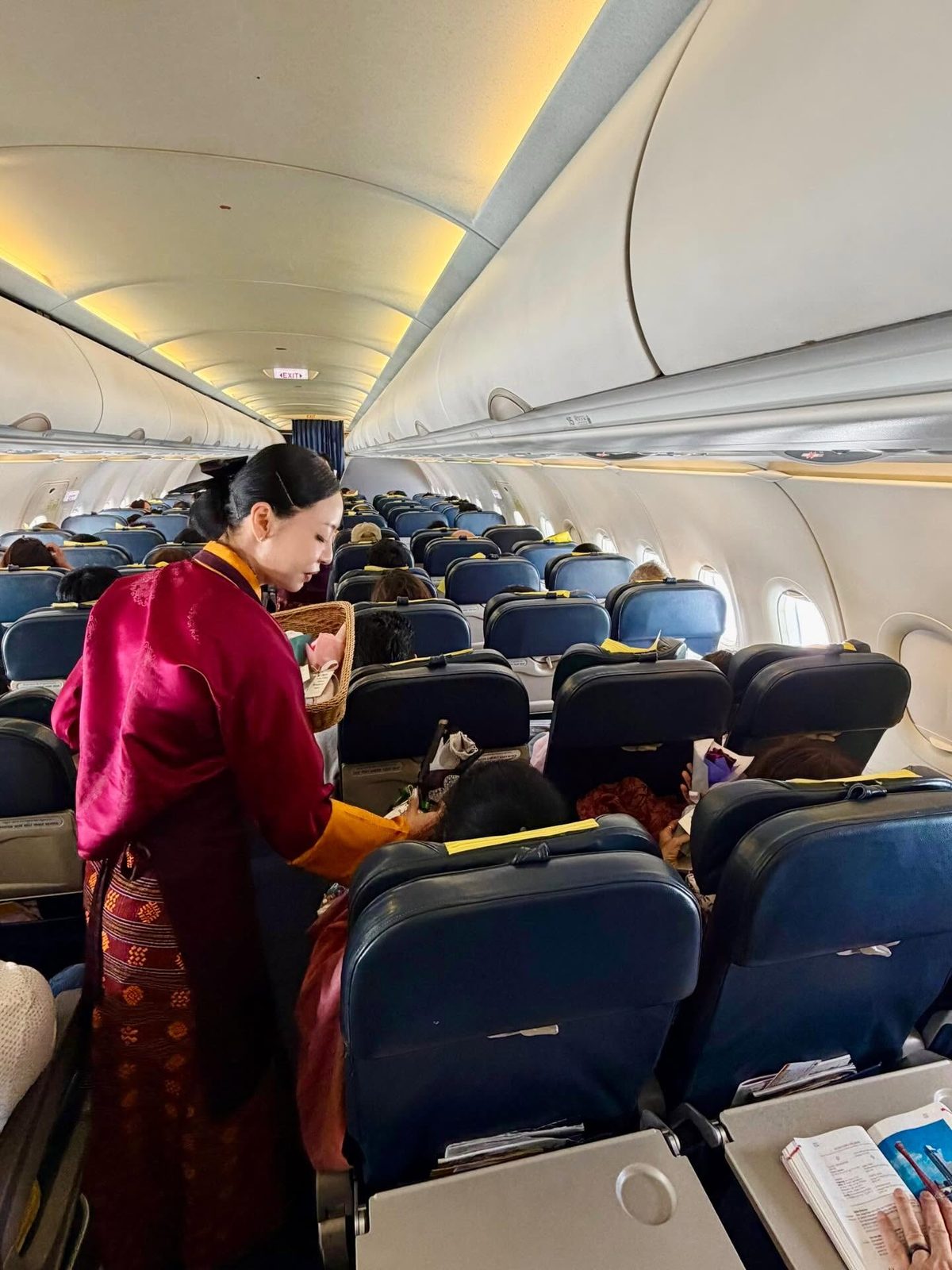
Business gives you a wider recliner in a 2-2 layout, an extra 5 kg of checked allowance, priority check-in and boarding, and a quieter cabin at the front. On a morning departure the priority check-in is the part you actually feel.
Economy is a standard A320 cabin with the full baggage allowance and the same meal service. For this sector length most travellers are comfortable in it, and the money is better spent on an extra night in Bhutan.
The crew are the same either way, and on a route this short that is most of the experience.
What is the meal actually like?
A hot tray on the Paro sector, served once, with a Bhutanese option alongside an international one. The Bhutanese tray is the interesting choice: red rice with a curry, usually a milder cheese-and-vegetable version rather than the full chilli heat of a farmhouse kitchen. It is a reasonable introduction and it will not prepare you for the real thing. What to eat in Bhutan covers what is coming.
Soft drinks, tea, coffee and beer are included. Special meals — vegetarian, no beef, no pork — need requesting at booking rather than on board, and for a temple group travelling under precepts that request is worth making in writing.
On a via-Kolkata routing you will usually be served on both sectors, though the second is lighter.
What is the flight itself like?
Ordinary for three hours and memorable for the last twenty minutes.
The cruise is a standard narrow-body flight. Then the aircraft descends into the Paro valley in a series of turns between ridgelines, close enough to see houses and prayer flags on the hillsides, and lands on a runway that appears late. Passengers who have not been briefed sometimes find this alarming. It is a routine, practised, visual approach flown by specifically qualified crews, and the reason it looks dramatic is geography rather than difficulty.
Two things help. Sit by a window if the view matters to you, and do not plan anything strenuous for the afternoon you land — you have gone from sea level to 2,235 m in three and a half hours and you will feel it. How to acclimatise in Bhutan is the honest version of what the first day is like.
Landing at Paro also means immigration, the visa stamp and your guide meeting you outside. It is a small airport and the whole process is quick.
How early should you get to the airport?
Three hours at Suvarnabhumi for the Paro flight, and that is not padding.
The flight departs early, the check-in queue is a single wave rather than a trickle, and group bookings of ten or more take longer at the counter than the individuals in them expect. Add the visa printout check: staff will ask to see the approval before they issue a boarding pass to Paro, and a phone with a flat battery is not a document.
Coming back, allow two hours at Paro, which is a small airport with one departure hall and a straightforward process. There is a shop and a cafe and not much else, so do your last souvenir buying in Paro town rather than at the gate.
One more thing on the return: if you are connecting onwards from Bangkok on a separate ticket, leave a generous gap. Paro departures can be delayed by the same weather that delays arrivals, and a separate ticket carries none of the protection a through-booking does.
What do you need in your hand luggage?
- Your passport and your printed Bhutan visa approval. Both are checked at Bangkok.
- A warm layer. You leave Bangkok at 30°C and land at 2,235 m, where mornings run near freezing from December to February.
- Any medication you rely on, in original packaging.
- Cash in USD or THB for the airport in Paro, where card acceptance is limited. Money in Bhutan covers what to change and where.
- Nothing sharp, and no drone. Drones require permits in Bhutan and are confiscated on arrival without them.
How do you book, and what do you pay?
Published Bangkok–Paro return fares in economy start from THB 31,869 including taxes and surcharges at the time of publishing. Group fares for parties of ten or more are quoted separately, and on the Bangkok–Gaya route start from THB 15,000 return per person.
Send your dates through Book & Hold. We hold the seats free for 48 hours and return one written quote covering the fare, the SDF and the visa, so the total is a single number rather than three surprises.
Paying: once the quote is confirmed in writing you can pay by bank transfer, or by Visa, Mastercard, Apple Pay or Google Pay through a secure Stripe link our team sends. The fare is not marked up; card payments add a separate card service fee, set out in how card payments work.
The flight is the first booking, not the whole trip. What a Bhutan trip from Thailand costs sets the fare against hotels, guide and SDF, the visa guide covers the paperwork, and the five-day Paro, Thimphu and Punakha itinerary is the route most first trips take. For dates, when to book Bangkok–Paro explains which months sell out first.
Fares are quoted in Thai baht, per person, inclusive of taxes and surcharges at the time of publishing, and start from the figure shown. Fares, seats and availability are confirmed in writing by OMG Experience, the appointed General Sales Agent for Bhutan Airlines in Thailand, before ticketing. No online payment is taken before you receive and approve the final quote.