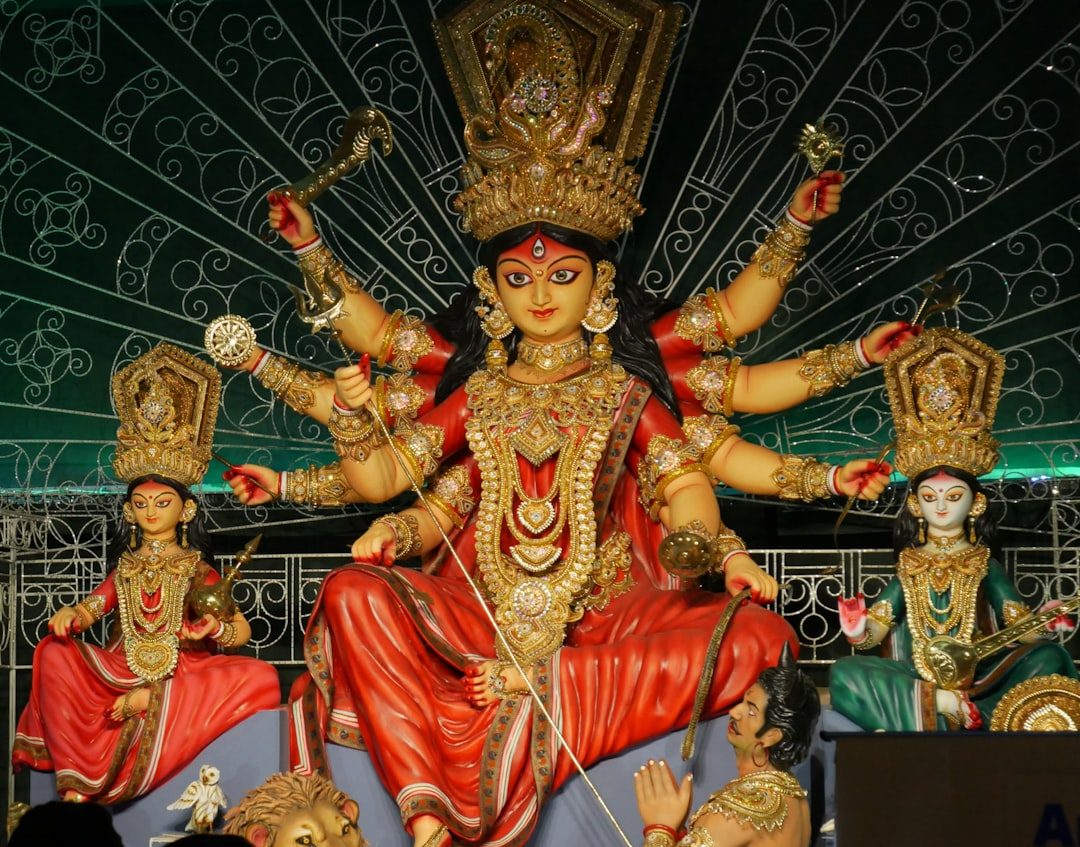
Durga Puja is five days in late September or October when Kolkata builds thousands of temporary pavilions, fills them with clay images of the goddess Durga, and stays awake for the best part of a week. UNESCO added it to the list of intangible cultural heritage in 2021, the first festival in Asia to be listed.
The days that matter are Shashthi, Saptami, Ashtami, Navami and Dashami — the sixth to the tenth of the lunar fortnight in the Hindu month of Ashwin. The dates move every year, so check them before you book anything at all.
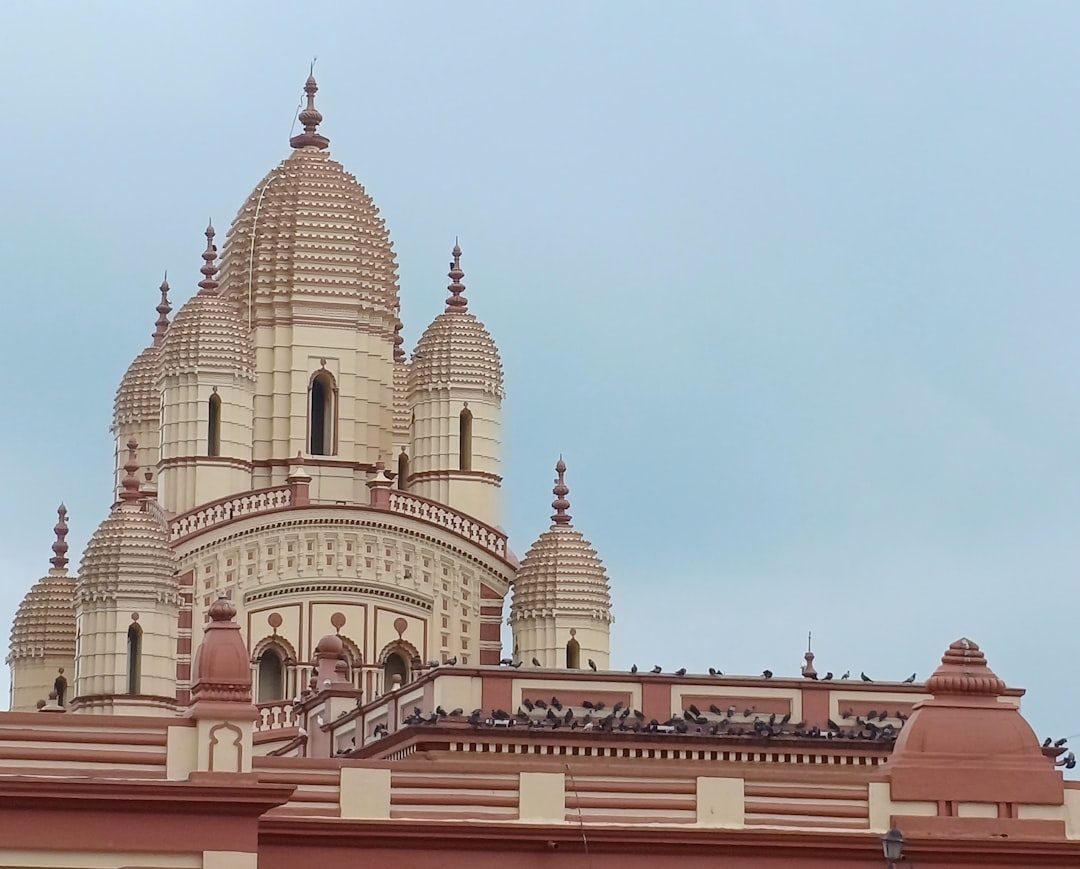
What actually happens on each day?
The festival has a shape, and knowing it is the difference between wandering through a crowd and understanding what you are looking at.
Mahalaya, about a week before, is the formal invitation to the goddess. Bengalis traditionally wake before dawn to hear the Mahishasura Mardini radio broadcast, which has been transmitted every year since 1931. Idol-makers paint the eyes on the images that day.
Shashthi is the unveiling. The pandals open, the images are revealed, and the city changes gear in a single evening.
Saptami, Ashtami and Navami are the three full days: morning rituals with flowers and drums, and evenings given entirely to walking from pandal to pandal. Sandhi Puja, at the junction of Ashtami and Navami, is the most intense ritual moment of the festival.
Dashami is the farewell. Married women mark each other with vermilion in sindoor khela, and in the afternoon the images are carried in procession to the Hooghly and immersed. The riverfront that evening is the most extraordinary and the most crowded few hours of the Kolkata year.
When is it in 2026?
The festival follows the lunar calendar, so the answer changes annually. In 2025 the main days ran from late September into early October; in 2026 they fall in October.
That is deliberately imprecise, because a specific date published a year out is how a guide becomes wrong. Confirm the year's dates from a Bengali almanac or a Kolkata news source before you commit, and treat any tour page that states them casually with suspicion.
What you can plan on: the festival is always in Ashwin, always five main days, always ending with immersion on Dashami, and always in the last week of September or in October.
How far ahead should you book?
Four to six months for hotels. Three to four for flights.
This is the single most expensive and most fully booked week in Kolkata. Hotels raise rates substantially and the good ones in the Park Street and Maidan area sell out first. Flights fill because the Bengali diaspora comes home — this is the week Kolkata's expatriates return, from Delhi, from Dubai, from Bangkok.
If your dates are fixed by the festival, hold the flights first and the hotel second. Seats are the scarcer of the two. Book & Hold holds the fare free for 48 hours while you check accommodation.
How does pandal-hopping actually work?
On foot, after dark, in a crowd, for several kilometres a night. This is worth being realistic about.
The pandals are temporary structures — bamboo, cloth and increasingly elaborate art direction — built by neighbourhood committees who compete openly for the best design. Some reproduce temples; others are full contemporary art installations on a theme, and the best of them would not be out of place in a biennale.
The famous ones are in north and central Kolkata and in the southern neighbourhoods: Bagbazar, Kumartuli Park, Ahiritola, Mohammad Ali Park, College Square, Ekdalia Evergreen, Bosepukur, Suruchi Sangha. Locals plan routes and argue about them for weeks.
Practically:
- Go after 20:00 and expect to keep going past midnight. The crowds thin around 02:00 and the atmosphere is better, not worse.
- Walk. Roads close, traffic gridlocks, and no taxi will make progress. The Metro runs extended hours through the festival and is the only reliable way to move between districts.
- Wear shoes you can stand in for six hours. This is the advice everyone ignores once.
- Pick three or four pandals a night, not twelve. Twelve is a queue with occasional art in it.
- Eat as you go. The food stalls beside the pandals are half the point, and they run all night.
Go to Kumartuli in the weeks before the festival to see the idols being built in open workshops. Half the year's craft happens there, and almost no visitor sees it.
Where do the idols come from?
Kumartuli, a lane of workshops in north Kolkata, and this is the part of the festival most visitors miss entirely.
The name means potters' quarter, and the families there have made the clay images for generations. Work runs most of the year: a bamboo and straw frame, then layers of river clay from the Hooghly, then drying, then paint, then the fabric and jewellery. The eyes go on last, on Mahalaya, in a ritual called chokkhudaan.
The workshops are open to the street and the artisans are used to being watched. Go in the two or three weeks before the festival and you will see two hundred half-finished goddesses standing in rows in the dark. It is the single best hour in Kolkata for a photographer and it costs nothing.
One thing to understand about the images: they are made to be destroyed. Unbaked clay dissolves in the river, which is the whole point of the immersion on Dashami, and the frames are recovered and reused. Nothing about the festival is meant to be permanent.
What does the festival cost a visitor?
Very little to attend, and a great deal more to sleep.
Every pandal is free to enter. There is no ticket, no visitor pricing and no VIP route, though the biggest pandals have separate queues that move at different speeds. Food from the stalls is cheap and bhog is often given away.
The cost is entirely in accommodation and flights. Hotel rates in central Kolkata rise sharply for the five main days and the shoulder nights around them, and the mid-range places sell out before the expensive ones. Budget for two to three times a normal-season room rate, and book it at the same time you book the flight rather than after.
Everything else — taxis you will not use, the Metro you will, and street food — costs the same as any other week.
Is it a good time for a first visit to Kolkata?
Honest answer: it depends on what you want, and the two versions of the trip barely resemble each other.
Come during Puja if the festival is the reason for the trip. Nothing else in India feels like it, the whole city participates, and you will be welcomed into pandals and offered food by strangers all week. Accept that the museums and sights will be secondary, the traffic will defeat any schedule, and you will be tired.
Come in November to February if you want to see Kolkata itself. Cooler, calmer, everything open and half the price. The first-timer's guide to Kolkata sets out that version of the city.
A workable compromise: arrive two or three days before Shashthi. You get the city in a state of high anticipation, Kumartuli in full production, the sights still navigable, and then the festival opening on your last nights.
What should a visitor know about etiquette?
The festival is genuinely open — Durga Puja is public in a way that few religious festivals anywhere are, and non-Hindus are welcome inside every pandal.
- Dress modestly, and cover shoulders and knees in the pandal itself. Bengalis dress up for Puja, and looking as though you made an effort is appreciated.
- Remove shoes where indicated, which is at the front of most pandals.
- Ask before photographing people at prayer. Photographing the image and the pandal is expected and encouraged.
- Do not push into the front during rituals; there is a rhythm to the queue and it works.
- Accept the food you are offered. Bhog is served at many pandals and refusing it is the one genuine discourtesy available to you.
Getting there
Bhutan Airlines flies Bangkok–Kolkata (BKK–CCU) daily on the Airbus A320, with 25 kg checked and 7 kg cabin baggage plus a meal in economy, 30 kg in business. You will need an India e-Visa — the step-by-step guide covers the four-day cut-off, which matters more than usual when your dates are fixed by a festival.
And when you get there, eat. What to eat in Kolkata is the list, and Puja week is when the whole city cooks at once.
Send your dates through Book & Hold and we return one written quote. Fares are quoted in Thai baht, per person, inclusive of taxes and surcharges at the time of publishing, and start from the figure shown. Fares, seats and availability are confirmed in writing by OMG Experience, the appointed General Sales Agent for Bhutan Airlines in Thailand, before ticketing.