Yes — Bhutan is one of the safer countries a Thai passport will visit. Violent crime against visitors is rare, scams aimed at tourists barely exist as an industry, and every international visitor travels with a licensed guide, which is a legal requirement rather than a nervous precaution.
The risks that actually change a trip are physical and operational: altitude, uneven stone steps, mountain roads, and Paro's weather. None of them is a reason not to go. All of them are worth understanding before you do.
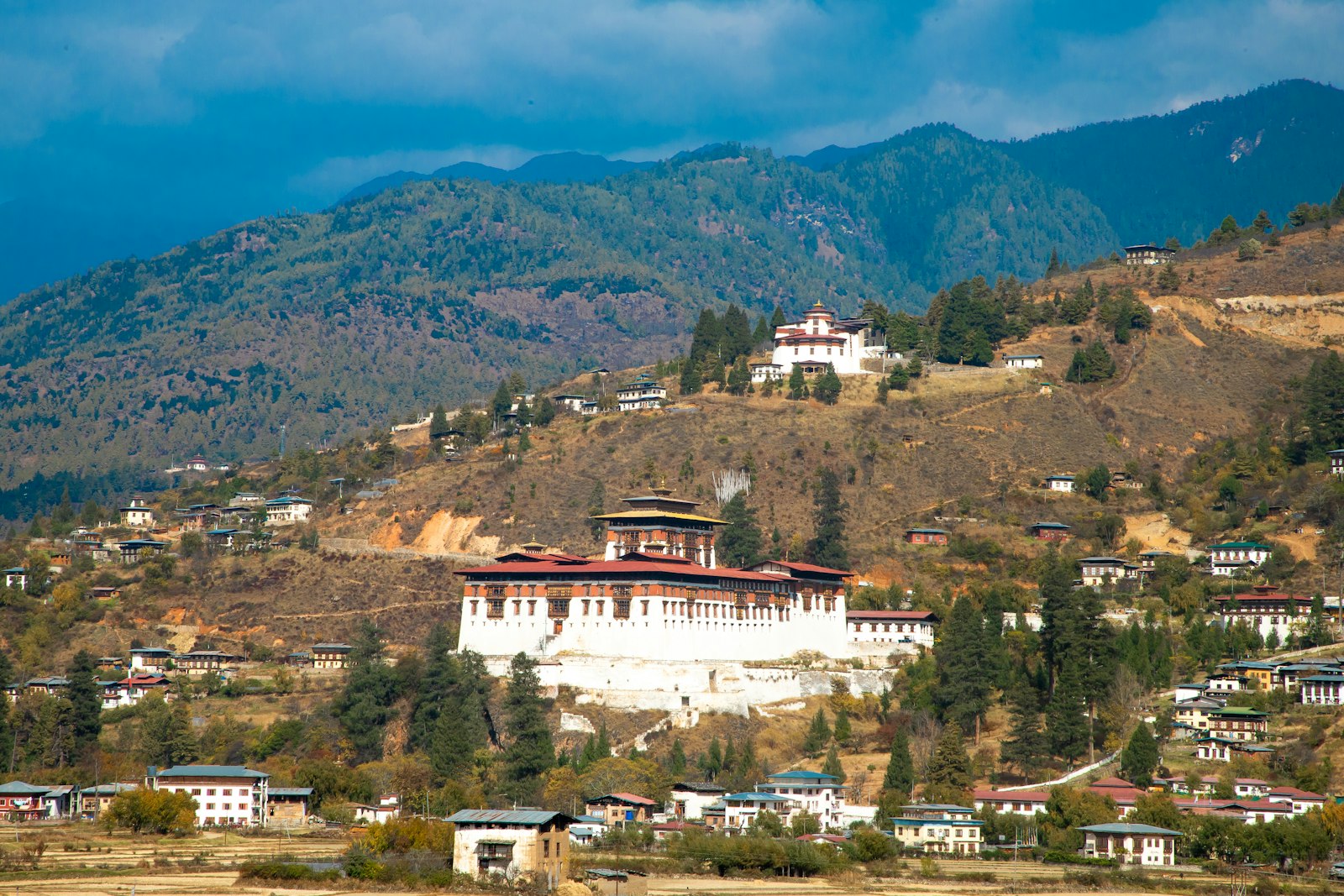
How much crime is there?
Very little, and almost none of it aimed at visitors.
Bhutan is a small, socially cohesive country where petty theft exists at roughly the low rate of any quiet capital and violent crime against foreigners is genuinely unusual. There is no beach-scam economy, no organised pickpocketing on transport, no taxi meter argument waiting for you at the airport. Prices in shops are what they say they are.
The sensible precautions are the ordinary ones. Watch an ATM the way you would anywhere. Do not leave a bag on a restaurant chair in Thimphu. Keep cash and cards in two separate places. Photograph your passport and cards before you fly.
What Bhutan does have, in common with the region, is occasional opportunistic theft from unlocked hotel rooms and from vehicles left open at trailheads. Lock the room, take the valuables up the mountain with you or leave them in the safe.
Is Bhutan safe for solo women?
By the accounts of women who have travelled there, yes, and more comfortably than much of the region.
The structural reason is the guide requirement: you are with a licensed guide during the day and in a licensed hotel at night, so the situations that create risk elsewhere — arriving in an unfamiliar city after dark, negotiating unlicensed transport, walking back to a guesthouse alone — largely do not arise. Street harassment is rarely reported.
Two practical notes. Bhutanese society is conservative in dress and manner, and matching that in temples and towns avoids unwanted attention as well as being courteous. And if you would prefer a female guide, ask at booking; supply is limited and it is usually possible with notice.
What actually injures visitors?
Not crime. In rough order of how often it changes someone's trip:
Altitude. Paro is 2,235 m and you get there from sea level in three and a half hours. Most people feel it mildly and adjust. The way to turn it into a problem is a hike on the arrival day. How to acclimatise in Bhutan has the detail.
Steps and floors. Dzongs and temples have steep wooden stairs, worn stone thresholds and courtyards that are slick in rain. You will be in socks indoors. This is the commonest source of a twisted ankle or a bruised hip.
The Taktsang path. Around 900 m of ascent, a gorge crossing on stone steps, and a surface that is dust in autumn and mud in summer. Broken-in shoes with grip matter more here than any other item you pack.
Dogs. Street dogs are everywhere, generally placid by day, and territorial at dawn and dusk. Do not feed them or approach a sleeping one. If you are bitten, that is a same-day clinic visit rather than a wait-and-see.
The sun. At 2,300 m and above, sun burns faster than the mild temperature suggests. Hat, sunglasses, high-SPF sunscreen.
Are the roads safe?
They are well surfaced and relentlessly winding, driven by professional drivers who do this daily, and they are the part of the trip most likely to make someone uncomfortable.
Bhutan's main highway is a two-lane mountain road with drops on one side and rock on the other, and stretches under repair in any given season. Speeds are low because they have to be. Fatal accidents happen, as they do on mountain roads anywhere, and monsoon landslides can close a road for hours rather than days.
What this means for you in practice: take something for motion sickness before the Dochula stretch rather than during it, sit in the front if you are prone to it, and accept that a monsoon itinerary carries a genuine chance of a delay on the road. There is no seatbelt culture in older vehicles; ask, and wear one.
What about the flight?
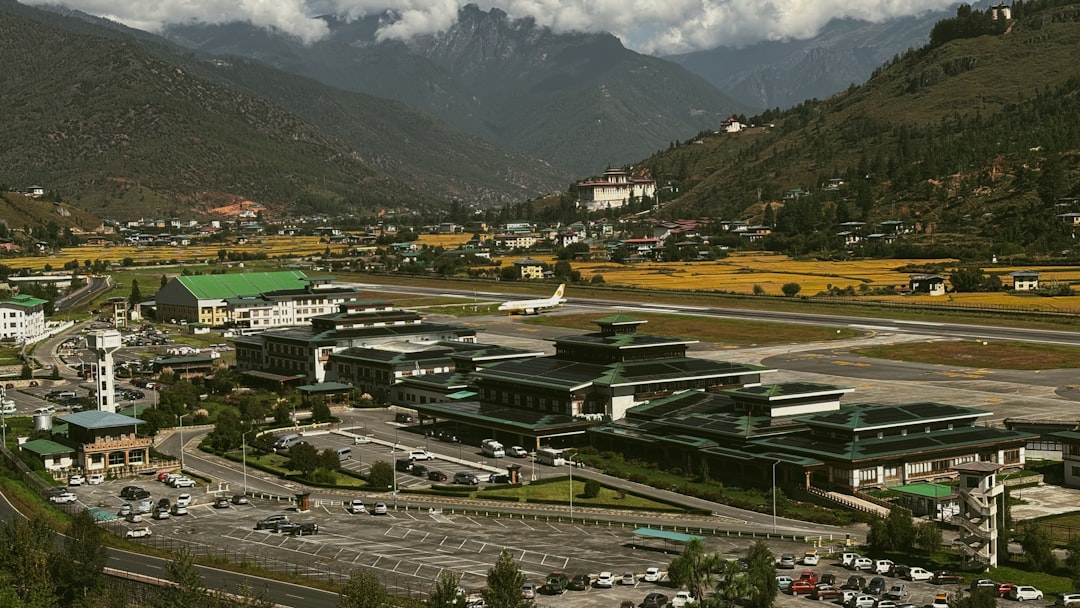
Paro is one of the more demanding commercial approaches in the world, flown visually in daylight only by specially certified crews. That sounds alarming and is the opposite: the reason the rules are strict is that the terrain leaves no margin for improvisation.
The consequence is not danger but schedule risk. Cloud below the ridges means the aircraft does not attempt the approach, and a flight can be delayed by hours or held to the next day. What happens when Paro weather delays your flight sets out how that is handled, and the practical rule is to leave a buffer night before any onward connection out of Bangkok.
Is the food and water safe?
Water: drink bottled or filtered, not tap, including for teeth if you are cautious. Hotels provide it, and a reusable bottle plus refills is both cheaper and better received.
Food: Bhutanese kitchens are clean and the food is cooked, and stomach upsets among our travellers are uncommon. Two things cause most of the trouble that does occur — a sudden increase in chilli and dairy for a stomach not used to either, and buffet food that has been standing. Eat hot food hot, be moderate with the chilli on the first day, and carry rehydration sachets. What to eat in Bhutan covers the plate itself.
Do you need vaccinations or specific medication?
No vaccination is required for entry from Thailand, and there is no malaria risk in the valleys you will visit. Standard travel advice applies: be current on routine vaccinations, and ask a travel clinic in Bangkok about hepatitis A and typhoid if you are not.
Bring your own prescription medication in labelled packaging, in your cabin bag, with a copy of the prescription. Pharmacies in Thimphu are adequate and choice narrows sharply outside it.
Is it safe for families and older travellers?
Yes, and both groups travel here regularly. The structure of Bhutanese tourism — private vehicle, licensed guide, fixed hotels — removes most of what makes travel with children or older parents stressful elsewhere.
The considerations are physical rather than security-related. Taktsang is optional, and the cafeteria at halfway is a legitimate destination in its own right with the classic view. Dzong stairs are steep and there are no lifts anywhere. Road journeys are long and curved, so plan shorter driving days with young children.
Children aged six to eleven pay half the SDF and under-sixes are exempt, so the cost structure is unusually family-friendly. What matters more is the pace: a five-day circuit with a child is better done as six.
Anyone with limited mobility should tell us at quote stage. Some sites are genuinely inaccessible, several are fine, and knowing which is which before you arrive avoids a bad morning.
What insurance do you actually need?
The line to check is helicopter evacuation and medical repatriation. Bhutan's referral hospital is in Thimphu, facilities elsewhere are limited, and the road out of a valley is long. Hiking to 3,120 m should be explicitly covered, which some basic policies exclude.
Also worth having: trip disruption cover for weather delays, given how Paro works. We do not sell insurance and will not advise on a specific policy, but we will say that this is the one piece of admin worth doing properly rather than at the airport.
Anything else?
Bhutan sits in a seismically active region and buildings in the valleys are a mix of old timber and new concrete; your hotel will have a procedure and it is worth reading the card on the door. Monsoon brings landslides rather than floods where you will be.
Two legal points that catch visitors out: tobacco import and sale are restricted, with limited dutiable personal allowances, and antiques and religious artefacts cannot be exported without a clearance certificate, which is checked on departure.
Drones need written permission and should be assumed prohibited without it. Photography inside most temples is not allowed, and the rule is enforced by monks rather than signs. Neither is a safety matter, but both are the kind of thing that turns a good day into an official conversation.
One last point that is worth saying plainly, because it is the honest answer to the question behind the question. The reason Bhutan feels safe is not that it is heavily policed. It is small, it is socially cohesive, and tourism is structured so that you are always somebody's responsibility. That structure is also why the risks left over are the ones the country cannot legislate away: the weather, the roads and the height.
Travel with the paperwork done properly
Send your dates through Book & Hold. We hold your seats and return one written quote covering flights, SDF and visa, with a licensed guide and vehicle throughout and the itinerary sequenced so altitude works in your favour.
Fares are quoted in Thai baht, per person, inclusive of taxes and surcharges at the time of publishing, and start from the figure shown. Fares, seats and availability are confirmed in writing by OMG Experience, the appointed General Sales Agent for Bhutan Airlines in Thailand, before ticketing.