5 days · 4 nights · Private tour
Bhutan Essential
Paro · Thimphu · Punakha
THB 67,000 per person, 2 sharing
See the full itinerary Bhutan AirlinesGSA, Thailand
 Everything on the Essential route plus the one thing most first trips miss - a night in the Phobjikha valley, the glacial bowl the black-necked cranes fly to from Tibet every winter.

Every stop, in order, with drive times, how long you spend there and what is worth knowing before you arrive.
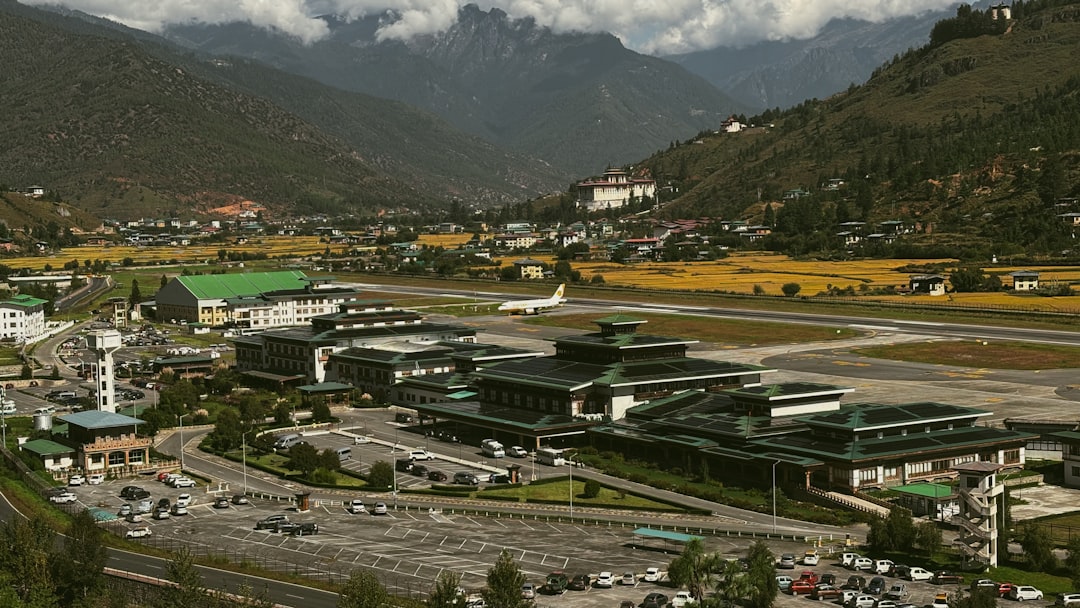
One of the world's most dramatic approaches - the aircraft banks between ridgelines into the valley. Your licensed guide and private driver meet you in the arrivals hall.
Only a small number of pilots in the world are certified for Paro. The approach is hand-flown between the ridges.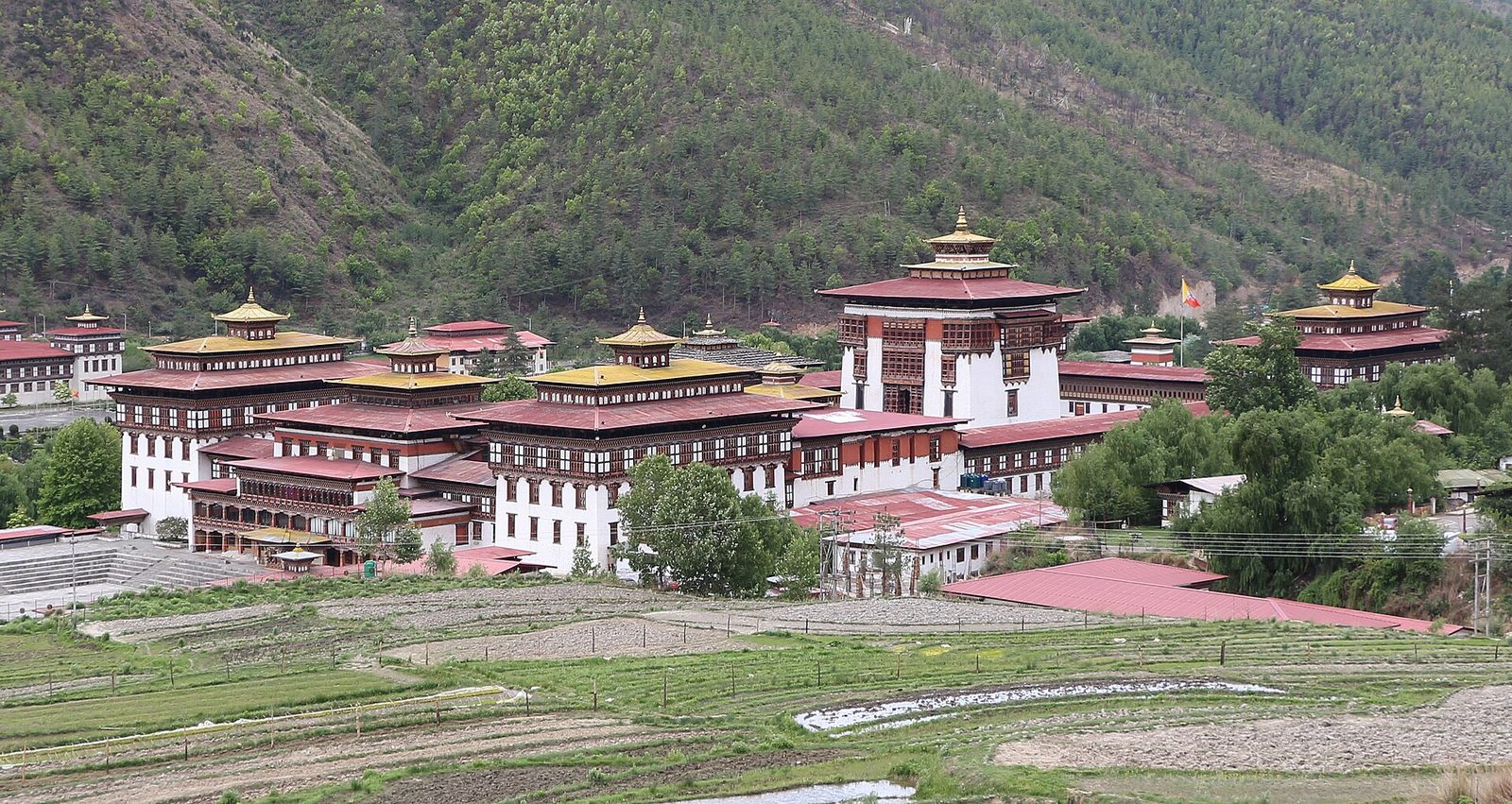
The seat of Bhutan's government and the summer residence of the Je Khenpo, the chief abbot. The King's throne room is inside these walls.
Visitors are only admitted once the government offices close, so this has to be a late-afternoon stop.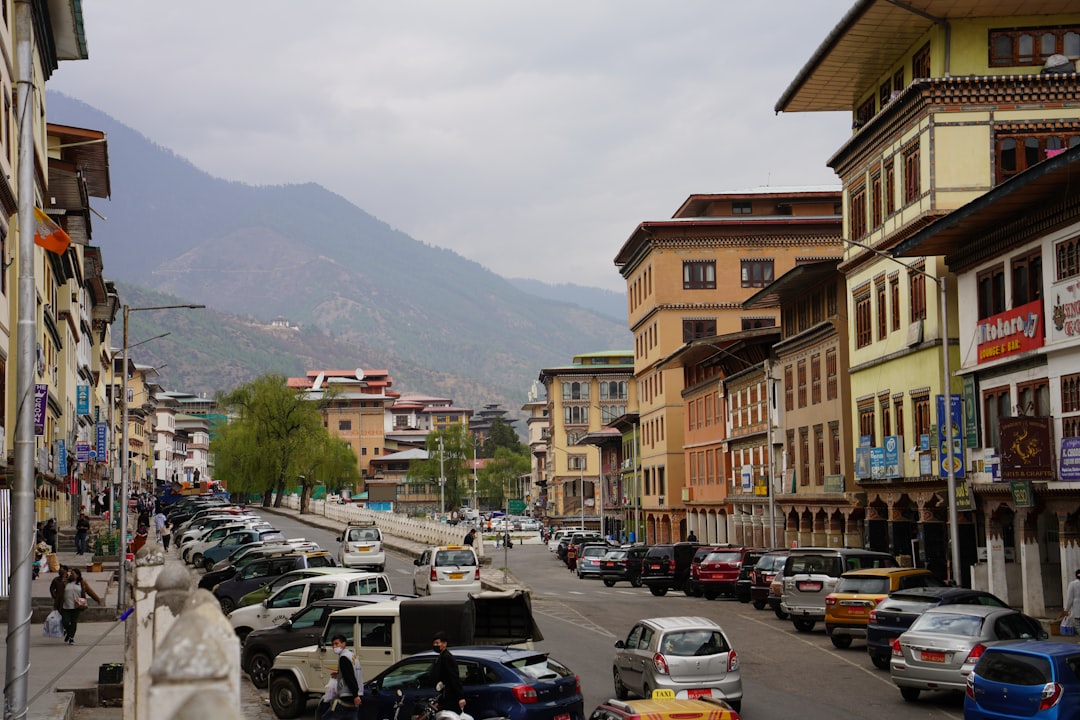
A circuit of the capital on foot and by car: the National Memorial Chorten, where Thimphu's elders walk the stupa from first light, the Sangaygang viewpoint above the city, the National Library, and the main street where a white-gloved officer still directs the only busy junction by hand.
Thimphu is the only national capital on earth with no traffic lights. One was installed and taken out again within days.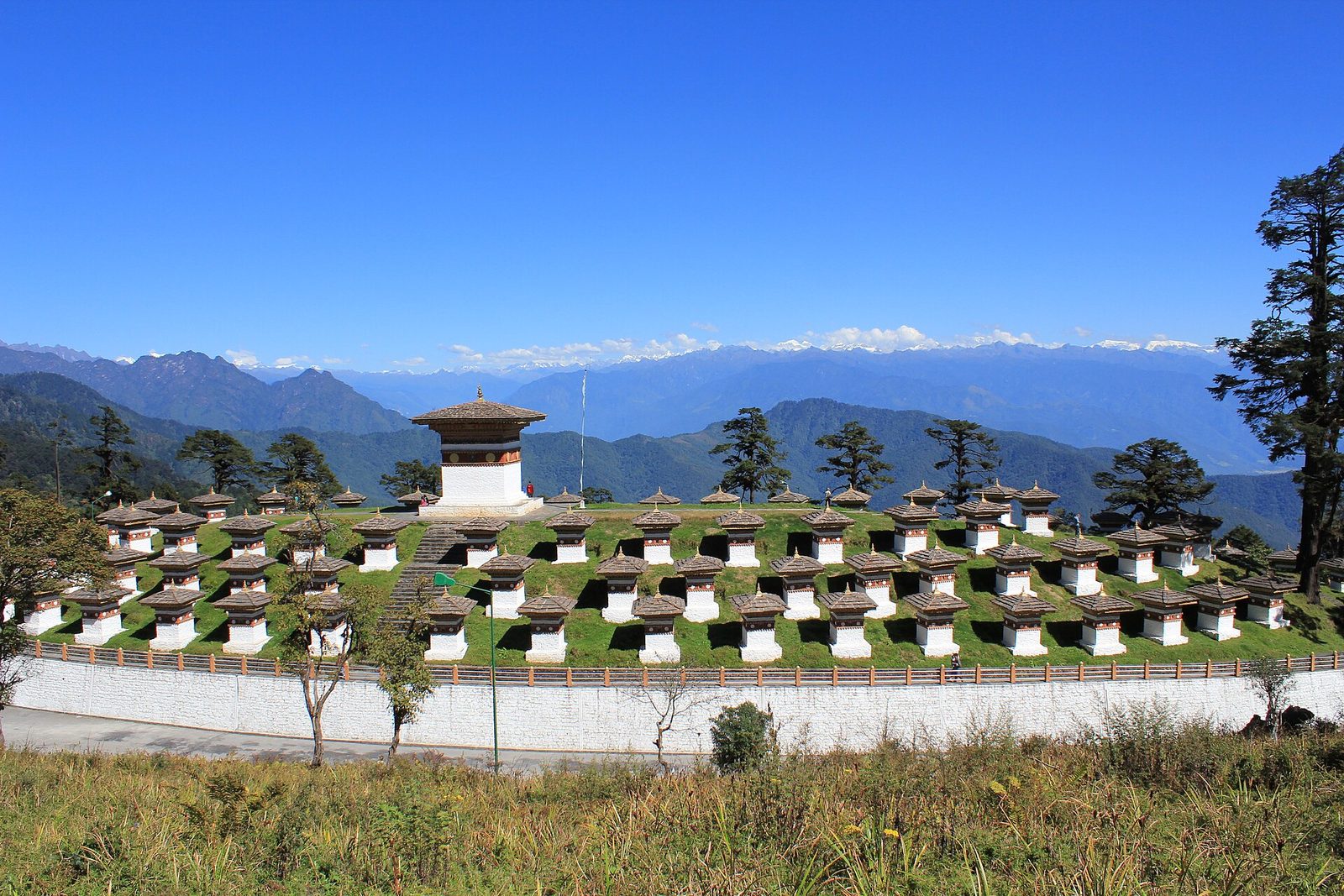
One hundred and eight chortens stand in rings on the saddle at 3,150 m, built to bless the country and everyone crossing. The Druk Wangyel Lhakhang above them is painted with the royal family.
On a clear morning the eastern Himalaya lines the whole horizon from here. Bring a layer - it is ten degrees colder than the valley.
A half-hour walk out through the paddy fields and village to the fifteenth-century temple of Drukpa Kunley, the Divine Madman. Couples come from all over Bhutan to ask here for a child.
The walk out is flat and pretty and takes about thirty minutes each way. The village houses along it are painted very frankly.
The Palace of Great Happiness, built in 1637 where the Pho Chhu and Mo Chhu rivers meet. It is the finest building in the country, the winter seat of the central monk body, and where every King of Bhutan has been crowned.
Late afternoon light on the whitewash and the gilded roofs is the reason we schedule it last rather than first.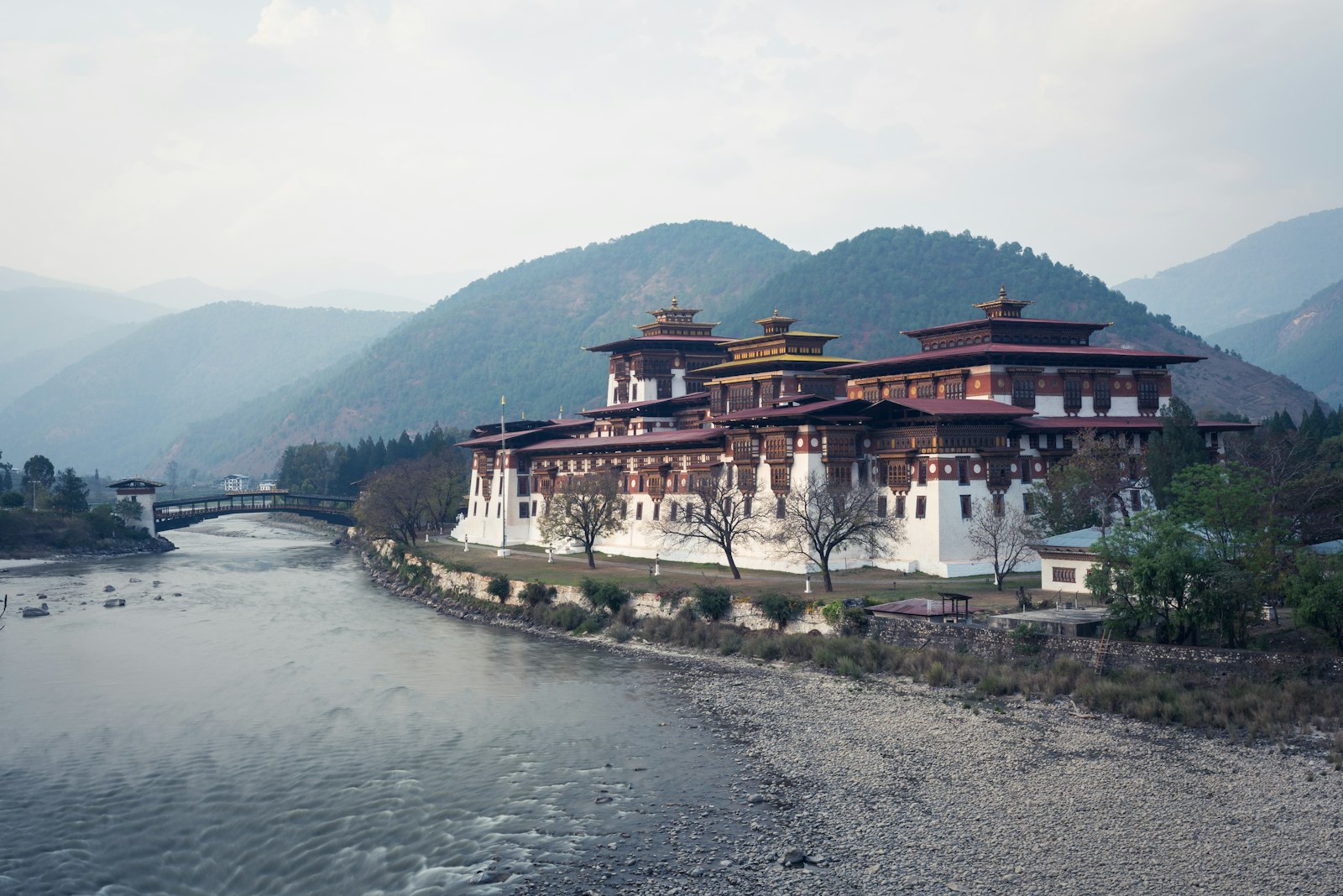
A short walk down onto the river bed below the dzong, where the cantilever bridge crosses the Mo Chhu and the whole fortress stands above you.
At 1,200 m Punakha is the warmest night of the trip by a wide margin. Most people sleep better here than anywhere else in Bhutan.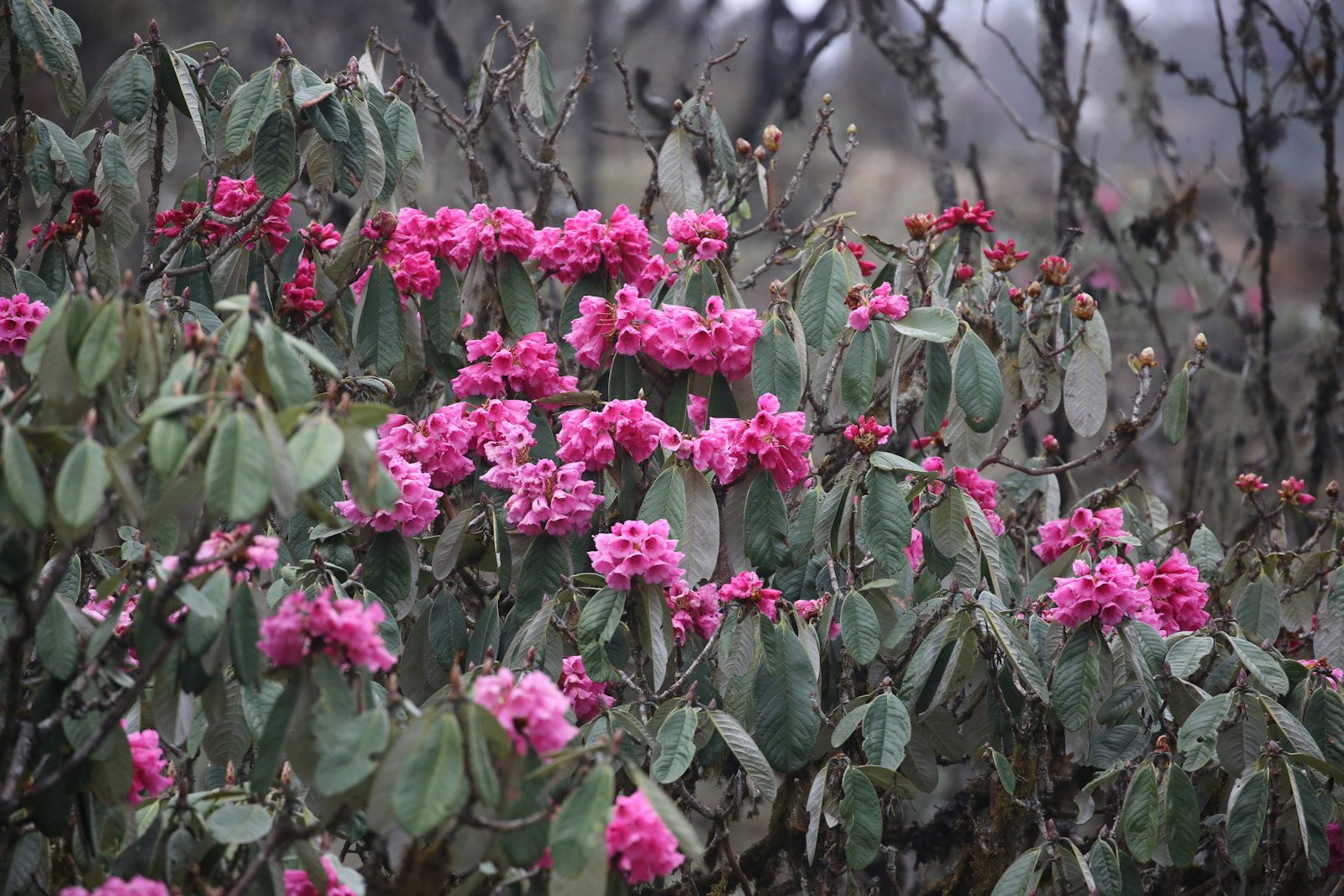
The road climbs out of the rice country into dwarf bamboo and rhododendron forest, crosses the Lawala pass at 3,360 m and drops into the widest glacial valley in the country.
If you are travelling in April or May this stretch is solid rhododendron in flower - red, pink and white, the whole way over.
The only Nyingma monastery of its size in western Bhutan, founded in 1613 by a grandson of the treasure-finder Pema Lingpa. The village of gomchen - married lay monks - around it descends from its original caretakers.
The restoration work was done entirely by Bhutanese craftsmen using the original joinery, without a single nail.A flat walk through potato fields and farmhouses along a valley that has no mains electricity on its floor by choice - the cables were buried so they would not endanger the cranes.
Black-necked cranes fly in from Tibet from late October and stay until February. They circle the monastery three times when they arrive.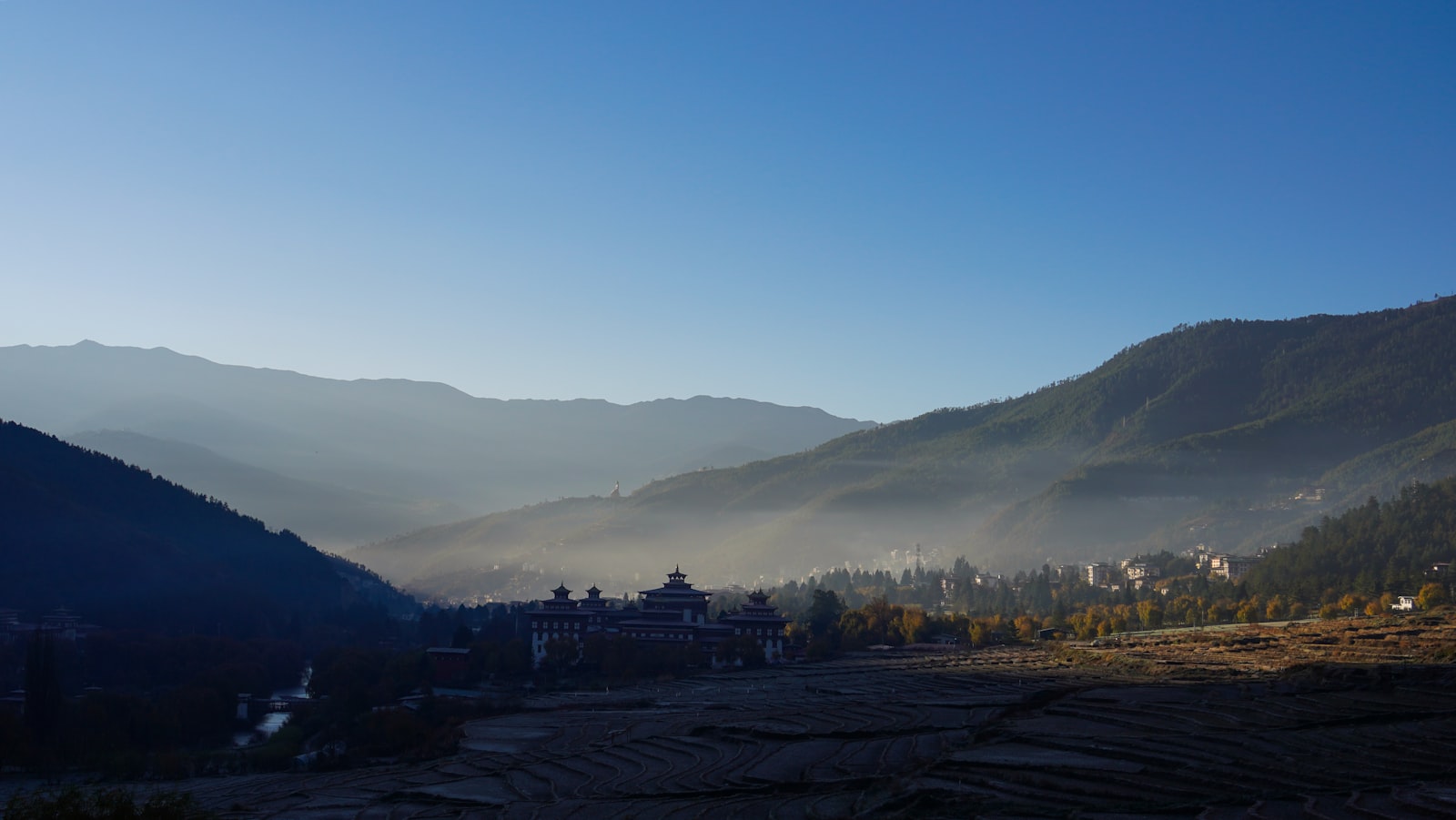
The long run back west over Lawala and Dochula. It is the biggest drive of the trip and also the best of the scenery, so we start early and stop often.
Dochula is usually clearer on the way back than on the way out. Have the camera within reach.
A 51.5 m gilded bronze Buddha on a hillside throne at Kuensel Phodrang, with 125,000 smaller Buddhas inside the meditation hall beneath it.
The terrace is the finest view over the whole capital, and the Sangaygang viewpoint is a few minutes further up the same ridge.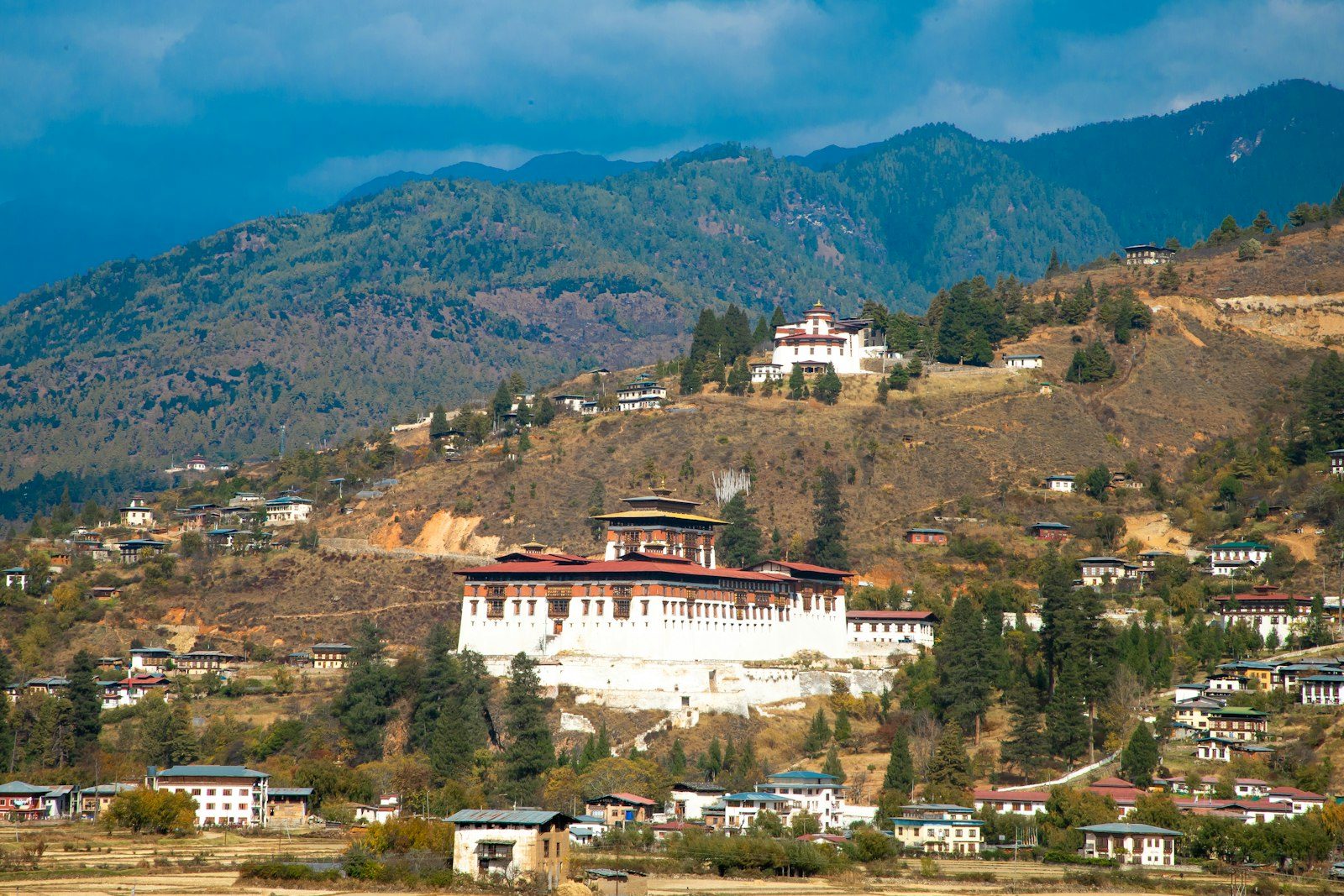
Cross the Nyamai Zam cantilever bridge to the 1644 fortress-monastery that still houses both the district government and around 200 monks.
Legs and shoulders must be covered inside any dzong. Your guide will be wearing the formal gho.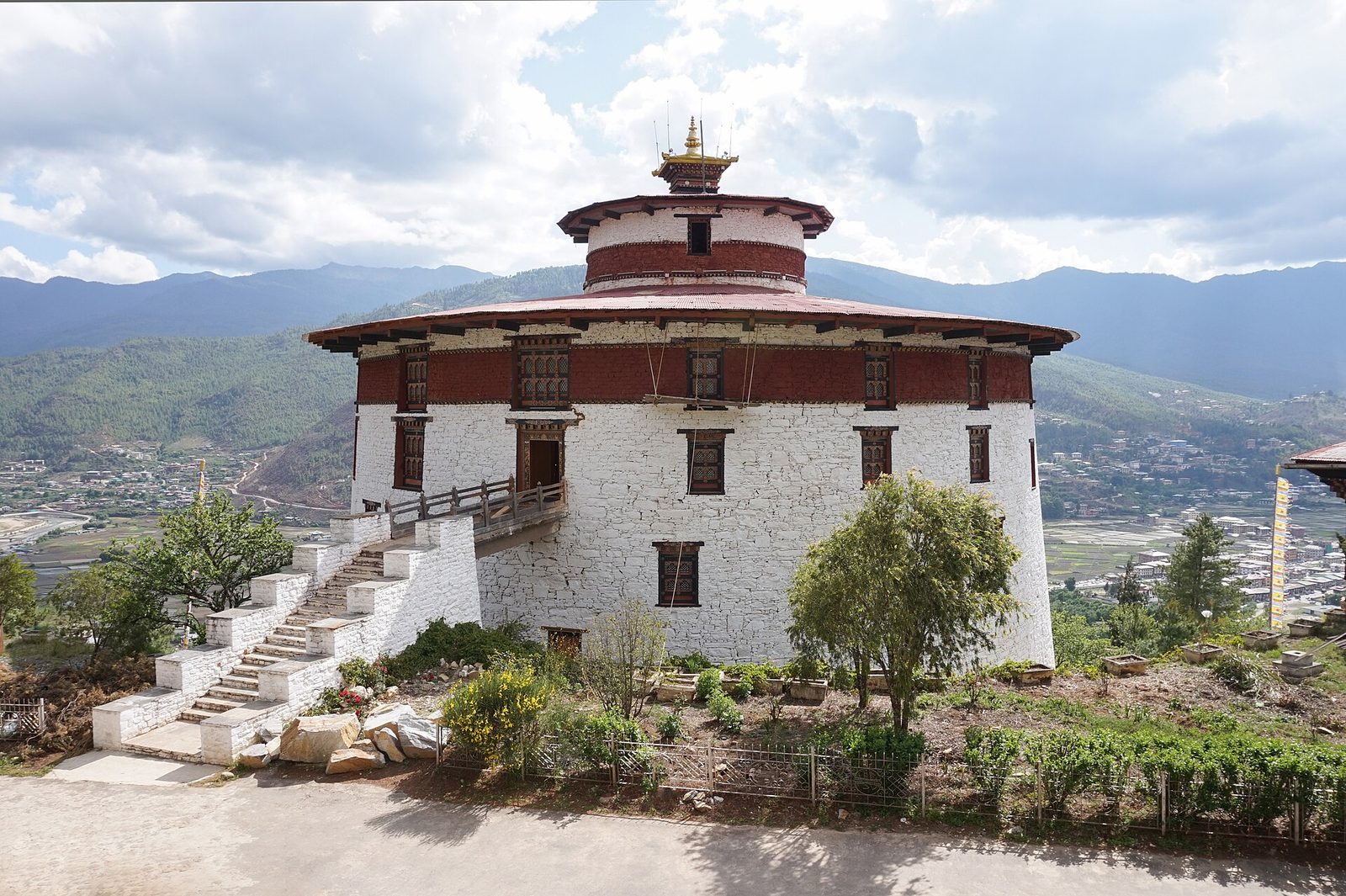
A round 1649 watchtower turned national museum in 1968 - thangka paintings, festival masks, textiles, armour and Bhutan's celebrated postage stamps.
No photography indoors. The mask gallery on the upper floor is the one worth slowing down for.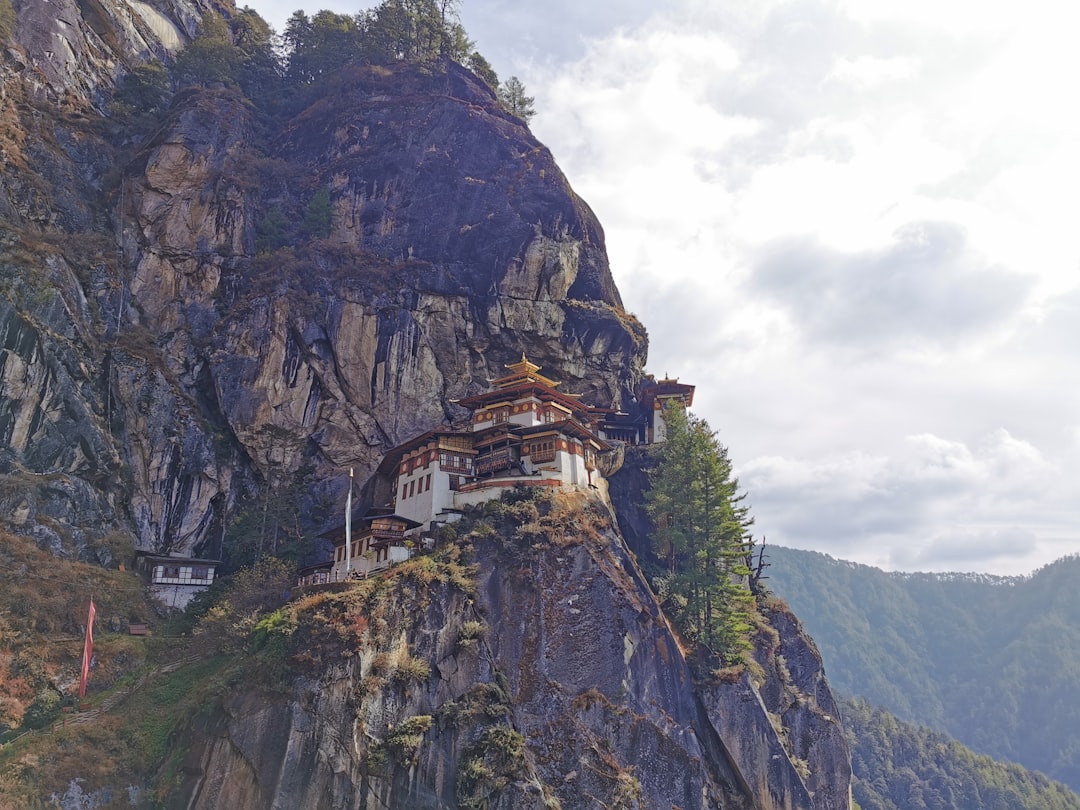
An early start to beat both the heat and the crowds. The path climbs steadily through blue pine hung with prayer flags.
Ponies can carry you as far as the halfway cafeteria, about THB 500. They cannot go beyond it, and they do not come back down.
Tea and a rest at the halfway house, looking straight across the gorge at the monastery.
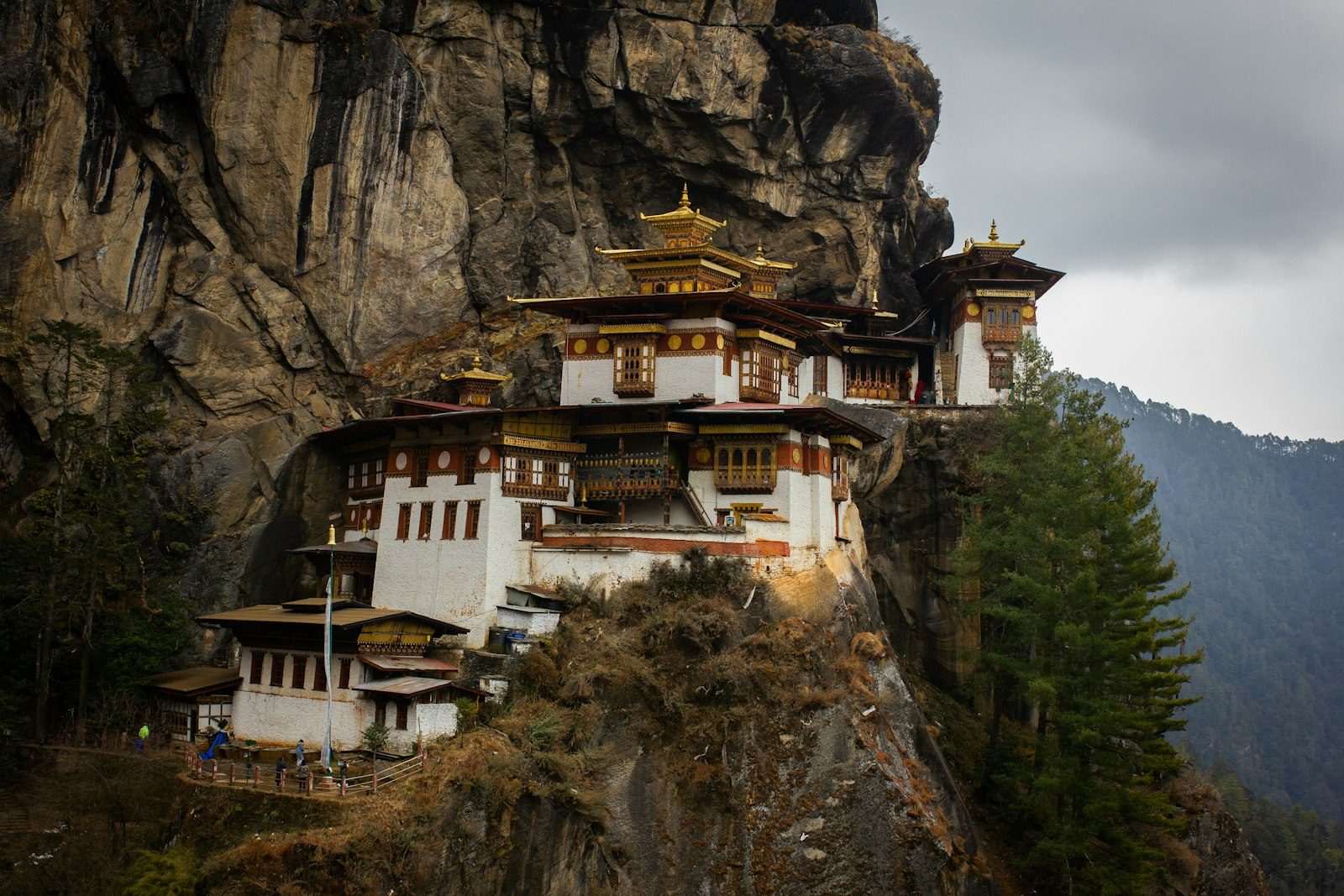
This is where the classic photograph is taken. If anyone in your party wants to stop here rather than go on, this is the place.Down a flight of stone steps, across the waterfall and up again into the monastery itself, built in 1692 around the cave where Guru Rinpoche is said to have meditated.
Shoes, bags and cameras go into lockers at the entrance. Legs and shoulders covered, as at every temple.
Back down at your own pace, with a long and thoroughly earned lunch waiting in the valley - red rice, ema datshi and whatever is in season.
Trekking poles help far more on the way down than the way up. We keep a spare pair in the vehicle.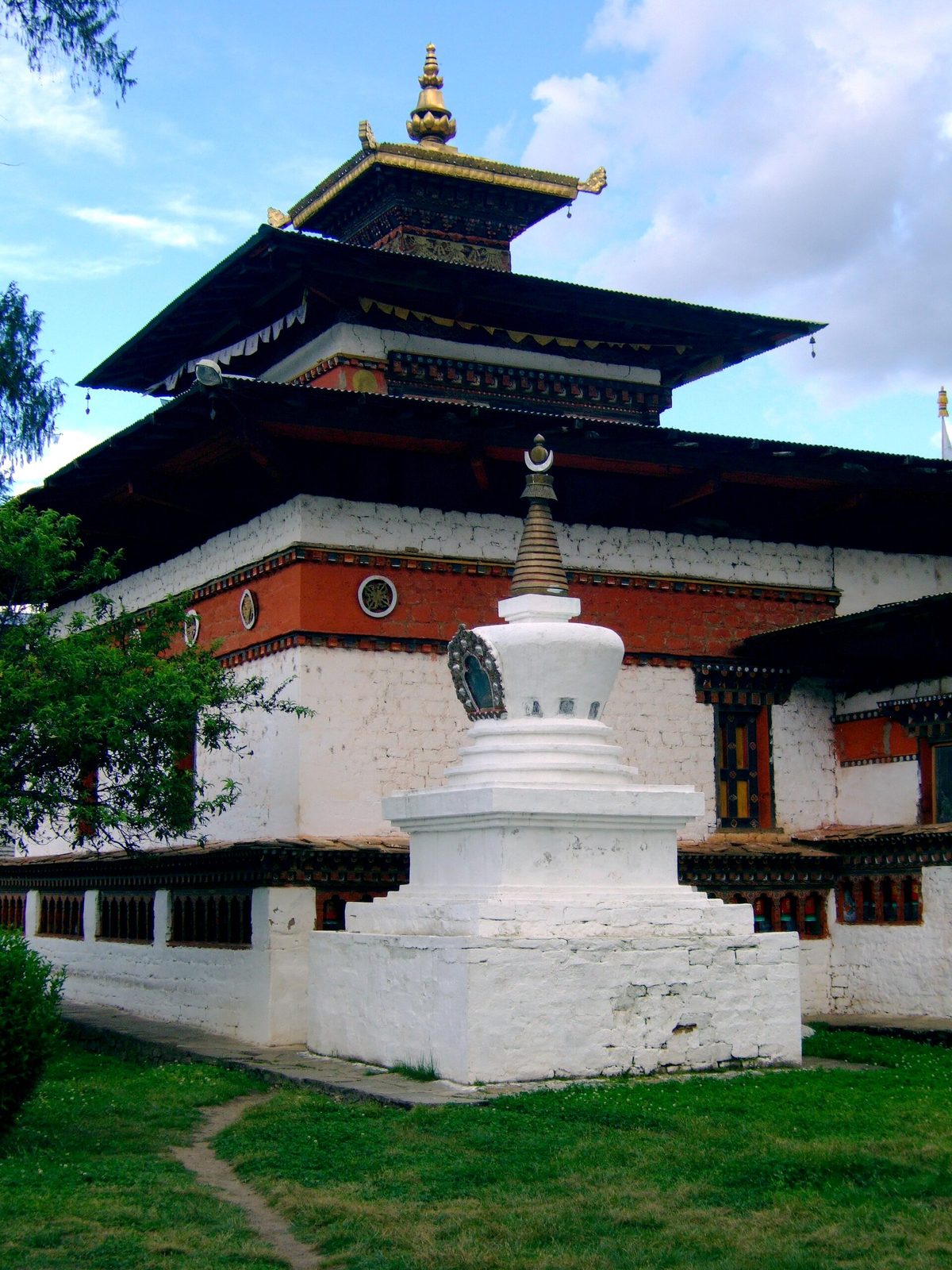
Founded in 659 by the Tibetan king Songtsen Gampo, among the oldest temples in the country. The orange trees in the courtyard are said to fruit all year.
Kyichu is ten minutes from the trailhead and takes as long as you want it to. If the climb has finished you off we go straight back to the hotel instead - nobody will mind.
The single main street of painted shopfronts - textiles, prayer flags, thangkas and yathra wool from Bumthang - ending with butter tea in a traditional teahouse.
This is the best souvenir shopping of the trip. Prices are fixed and nobody will hassle you.
A relaxed morning before your driver takes you to Paro International. Timings shift freely if you are extending your trip or connecting onward.
Paro asks for check-in two hours ahead. The terminal is small and the queue moves quickly.
Into Bangkok at 16:05 the same afternoon.
Ask for a left-hand window seat on the way out. On a clear morning the Himalaya runs along the horizon.Bhutan does not operate an official star rating. Hotels on this package are standard class, the grade Bhutan itself uses for this tier and broadly equivalent to three-star elsewhere. They are drawn from a small set of properties approved by the Tourism Council of Bhutan in each town. Your hotels are confirmed in writing when you reserve and book, and remain subject to availability.
7 stops on this trip. Tap any photograph for the detail.
The same four things are true of every trip we put together.
Same guides, same vehicles, same inclusions. The difference is how long you stay and where you sleep.
Paro · Thimphu · Punakha
THB 67,000 per person, 2 sharing
See the full itinerary
Paro · Thimphu · Punakha
THB 97,000 per person, 2 sharing
See the full itineraryTell us your dates and we will come back with your confirmed hotels, the exact quotation and your flight options. No payment is taken here.